
Nursing practice questions with comprehensive rationales
NurseDive Free Nursing Practice Question
A nurse is reviewing guidelines to prevent DKA during periods of illness with a client who has type 1 diabetes mellitus. Which of the following instructions should the nurse include in the teaching?
A. "Withhold your usual daily dose of insulin."
Incorrect. Withholding insulin during illness is not recommended. Clients with type 1 diabetes should continue to take their prescribed insulin even when they are ill. Insulin is necessary to regulate blood glucose levels, and illness can increase the body's demand for insulin.
B. "Drink 240 to 360 milliliters of calorie-free liquids every 8 hours."
Incorrect. Drinking calorie-free liquids is important to prevent dehydration during illness, but specific fluid amounts should be individualized based on the client's needs and healthcare provider's recommendations. The given volume is not a universally applicable guideline.
C. "Test your blood glucose level every 8 hours."
Incorrect. Testing blood glucose levels every 8 hours may not be frequent enough during illness. Blood glucose should be monitored more frequently to closely track changes in response to illness and adjust insulin doses accordingly.
D. "Check your urine for ketones when blood glucose levels are greater than 240 mg/dL."
Correct. Checking urine for ketones when blood glucose levels exceed 240 mg/dL is an important guideline during illness. Elevated blood glucose levels can lead to the production of ketones, and checking for ketones in the urine helps identify the early signs of diabetic ketoacidosis (DKA). If ketones are present, the client should follow a specific plan of action as outlined by their healthcare provider, which may include adjusting insulin doses or seeking medical attention.
This question is an excerpt from Nurse Dive's nursing test bank - RN ATI Medsurg Proctored Exam. Take the full exam now
Full Explanation
A. Incorrect. Withholding insulin during illness is not recommended. Clients with type 1 diabetes should continue to take their prescribed insulin even when they are ill. Insulin is necessary to regulate blood glucose levels, and illness can increase the body's demand for insulin.
B. Incorrect. Drinking calorie-free liquids is important to prevent dehydration during illness, but specific fluid amounts should be individualized based on the client's needs and healthcare provider's recommendations. The given volume is not a universally applicable guideline.
C. Incorrect. Testing blood glucose levels every 8 hours may not be frequent enough during illness. Blood glucose should be monitored more frequently to closely track changes in response to illness and adjust insulin doses accordingly.
D. Correct. Checking urine for ketones when blood glucose levels exceed 240 mg/dL is an important guideline during illness. Elevated blood glucose levels can lead to the production of ketones, and checking for ketones in the urine helps identify the early signs of diabetic ketoacidosis (DKA). If ketones are present, the client should follow a specific plan of action as outlined by their healthcare provider, which may include adjusting insulin doses or seeking medical attention.
Similar Questions
A nurse is preparing to administer furosemide 40 mg IV. Available is furosemide 10 mg/1 mL. How many ml should the nurse administer per dose?
Full Explanation
Dose (mg) / Concentration (mg/mL) = Volume (mL)
Plugging in the given values, we get:
40 mg / 10 mg/mL = 4 Ml
Therefore, the nurse should administer 4 mL of furosemide per dose.
A nurse is caring for a client who is 1 day postoperative following a subtotal thyroidectomy. The client reports a tingling sensation in the hands, the soles of the feet, and around the lips. For which of the following findings should the nurse assess the client?
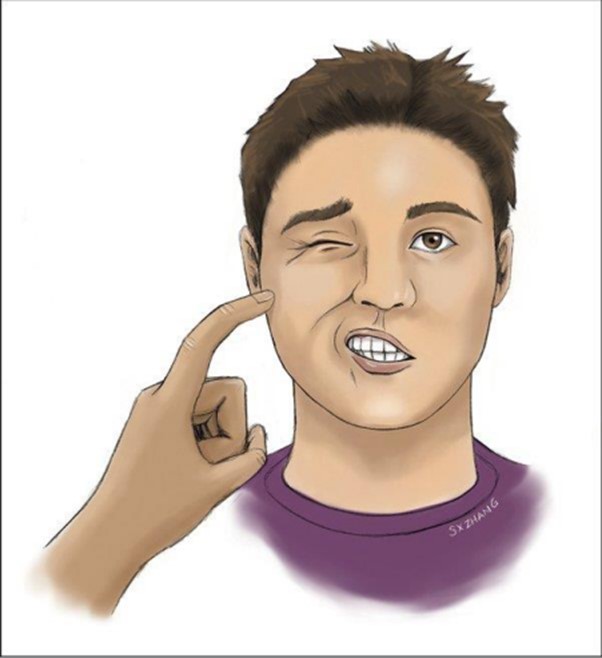
A. Chvostek's sign
Correct. Chvostek's sign is a clinical sign of hypocalcemia. It is elicited by tapping on the facial nerve, just anterior to the ear, and observing for facial twitching or spasm.
B. Kernig's sign
Incorrect. Kernig's sign is a test for assessing meningitis and involves flexing the hip and knee at 90-degree angles and then extending the knee. This test is not relevant to the client's reported symptoms.
C. Brudzinski's sign
Incorrect. Brudzinski's sign is another test for assessing meningitis. It involves flexing the neck forward and observing for involuntary flexion of the hips and knees. This test is not relevant to the client's reported symptoms.
D. Babinski's sign
Incorrect. Babinski's sign is used to assess upper motor neuron lesions. It involves stimulating the sole of the foot, and in a positive response, the big toe extends upward. This test is not relevant to the client's reported symptoms.
Full Explanation
A. Correct. Chvostek's sign is a clinical sign of hypocalcemia. It is elicited by tapping on the facial nerve, just anterior to the ear, and observing for facial twitching or spasm.
B. Incorrect. Kernig's sign is a test for assessing meningitis and involves flexing the hip and knee at 90-degree angles and then extending the knee. This test is not relevant to the client's reported symptoms.
C. Incorrect. Brudzinski's sign is another test for assessing meningitis. It involves flexing the neck forward and observing for involuntary flexion of the hips and knees. This test is not relevant to the client's reported symptoms.
D. Incorrect. Babinski's sign is used to assess upper motor neuron lesions. It involves stimulating the sole of the foot, and in a positive response, the big toe extends upward. This test is not relevant to the client's reported symptoms.
At 8 a.m. the nurse is reviewing patient assignments and notes one of the patients has a current blood glucose of 264. Breakfast is routinely served at 8:30. The following orders are noted in the chart. What action should the nurse take? Accucheck before meals and at bedtime with sliding scale insulin aspart SQ: Glucose 0-150 Administer 0 units; 151-200 Administer 2 units; 201-250 Administer 4 units: 251-300 Administer 6 units: 301-350 Administer 8 units; 351- 400 Administer 10 units; >400 Notify physician.
A. Provide 2 units insulin aspart 50
This option corresponds to the blood glucose range of 151-200. However, the patient's current blood glucose level is 264, which falls into the range of 251-300. Therefore, administering 2 units would not be appropriate in this case.
B. Provide 6 units insulin aspart 50
The patient's current blood glucose level is 264, which falls into the range of 251-300. According to the sliding scale insulin aspart orders, for this range, 6 units should be administered. This option aligns with the patient's blood glucose level and the prescribed protocol.
C. Provide 10 units insin apart SQ
This option corresponds to the blood glucose range of 351-400. The patient's blood glucose level of 264 does not fall into this range, so administering 10 units would be excessive and potentially lead to hypoglycemia.
D. Provide 4 units insulin aspart 50
This option corresponds to the blood glucose range of 201-250. The patient's current blood glucose level is 264, which falls into the range of 251-300. Therefore, administering 4 units would not be sufficient to address the elevated blood glucose level.
Full Explanation
A. This option corresponds to the blood glucose range of 151-200. However, the patient's current blood glucose level is 264, which falls into the range of 251-300. Therefore, administering 2 units would not be appropriate in this case.
B. The patient's current blood glucose level is 264, which falls into the range of 251-300. According to the sliding scale insulin aspart orders, for this range, 6 units should be administered. This option aligns with the patient's blood glucose level and the prescribed protocol.
C. This option corresponds to the blood glucose range of 351-400. The patient's blood glucose level of 264 does not fall into this range, so administering 10 units would be excessive and potentially lead to hypoglycemia.
D. This option corresponds to the blood glucose range of 201-250. The patient's current blood glucose level is 264, which falls into the range of 251-300. Therefore, administering 4 units would not be sufficient to address the elevated blood glucose level.