
Nursing practice questions with comprehensive rationales
NurseDive Free Nursing Practice Question
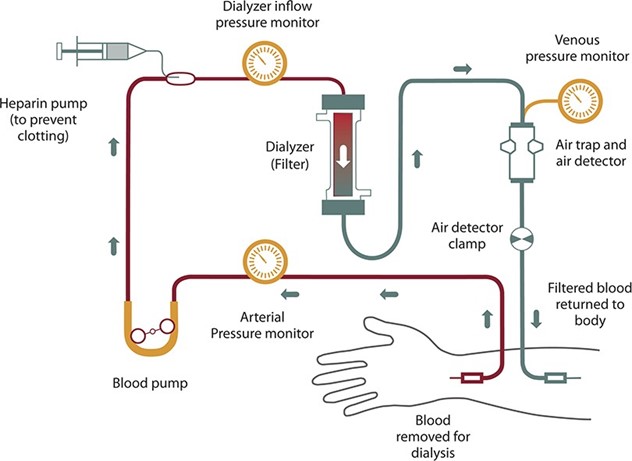
A nurse is reviewing the laboratory data of a client following a hemodialysis treatment. The nurse should expect to find a decrease in which of the following laboratory values?
A. Calcium
Thisis incorrect because calcium levels are not directly affected by hemodialysis. Calcium is a mineral that is important for bone health, blood clotting, and muscle contraction. Hemodialysis does not remove calcium from the blood, but it may cause low calcium levels if the dialysate fluid has a lower concentration of calcium than the blood.
B. Potassium
This is correct because potassium levels are decreased by hemodialysis. Potassium is an electrolyte that is essential for nerve and muscle function, especially the heart. Hemodialysis removes excess potassium from the blood, which can build up in people with kidney failure and cause irregular heartbeats, muscle weakness, or even cardiac arrest.
C. Protein
This is incorrect because protein levels are not decreased by hemodialysis. Protein is a macromolecule that is composed of amino acids and performs various functions in the body, such as building and repairing tissues, transporting substances, and regulating processes. Hemodialysis does not remove protein from the blood, but it may cause low protein levels if the client has a poor diet or loses protein through other means, such as urine or wounds.
D. RBC count
This is incorrect because RBC count is not decreased by hemodialysis. RBCs are red blood cells that carry oxygen throughout the body. Hemodialysis does not remove RBCs from the blood, but it may cause low RBC count if the client has anemia, which is a common complication of kidney failure. Anemia can be caused by reduced production of erythropoietin (a hormone that stimulates RBC production), iron deficiency, or blood loss.
This question is an excerpt from Nurse Dive's nursing test bank - ATI Med Surg 2 Proctored Exam. Take the full exam now
Full Explanation
Choice a) is incorrect because calcium levels are not directly affected by hemodialysis. Calcium is a mineral that is important for bone health, blood clotting, and muscle contraction. Hemodialysis does not remove calcium from the blood, but it may cause low calcium levels if the dialysate fluid has a lower concentration of calcium than the blood.
Choice b) is correct because potassium levels are decreased by hemodialysis. Potassium is an electrolyte that is essential for nerve and muscle function, especially the heart. Hemodialysis removes excess potassium from the blood, which can build up in people with kidney failure and cause irregular heartbeats, muscle weakness, or even cardiac arrest.
Choice c) is incorrect because protein levels are not decreased by hemodialysis. Protein is a macromolecule that is composed of amino acids and performs various functions in the body, such as building and repairing tissues, transporting substances, and regulating processes. Hemodialysis does not remove protein from the blood, but it may cause low protein levels if the client has a poor diet or loses protein through other means, such as urine or wounds.
Choice d) is incorrect because RBC count is not decreased by hemodialysis. RBCs are red blood cells that carry oxygen throughout the body. Hemodialysis does not remove RBCs from the blood, but it may cause low RBC count if the client has anemia, which is a common complication of kidney failure. Anemia can be caused by reduced production of erythropoietin (a hormone that stimulates RBC production), iron deficiency, or blood loss.
Similar Questions
A community health nurse is providing a community education program about disaster preparedness. Which of the following should the nurse recommend that clients include in their family’s disaster readiness supply kit or “go bag”? (Select all that apply.)
A. Copies of insurance cards
Choice a) is correct because copies of insurance cards can help clients access medical care and claim compensation in case of a disaster. Insurance cards can also serve as a form of identification if other documents are lost or damaged.
B. Whistle
Choice b) is correct because a whistle can help clients signal for help or locate each other in case of an emergency. A whistle can also deter potential attackers or wild animals.
C. Antibiotics
Choice c) is incorrect because antibiotics are not recommended to be included in a disaster readiness supply kit or “go bag”. Antibiotics are prescription drugs that should only be used under the guidance of a healthcare provider. Using antibiotics without proper indication, dosage, or duration can cause adverse effects, such as allergic reactions, resistance, or superinfection.
D. Household bleach
Choice d) is correct because household bleach can be used to disinfect water, surfaces, or wounds in case of a disaster. Household bleach can also be used to create chlorine gas, which can be used as a weapon or a deterrent. Choice e) is correct because pencil and paper can be used to write down important information, such as contact numbers, medical history, or evacuation plans. Pencil and paper can also be used to communicate with others, especially if there is no access to phone or internet services.
E. Pencil and paper
Choice e) is correct because pencil and paper can be used to write down important information, such as contact numbers, medical history, or evacuation plans. Pencil and paper can also be used to communicate with others, especially if there is no access to phone or internet services.
Full Explanation
Choice a) is correct because copies of insurance cards can help clients access medical care and claim compensation in case of a disaster. Insurance cards can also serve as a form of identification if other documents are lost or damaged.
Choice b) is correct because a whistle can help clients signal for help or locate each other in case of an emergency. A whistle can also deter potential atackers or wild animals.
Choice c) is incorrect because antibiotics are not recommended to be included in a disaster readiness supply kit or “go bag”. Antibiotics are prescription drugs that should only be used under the guidance of a health care provider. Using antibiotics without proper indication, dosage, or duration can cause adverse effects, such as allergic reactions, resistance, or superinfection.
Choice d) is correct because household bleach can be used to disinfect water, surfaces, or wounds in case of a disaster. Household bleach can also be used to create chlorine gas, which can be used as a weapon or a deterrent.
Choice e) is correct because pencil and paper can be used to write down important information, such as contact numbers, medical history, or evacuation plans. Pencil and paper can also be used to communicate with others, especially if there is no access to phone or internet services.
A nurse is reviewing the laboratory data of a client following a hemodialysis treatment. The nurse should expect to find a decrease in which of the following laboratory values?
A. Calcium
Thisis incorrect because calcium levels are not directly affected by hemodialysis. Calcium is a mineral that is important for bone health, blood clotting, and muscle contraction. Hemodialysis does not remove calcium from the blood, but it may cause low calcium levels if the dialysate fluid has a lower concentration of calcium than the blood.
B. Potassium
This is correct because potassium levels are decreased by hemodialysis. Potassium is an electrolyte that is essential for nerve and muscle function, especially the heart. Hemodialysis removes excess potassium from the blood, which can build up in people with kidney failure and cause irregular heartbeats, muscle weakness, or even cardiac arrest.
C. Protein
This is incorrect because protein levels are not decreased by hemodialysis. Protein is a macromolecule that is composed of amino acids and performs various functions in the body, such as building and repairing tissues, transporting substances, and regulating processes. Hemodialysis does not remove protein from the blood, but it may cause low protein levels if the client has a poor diet or loses protein through other means, such as urine or wounds.
D. RBC count
This is incorrect because RBC count is not decreased by hemodialysis. RBCs are red blood cells that carry oxygen throughout the body. Hemodialysis does not remove RBCs from the blood, but it may cause low RBC count if the client has anemia, which is a common complication of kidney failure. Anemia can be caused by reduced production of erythropoietin (a hormone that stimulates RBC production), iron deficiency, or blood loss.
Full Explanation
Choice a) is incorrect because calcium levels are not directly affected by hemodialysis. Calcium is a mineral that is important for bone health, blood clotting, and muscle contraction. Hemodialysis does not remove calcium from the blood, but it may cause low calcium levels if the dialysate fluid has a lower concentration of calcium than the blood.
Choice b) is correct because potassium levels are decreased by hemodialysis. Potassium is an electrolyte that is essential for nerve and muscle function, especially the heart. Hemodialysis removes excess potassium from the blood, which can build up in people with kidney failure and cause irregular heartbeats, muscle weakness, or even cardiac arrest.
Choice c) is incorrect because protein levels are not decreased by hemodialysis. Protein is a macromolecule that is composed of amino acids and performs various functions in the body, such as building and repairing tissues, transporting substances, and regulating processes. Hemodialysis does not remove protein from the blood, but it may cause low protein levels if the client has a poor diet or loses protein through other means, such as urine or wounds.
Choice d) is incorrect because RBC count is not decreased by hemodialysis. RBCs are red blood cells that carry oxygen throughout the body. Hemodialysis does not remove RBCs from the blood, but it may cause low RBC count if the client has anemia, which is a common complication of kidney failure. Anemia can be caused by reduced production of erythropoietin (a hormone that stimulates RBC production), iron deficiency, or blood loss.
A nurse is caring for a client who suspects recent exposure to inhalation anthrax. Which of the following findings indicate possible exposure?
A. Vesicles on the skin
Vesicles on the skin are not typical of inhalation anthrax; instead, they are more associated with cutaneous anthrax, which presents as papules that progress to vesicles and then black eschars.
B. Respiratory failure
Respiratory failure can occur later in the course of inhalation anthrax, but it is not an early finding. It usually develops after the initial phase of nonspecific symptoms when the illness progresses to severe respiratory distress and shock.
C. Sloughing of skin
Sloughing of skin is not characteristic of inhalation anthrax. Similar to vesicles, skin sloughing may be associated with severe cutaneous infections or other dermatologic conditions, not the respiratory form of anthrax.
D. Flu-like symptoms
Flu-like symptoms, such as fever, cough, malaise, muscle aches, and mild chest discomfort, are the initial and most indicative early findings of inhalation anthrax. These nonspecific symptoms often appear within several days after exposure before progressing to severe respiratory compromise.
E. None
None
F. None
None
Full Explanation
Choice A reason: Vesicles on the skin are not typical of inhalation anthrax; instead, they are more associated with cutaneous anthrax, which presents as papules that progress to vesicles and then black eschars.
Choice B reason: Respiratory failure can occur later in the course of inhalation anthrax, but it is not an early finding. It usually develops after the initial phase of nonspecific symptoms when the illness progresses to severe respiratory distress and shock.
Choice C reason: Sloughing of skin is not characteristic of inhalation anthrax. Similar to vesicles, skin sloughing may be associated with severe cutaneous infections or other dermatologic conditions, not the respiratory form of anthrax.
Choice D reason: Flu-like symptoms, such as fever, cough, malaise, muscle aches, and mild chest discomfort, are the initial and most indicative early findings of inhalation anthrax. These nonspecific symptoms often appear within several days after exposure before progressing to severe respiratory compromise.