
Nursing practice questions with comprehensive rationales
NurseDive Free Nursing Practice Question
A nurse is reviewing the laboratory test results from a client who has prerenal acute kidney injury (AKI). Which of the following electrolyte imbalances should the nurse expect?
A. Hyperkalemia
In prerenal AKI, the kidneys are not receiving enough blood flow. As a result, they cannot filter potassium out of the blood efficiently, leading to hyperkalemia, which is an elevated level of potassium in the blood. This condition is dangerous because it can cause cardiac dysrhythmias and muscle weakness.
B. Hypernatremia
Hypernatremia, an elevated sodium level, is not typically associated with prerenal AKI. It is more commonly related to dehydration or an excessive intake of sodium, which are not direct consequences of prerenal AKI.
C. Hypercalcemia
Hypercalcemia, an elevated calcium level, is also not a common finding in prerenal AKI. It is usually associated with other conditions such as hyperparathyroidism or malignancy.
D. Hypophosphatemia
Hypophosphatemia, a low level of phosphate in the blood, is not a typical result of prerenal AKI. It can occur due to malnutrition or malabsorption, but it is not directly caused by prerenal AKI.
This question is an excerpt from Nurse Dive's nursing test bank - Ati Med Surg Proctored Exam Midterm Rn 36 1125. Take the full exam now
Full Explanation
Choice A rationale
In prerenal AKI, the kidneys are not receiving enough blood flow. As a result, they cannot filter potassium out of the blood efficiently, leading to hyperkalemia, which is an elevated level of potassium in the blood. This condition is dangerous because it can cause cardiac dysrhythmias and muscle weakness.
Choice B rationale
Hypernatremia, an elevated sodium level, is not typically associated with prerenal AKI. It is more commonly related to dehydration or an excessive intake of sodium, which are not direct consequences of prerenal AKI.
Choice C rationale
Hypercalcemia, an elevated calcium level, is also not a common finding in prerenal AKI. It is usually associated with other conditions such as hyperparathyroidism or malignancy.
Choice D rationale
Hypophosphatemia, a low level of phosphate in the blood, is not a typical result of prerenal AKI. It can occur due to malnutrition or malabsorption, but it is not directly caused by prerenal AKI.
Similar Questions
A nurse is gathering medical history from a client admitted for pyelonephritis. Which of the following should the nurse expect the client to report when asked about their medical history?
A. The client states that they consume a high calcium diet and have had high calcium in their blood.
A high calcium diet and hypercalcemia are not directly associated with pyelonephritis. While dietary habits and blood calcium levels can impact overall health, they do not typically contribute to the development of pyelonephritis.
B. The client reports that they took a lot of ibuprofen for arthritis for many years.
Long-term use of ibuprofen can lead to kidney damage, which may increase the risk of pyelonephritis, especially if there is pre-existing kidney impairment. However, it is not as directly related to pyelonephritis as a history of UTIs.
C. The client reports that they had two urinary tract infections (UTIs) in the past 10 months.
A history of UTIs is relevant to pyelonephritis, as the infection can ascend from the lower urinary tract to the kidneys. Recurrent UTIs are a risk factor for pyelonephritis, making this the most likely report from the client.
D. The client states that they remember their mother saying their grandmother had this same genetic disease.
Genetic diseases can have various impacts on health, but there is no common genetic disease that directly causes pyelonephritis. This choice is less likely to be relevant to the client's current condition.
Full Explanation
Choice A rationale
A high calcium diet and hypercalcemia are not directly associated with pyelonephritis. While dietary habits and blood calcium levels can impact overall health, they do not typically contribute to the development of pyelonephritis.
Choice B rationale
Long-term use of ibuprofen can lead to kidney damage, which may increase the risk of pyelonephritis, especially if there is pre-existing kidney impairment. However, it is not as directly related to pyelonephritis as a history of UTIs.
Choice C rationale
A history of UTIs is relevant to pyelonephritis, as the infection can ascend from the lower urinary tract to the kidneys. Recurrent UTIs are a risk factor for pyelonephritis, making this the most likely report from the client.
Choice D rationale
Genetic diseases can have various impacts on health, but there is no common genetic disease that directly causes pyelonephritis. This choice is less likely to be relevant to the client's current condition.
A nurse is caring for a client who has an acute kidney injury caused by acute tubular necrosis. The client asks why their glomerular filtration rate (GFR) keeps decreasing. Which of the following pathophysiological changes occurring in the kidney should the nurse explain as the cause of the decrease?
A. Inflammatory cells invade the already damaged kidneys.
While inflammation can affect the kidneys, the presence of inflammatory cells alone does not typically cause a decrease in GFR. Inflammatory cells invading the kidneys is more associated with conditions like glomerulonephritis rather than acute tubular necrosis.
B. There is a reduction of blood flow to the kidneys.
A reduction in blood flow to the kidneys, known as prerenal azotemia, can indeed lead to a decreased GFR. However, in the context of acute tubular necrosis, the primary issue is damage to the renal tubules rather than blood flow.
C. There is injury to the renal tubular cells.
Acute tubular necrosis is characterized by damage to the renal tubular cells, which can lead to a decrease in GFR. This damage impairs the kidney's ability to filter waste products from the blood, resulting in a lower GFR.
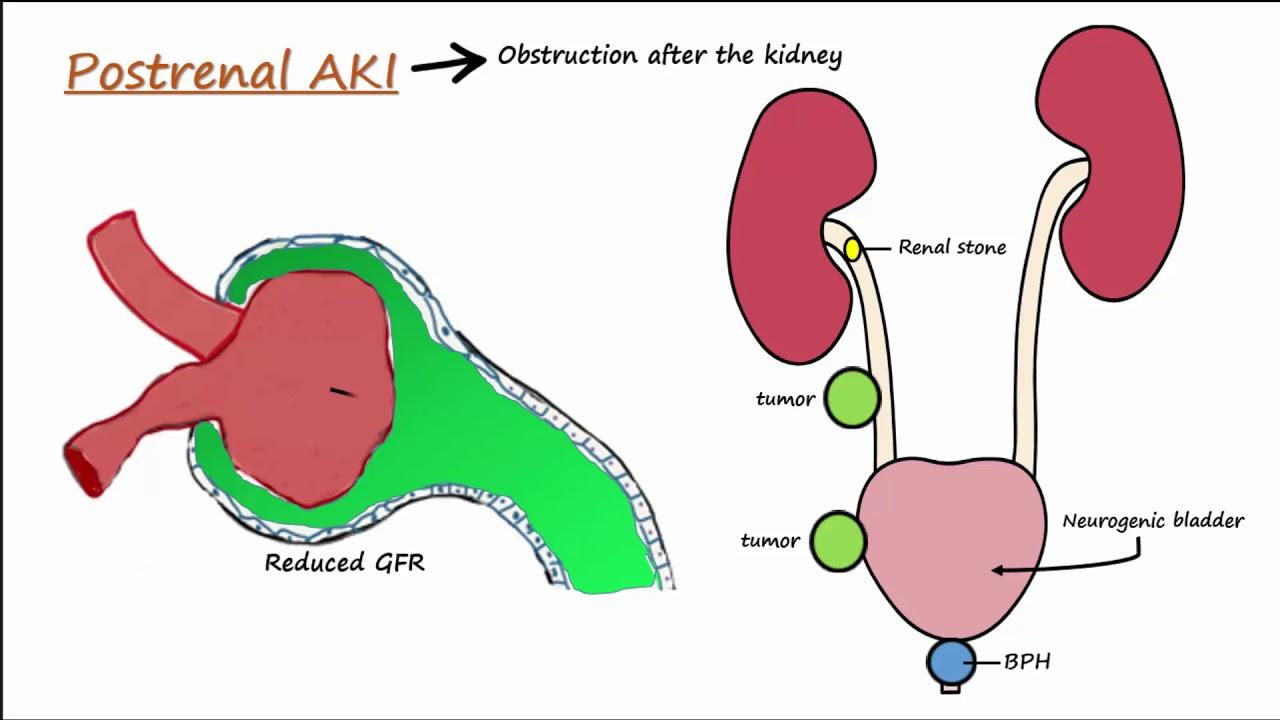
D. There is obstruction leading to the filtration system backing up and eventually shutting the kidneys down.
Obstruction of the urinary tract can lead to postrenal azotemia, which may decrease GFR if severe enough. However, this is not the typical pathophysiological change seen in acute tubular necrosis, which primarily involves tubular cell injury.
Full Explanation
Choice A rationale
While inflammation can affect the kidneys, the presence of inflammatory cells alone does not typically cause a decrease in GFR. Inflammatory cells invading the kidneys is more associated with conditions like glomerulonephritis rather than acute tubular necrosis.
Choice B rationale
A reduction in blood flow to the kidneys, known as prerenal azotemia, can indeed lead to a decreased GFR. However, in the context of acute tubular necrosis, the primary issue is damage to the renal tubules rather than blood flow.
Choice C rationale
Acute tubular necrosis is characterized by damage to the renal tubular cells, which can lead to a decrease in GFR. This damage impairs the kidney's ability to filter waste products from the blood, resulting in a lower GFR.
Choice D rationale
Obstruction of the urinary tract can lead to postrenal azotemia, which may decrease GFR if severe enough. However, this is not the typical pathophysiological change seen in acute tubular necrosis, which primarily involves tubular cell injury.
A female patient with a suspected urinary tract infection is to provide a clean-catch midstream urine specimen for culture and sensitivity testing. What should the nurse do to obtain the specimen?
A. Tell the patient to clean the urethral area, void a small amount into the toilet, then void directly into a sterile container.
This method is the standard procedure for obtaining a clean-catch midstream urine specimen. The initial voiding washes away organisms near the meatus, and the midstream urine is less likely to be contaminated by bacteria from the skin or urethral area, providing a sample that more accurately represents the bacteria in the bladder.
B. Have the patient empty the bladder completely; then obtain the next urine specimen that the patient is able to void.
Having the patient empty the bladder completely and then obtaining the next specimen does not ensure a clean-catch sample. This method could lead to contamination of the specimen with bacteria from the skin or urethral area.
C. Clean the area around the patient's meatus with a povidone-iodine (Betadine) swab and then have the patient void into a sterile specimen cup.
Cleaning the area with povidone-iodine is not recommended for routine urine culture as it may kill some of the bacteria, leading to a false-negative result. The standard practice is to clean the area with mild soap and water.
D. Insert a short sterile "mini" catheter attached to a collecting container into the urethra and bladder to obtain the specimen.
Inserting a catheter is an invasive procedure and is not the first choice for obtaining a urine specimen. It is used when a patient is unable to provide a clean-catch specimen or if there are specific medical indications.
Full Explanation
Choice A rationale
This method is the standard procedure for obtaining a clean-catch midstream urine specimen. The initial voiding washes away organisms near the meatus, and the midstream urine is less likely to be contaminated by bacteria from the skin or urethral area, providing a sample that more accurately represents the bacteria in the bladder.
Choice B rationale
Having the patient empty the bladder completely and then obtaining the next specimen does not ensure a clean-catch sample. This method could lead to contamination of the specimen with bacteria from the skin or urethral area.
Choice C rationale
Cleaning the area with povidone-iodine is not recommended for routine urine culture as it may kill some of the bacteria, leading to a false-negative result. The standard practice is to clean the area with mild soap and water.
Choice D rationale
Inserting a catheter is an invasive procedure and is not the first choice for obtaining a urine specimen. It is used when a patient is unable to provide a clean-catch specimen or if there are specific medical indications.