
Nursing practice questions with comprehensive rationales
NurseDive Free Nursing Practice Question
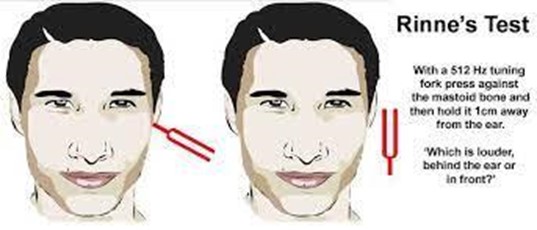
A nurse is teaching a client about the Rinne test. Which of the following client statements indicates an understanding of the teaching?
A. "I will wear earphones during this test."
Reason: This is incorrect because earphones are not used in the Rinne test. The Rinne test compares air conduction and bone conduction of sound using a tuning fork.
B. "Small electrodes are placed on my scalp."
Reason: This is incorrect because electrodes are not used in the Rinne test. Electrodes are used in electroencephalography (EEG), which measures brain activity.
C. "A small probe is placed inside my ear."
Reason: This is incorrect because a probe is not used in the Rinne test. A probe is used in tympanometry, which measures the pressure and mobility of the eardrum.
D. "A tuning fork is placed on my head."
Reason: This is correct because a tuning fork is used in the Rinne test. The tuning fork is placed on the mastoid process behind the ear and then moved near the ear canal to compare the sound perception.
This question is an excerpt from Nurse Dive's nursing test bank - ATI Med Surg Proctored Exam 4. Take the full exam now
Full Explanation
Choice A Reason: This is incorrect because earphones are not used in the Rinne test. The Rinne test compares air conduction and bone conduction of sound using a tuning fork.
Choice B Reason: This is incorrect because electrodes are not used in the Rinne test. Electrodes are used in electroencephalography (EEG), which measures brain activity.
Choice C Reason: This is incorrect because a probe is not used in the Rinne test. A probe is used in tympanometry, which measures the pressure and mobility of the eardrum.
Choice D Reason: This is correct because a tuning fork is used in the Rinne test. The tuning fork is placed on the mastoid process behind the ear and then moved near the ear canal to compare the sound perception.
Similar Questions
It is night time and a client who suffers from dementia is agitated and is having difficulty staying in his bed. Which of the following actions should the nurse take first?
A. Turn off the lights and TV and close the door for privacy
Reason: This is incorrect because turning off the lights and TV and closing the door may increase the client's anxiety and confusion. The nurse should provide adequate lighting and familiar objects to help orient the client.
B. Use one wrist restraint to keep the client safe
Reason: This is incorrect because using restraints may increase the risk of injury, infection, and psychological distress for the client. The nurse should use restraints only as a last resort and with a physician's order.
C. Ask the physician for a sedative
Reason: This is incorrect because asking for a sedative may not address the underlying cause of the agitation. The nurse should use non-pharmacological interventions first, such as calming music, massage, or aromatherapy.
D. Identify if there is a cause for the agitation
Reason: This is correct because identifying the cause of the agitation may help resolve it. The nurse should assess for possible triggers, such as pain, hunger, thirst, infection, or environmental factors.
Full Explanation
Choice A Reason: This is incorrect because turning off the lights and TV and closing the door may increase the client's anxiety and confusion. The nurse should provide adequate lighting and familiar objects to help orient the client.
Choice B Reason: This is incorrect because using restraints may increase the risk of injury, infection, and psychological distress for the client. The nurse should use restraints only as a last resort and with a physician's order.
Choice C Reason: This is incorrect because asking for a sedative may not address the underlying cause of the agitation. The nurse should use non-pharmacological interventions first, such as calming music, massage, or aromatherapy.
Choice D Reason: This is correct because identifying the cause of the agitation may help resolve it. The nurse should assess for possible triggers, such as pain, hunger, thirst, infection, or environmental factors.
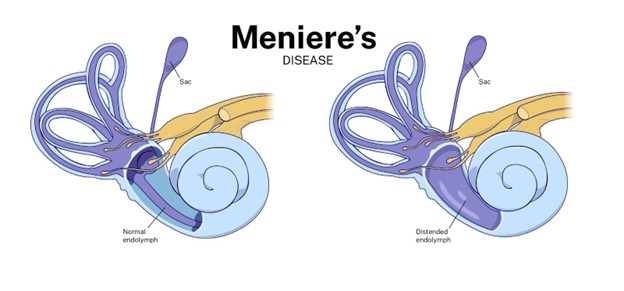
A client admitted with an acute exacerbation of Ménière's disease asks the student nurse why he was prescribed diphenhydramine. Which response by the student nurse requires correction by the primary nurse?
A. "Ménière's disease is caused by an allergic response."
Reason: This is incorrect because Ménière's disease is not caused by an allergic response. Ménière's disease is a disorder of the inner ear that causes vertigo, tinnitus, hearing loss, and a feeling of fullness in the ear. The exact cause of Ménière's disease is unknown, but it may be related to fluid imbalance, infection, trauma, or autoimmune reaction.
B. "This medication can help offset the nauseous feeling."
Reason: This is correct because diphenhydramine can help offset the nauseous feeling. Diphenhydramine is an antihistamine that blocks histamine receptors in the brain and inner ear, which can reduce nausea and vomiting associated with vertigo.
C. "Anticholinergics will help you rest."
Reason: This is correct because anticholinergics will help you rest. Anticholinergics are a class of drugs that block acetylcholine receptors in the brain and body, which can have sedative effects and reduce motion sickness. Diphenhydramine has anticholinergic properties.
D. "This medication can help reduce vomiting episodes."
Reason: This is correct because diphenhydramine can help reduce vomiting episodes. As mentioned above, diphenhydramine can reduce nausea and vomiting by blocking histamine receptors in the brain and inner ear.
Full Explanation
Choice A Reason: This is incorrect because Ménière's disease is not caused by an allergic response. Ménière's disease is a disorder of the inner ear that causes vertigo, tinnitus, hearing loss, and a feeling of fullness in the ear. The exact cause of Ménière's disease is unknown, but it may be related to fluid imbalance, infection, trauma, or autoimmune reaction.
Choice B Reason: This is correct because diphenhydramine can help offset the nauseous feeling. Diphenhydramine is an antihistamine that blocks histamine receptors in the brain and inner ear, which can reduce nausea and vomiting associated with vertigo.
Choice C Reason: This is correct because anticholinergics will help you rest. Anticholinergics are a class of drugs that block acetylcholine receptors in the brain and body, which can have sedative effects and reduce motion sickness. Diphenhydramine has anticholinergic properties.
Choice D Reason: This is correct because diphenhydramine can help reduce vomiting episodes. As mentioned above, diphenhydramine can reduce nausea and vomiting by blocking histamine receptors in the brain and inner ear.
A patient with a head injury opens his eyes to verbal stimulation, shouts out when stimulated, and does not respond to a verbal command to move but attempts to push away a painful stimulus. How would the nurse record the patient's Glasgow Coma Scale score?
A. 9
Reason: This is correct because the patient's Glasgow Coma Scale score is 9. The Glasgow Coma Scale is a tool that assesses the level of consciousness of a patient with a head injury by measuring three parameters: eye opening, verbal response, and motor response. The patient's eye opening score is 3 (opens eyes to verbal command), verbal response score is 4 (confused speech), and motor response score is 2 (withdraws from pain). The total score is the sum of these three scores, which is 9.
B. 11
Reason: This is incorrect because the patient's Glasgow Coma Scale score is not 11. To get a score of 11, the patient would need to have a higher motor response score, such as 4 (withdraws to touch) or 5 (localizes to pain).
C. 15
Reason: This is incorrect because the patient's Glasgow Coma Scale score is not 15. To get a score of 15, the patient would need to have the highest scores for all three parameters, such as 4 (opens eyes spontaneously), 5 (oriented speech), and 6 (obeys commands).
D. 13
Reason: This is incorrect because the patient's Glasgow Coma Scale score is not 13. To get a score of 13, the patient would need to have a higher verbal response score, such as 5 (oriented speech).
Full Explanation
Choice A Reason: This is correct because the patient's Glasgow Coma Scale score is 9. The Glasgow Coma Scale is a tool that assesses the level of consciousness of a patient with a head injury by measuring three parameters: eye opening, verbal response, and motor response. The patient's eye opening score is 3 (opens eyes to verbal command), verbal response score is 4 (confused speech), and motor response score is 2 (withdraws from pain). The total score is the sum of these three scores, which is 9.
Choice B Reason: This is incorrect because the patient's Glasgow Coma Scale score is not 11. To get a score of 11, the patient would need to have a higher motor response score, such as 4 (withdraws to touch) or 5 (localizes to pain).
Choice C Reason: This is incorrect because the patient's Glasgow Coma Scale score is not 15. To get a score of 15, the patient would need to have the highest scores for all three parameters, such as 4 (opens eyes spontaneously), 5 (oriented speech), and 6 (obeys commands).
Choice D Reason: This is incorrect because the patient's Glasgow Coma Scale score is not 13. To get a score of 13, the patient would need to have a higher verbal response score, such as 5 (oriented speech).