
Nursing practice questions with comprehensive rationales
NurseDive Free Nursing Practice Question
A nurse is teaching a client who is postpartum and has a new prescription for an injection of Rh (D) immunoglobulin. Which of the following should be included in the teaching?
A. "It prevents the formation of Rh antibodies in mothers who are Rh negative."
Rh (D) immunoglobulin, commonly known as Rhogam, is given to Rh-negative mothers to prevent the formation of Rh antibodies if the baby is Rh positive. This prevents Rh sensitization in future pregnancies, which could lead to hemolytic disease of the newborn.
B. "It destroys Rh antibodies in mothers who are Rh negative."
Rh (D) immunoglobulin does not destroy Rh antibodies in Rh-negative mothers but rather prevents their formation.
C. "It prevents the formation of Rh antibodies in newborns who are Rh positive."
Rh (D) immunoglobulin does not prevent the formation of Rh antibodies in Rh-positive newborns but rather prevents the mother's immune system from producing antibodies against Rh-positive blood cells.
D. "It destroys Rh antibodies in newborns who are Rh positive."
Rh (D) immunoglobulin does not destroy Rh antibodies in Rh-positive newborns. It is administered to Rh-negative mothers to prevent antibody formation.
This question is an excerpt from Nurse Dive's nursing test bank - Ati N230 Exam 3 With Ngn Maternal Newborn Proctored Exam. Take the full exam now
Full Explanation
A. Rh (D) immunoglobulin, commonly known as Rhogam, is given to Rh-negative mothers to prevent the formation of Rh antibodies if the baby is Rh positive. This prevents Rh sensitization in future pregnancies, which could lead to hemolytic disease of the newborn.
B. Rh (D) immunoglobulin does not destroy Rh antibodies in Rh-negative mothers but rather prevents their formation.
C. Rh (D) immunoglobulin does not prevent the formation of Rh antibodies in Rh-positive
newborns but rather prevents the mother's immune system from producing antibodies against Rh-positive blood cells.
D. Rh (D) immunoglobulin does not destroy Rh antibodies in Rh-positive newborns. It is administered to Rh-negative mothers to prevent antibody formation.
Similar Questions
A nurse is caring for a postpartum client.
Which of the following statements by the client indicates an understanding of the discharge teaching?
A. "Because of my baby's weight loss, I need to supplement with formula after breastfeeding."
Supplementing with formula after breastfeeding due to perceived weight loss may indicate a misunderstanding of normal newborn feeding patterns and could potentially interfere with establishing a sufficient milk supply. Breastfeeding on demand and ensuring proper latch andpositioning are essential for successful breastfeeding. This statement suggests a need for further education about newborn feeding and breastfeeding management.
B. "I should make sure that my baby feeds 8 to 12 times per day."
Breastfeeding frequency is crucial for establishing and maintaining milk supply. Newborns typically need to breastfeed at least 8 to 12 times per day to ensure they receive enough milk and to stimulate milk production in the mother's breasts. This statement indicates that the clientunderstands the importance of frequent feeding for successful breastfeeding.
C. "I should cover my sore nipples with plastic-lined breast pads after every feeding."
While covering sore nipples with breast pads can provide comfort and protect clothing from leakage, using plastic-lined breast pads after every feeding may not be necessary and couldpotentially worsen nipple discomfort. Plastic-lined breast pads can trap moisture, which maycontribute to nipple soreness or increase the risk of developing nipple thrush. Education may be needed to clarify appropriate nipple care and management of nipple discomfort duringbreastfeeding.
D. "My baby's stools should turn to a yellow color within the next day or two." "I can increase my milk supply by drinking more water."
Meconium stools, which are dark and sticky, are normal for newborns in the first few days of life. As the baby begins to digest breast milk, their stools transition from meconium to a yellow, seedy consistency. This statement indicates that the client understands what to expect regarding the color and consistency of their baby's stools after transitioning to breastfeeding.
E. "I should expect my breasts to become harder. warmer, and more tender when my milk comes in."
This statement demonstrates an understanding of breast engorgement, a common occurrence when milk production increases in the breasts. Breasts may become harder, warmer, and more tender when milk "comes in" or when lactation is established. Recognizing these signs indicates that the client is aware of normal changes in their body related to breastfeeding.
Full Explanation
A. Supplementing with formula after breastfeeding due to perceived weight loss may indicate a misunderstanding of normal newborn feeding patterns and could potentially interfere with establishing a sufficient milk supply. Breastfeeding on demand and ensuring proper latch and
positioning are essential for successful breastfeeding. This statement suggests a need for further education about newborn feeding and breastfeeding management.
B. Breastfeeding frequency is crucial for establishing and maintaining milk supply. Newborns typically need to breastfeed at least 8 to 12 times per day to ensure they receive enough milk and to stimulate milk production in the mother's breasts. This statement indicates that the client
understands the importance of frequent feeding for successful breastfeeding.
C. While covering sore nipples with breast pads can provide comfort and protect clothing from leakage, using plastic-lined breast pads after every feeding may not be necessary and could
potentially worsen nipple discomfort. Plastic-lined breast pads can trap moisture, which may
contribute to nipple soreness or increase the risk of developing nipple thrush. Education may be needed to clarify appropriate nipple care and management of nipple discomfort during
breastfeeding.
D. Meconium stools, which are dark and sticky, are normal for newborns in the first few days of life. As the baby begins to digest breast milk, their stools transition from meconium to a yellow, seedy consistency. This statement indicates that the client understands what to expect regarding the color and consistency of their baby's stools after transitioning to breastfeeding.
E. This statement demonstrates an understanding of breast engorgement, a common occurrence when milk production increases in the breasts. Breasts may become harder, warmer, and more
tender when milk "comes in" or when lactation is established. Recognizing these signs indicates that the client is aware of normal changes in their body related to breastfeeding.
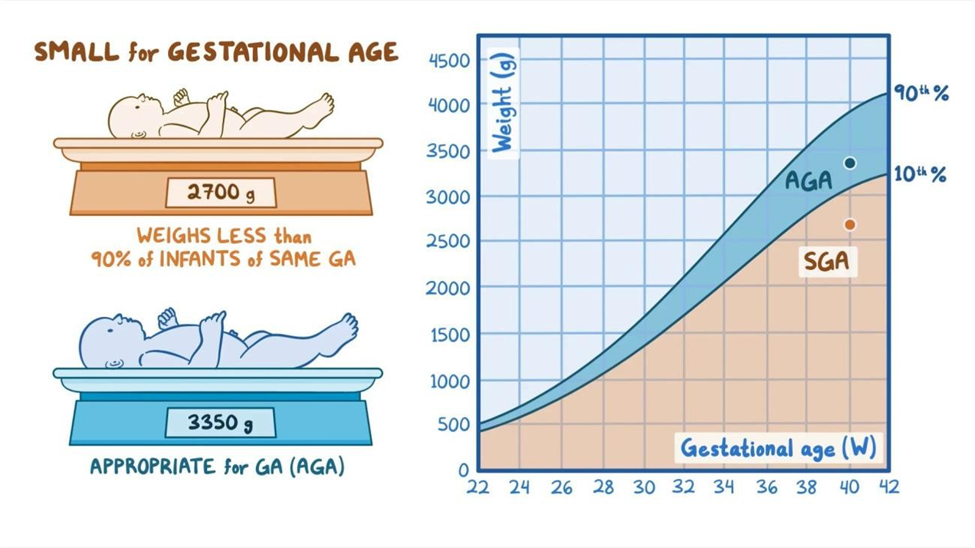
A nurse is planning care for a newborn who is small for gestational age (SGA). Which of the following is the priority intervention the nurse should include in the newborn's plan of care?
A. Monitor weight.
Monitoring weight is important for assessing growth but may not be the priority for anewborn who is small for gestational age (SGA) as it doesn't address immediate physiological needs.
B. Monitor axillary temperature.
Monitoring axillary temperature is important for detecting signs of infection or hypothermia, but it's not the priority for a newborn who is small for gestational age (SGA).
C. Monitor blood glucose levels.
Monitoring blood glucose levels is the priority for a newborn who is small for gestational age (SGA) because they are at risk for hypoglycemia due to inadequate glycogen stores.
D. Monitor I & 0.
Monitoring intake and output is important for overall assessment but is not the priority intervention for a newborn who is small for gestational age (SGA).
Full Explanation
A. Monitoring weight is important for assessing growth but may not be the priority for a
newborn who is small for gestational age (SGA) as it doesn't address immediate physiological needs.
B. Monitoring axillary temperature is important for detecting signs of infection or hypothermia, but it's not the priority for a newborn who is small for gestational age (SGA).
C. Monitoring blood glucose levels is the priority for a newborn who is small for gestational age (SGA) because they are at risk for hypoglycemia due to inadequate glycogen stores.
D. Monitoring intake and output is important for overall assessment but is not the priority intervention for a newborn who is small for gestational age (SGA).
A nurse in the newborn nursery is caring for a group of newborns. Which of the following newborns requires immediate intervention?
A. A newborn who is 24-hr post-delivery and has not passed meconium
Not passing meconium within 24 hours may indicate meconium ileus or another bowel obstruction, but it's not an immediate concern.
B. A newborn who is 12 hr post-delivery and has a temperature of 37.5° C (99.5° F)
A temperature of 37.5°C (99.5°F) is within the normal range for a newborn and does not require immediate intervention.
C. A newborn who is 18 hr post-delivery and has acrocyanosis
Acrocyanosis, blueness of the extremities, is a common finding in newborns and does not require immediate intervention.
D. A newborn who is 24 hr post-delivery and has not voided
A newborn who is 24 hours post-delivery and has not voided requires immediate intervention as it may indicate a urinary tract obstruction or another issue that needs prompt assessment and management.
Full Explanation
A. Not passing meconium within 24 hours may indicate meconium ileus or another bowel obstruction, but it's not an immediate concern.
B. A temperature of 37.5°C (99.5°F) is within the normal range for a newborn and does not require immediate intervention.
C. Acrocyanosis, blueness of the extremities, is a common finding in newborns and does not require immediate intervention.
D. A newborn who is 24 hours post-delivery and has not voided requires immediate intervention as it may indicate a urinary tract obstruction or another issue that needs prompt assessment and management.