Nursing practice questions with comprehensive rationales
NurseDive Free Nursing Practice Question
A nurse is teaching a client who reports wanting to lose weight about behavioral modifications. Which of the following statements should the nurse include in the teaching?
A. "Make sure to drink water with your meals."
According to some sources, behavioral modifications for weight loss include: Keeping a food journal to track your intake and identify patterns Eating smaller portions and using smaller plates Filling half of your plate with fruits and vegetables Getting plenty of sleep and drinking fluids Eating slowly and consciously Eating breakfast every day Avoiding high-calorie add-ons such as cream, butter, mayonnaise and salad dressings Not eating while watching television, reading, working or doing other activities Planning healthy snacks and meals in advance and bringing them to work Replacing eating with another activity that you will not associate with food Based on these suggestions, the statement that the nurse should include in the teaching is “Make sure to drink water with your meals.” This can help you feel full and hydrated, and reduce your calorie intake from other beverages.
B. "Your biggest meal of the day should be breakfast."
Your biggest meal of the day should be breakfast. This is not a behavioral modification, but a dietary recommendation that may vary depending on your preferences and needs.
C. "Meal replacement shakes can cause weight gain."
Meal replacement shakes can cause weight gain. This is not a behavioral modification, but a claim that is not supported by evidence. Meal replacement shakes can be part of a weight loss plan if they are used appropriately and provide adequate nutrition.
D. "Set your weight loss goal to 2.5 pounds per week."
Set your weight loss goal to 2.5 pounds per week. This is not a behavioral modification, but a goal that may be unrealistic or unhealthy for some people. A more reasonable goal is to lose 1 to 2 pounds per week.
This question is an excerpt from Nurse Dive's nursing test bank - ATI RN Nutrition 2019 Proctored Exam. Take the full exam now
Full Explanation
According to some sources, behavioral modifications for weight loss include:
● Keeping a food journal to track your intake and identify patterns
● Eating smaller portions and using smaller plates
● Filling half of your plate with fruits and vegetables
● Getting plenty of sleep and drinking fluids
● Eating slowly and consciously
● Eating breakfast every day
● Avoiding high-calorie add-ons such as cream, butter, mayonnaise and salad dressings
● Not eating while watching television, reading, working or doing other activities
● Planning healthy snacks and meals in advance and bringing them to work
● Replacing eating with another activity that you will not associate with food
Based on these suggestions, the statement that the nurse should include in the teaching is “Make sure to drink water with your meals.” This can help you feel full and hydrated, and reduce your calorie intake from other beverages.
The other statements are either false or not related to behavioral modifications. For example:
● Your biggest meal of the day should be breakfast. This is not a behavioral modification, but a dietary recommendation that may vary depending on your preferences and needs.
● Meal replacement shakes can cause weight gain. This is not a behavioral modification, but a claim that is not supported by evidence. Meal replacement shakes can be part of a weight loss plan if they are used appropriately and provide adequate nutrition.
● Set your weight loss goal to 2.5 pounds per week. This is not a behavioral modification, but a goal that may be unrealistic or unhealthy for some people. A more reasonable goal is to lose 1 to 2 pounds per week.
Similar Questions
A nurse in a long-term care facility is implementing a nutrition plan for a client who is at risk for malnutrition. Which of the following actions should the nurse include in the plan? (Select all that apply.)
A. Assess for pain prior to mealtime.
Assess for pain prior to mealtime: Pain can significantly impact a person's appetite and ability to eat. Assessing for pain before mealtime can help identify any discomfort that may hinder the client's ability to eat.
B. Discourage snacks between meals.
Discourage snacks between meals: For clients at risk for malnutrition, it may be necessary to encourage nutrient-dense snacks between meals to increase caloric intake. Discouraging snacks may further contribute to malnutrition.
C. Provide mouth care before feeding.
Provide mouth care before feeding: Proper oral hygiene is essential for maintaining a healthy appetite and preventing oral health issues that can affect eating. Providing mouth care before feeding helps ensure a clean and comfortable oral environment.
D. Remove the bedpan from the client's sight.
Remove the bedpan from the client's sight: Sight and smell can have a significant impact on a person's appetite. Removing the bedpan from the client's sight can help create a more pleasant dining environment and promote a better appetite.
E. Administer antiemetics following the meal.
Administer antiemetics following the meal: Administering antiemetics following a meal is not a routine action in a nutrition plan. Antiemetics are typically used to treat nausea and vomiting, which may interfere with a person's ability to eat, but their administration should be based on specific symptoms and prescribed by a healthcare provider.
Full Explanation
In a nutrition plan for a client at risk for malnutrition, the nurse should include the following actions:
Assess for pain prior to mealtime: Pain can significantly impact a person's appetite and ability to eat. Assessing for pain before mealtime can help identify any discomfort that may hinder the client's ability to eat.
Provide mouth care before feeding: Proper oral hygiene is essential for maintaining a healthy appetite and preventing oral health issues that can affect eating. Providing mouth care before feeding helps ensure a clean and comfortable oral environment.
Remove the bedpan from the client's sight: Sight and smell can have a significant impact on a person's appetite. Removing the bedpan from the client's sight can help create a more pleasant dining environment and promote a better appetite.
However, the following actions should not be included in the plan:
Discourage snacks between meals: For clients at risk for malnutrition, it may be necessary to encourage nutrient-dense snacks between meals to increase caloric intake. Discouraging snacks may further contribute to malnutrition.
Administer antiemetics following the meal: Administering antiemetics following a meal is not a routine action in a nutrition plan. Antiemetics are typically used to treat nausea and vomiting, which may interfere with a person's ability to eat, but their administration should be based on specific symptoms and prescribed by a healthcare provider.
A nurse is teaching about denture care to the partner of a client who is unable to perform oral hygiene. Which of the following should the nurse include in the teaching?
A. Wrap gloved fingers with gauze to remove dentures.
Wrap gloved fingers with gauze to remove dentures: This is not the recommended technique for removing dentures. Instead, it is recommended to use a denture brush or a soft-bristled toothbrush with a non-abrasive denture cleaner or mild soap to clean the dentures. The use of gauze may not provide adequate cleaning and may cause damage to the denture surface.
B. Wipe dentures before storing them in a dry container at night.
Wipe dentures before storing them in a dry container at night: This is a correct instruction. Before storing dentures overnight, it is important to remove debris and rinse them with water. Wiping the dentures helps to remove any remaining residue or particles and keeps them relatively clean until the next use. Storing dentures in a dry container helps prevent the growth of microorganisms and maintains the shape of the dentures.
C. Use a washcloth to clean the denture surfaces.
Use a washcloth to clean the denture surfaces: A washcloth is not the ideal tool for cleaning dentures. Instead, a denture brush or a soft-bristled toothbrush should be used. These tools are specifically designed to clean denture surfaces effectively without causing damage.
D. Floss dentures as part of daily cleaning.
Floss dentures as part of daily cleaning: Flossing is not necessary for denture cleaning since dentures do not have natural teeth or spaces between them. However, it is important to clean all surfaces of the dentures using a denture brush or a soft-bristled toothbrush to remove plaque, debris, and stains.
Full Explanation
Wipe dentures before storing them in a dry container at night: This is a correct instruction. Before storing dentures overnight, it is important to remove debris and rinse them with water. Wiping the dentures helps to remove any remaining residue or particles and keeps them relatively clean until the next use. Storing dentures in a dry container helps prevent the growth of microorganisms and maintains the shape of the dentures.
Wrap gloved fingers with gauze to remove dentures: This is not the recommended technique for removing dentures. Instead, it is recommended to use a denture brush or a soft-bristled toothbrush with a non-abrasive denture cleaner or mild soap to clean the dentures. The use of gauze may not provide adequate cleaning and may cause damage to the denture surface.
Use a washcloth to clean the denture surfaces: A washcloth is not the ideal tool for cleaning dentures. Instead, a denture brush or a soft-bristled toothbrush should be used. These tools are specifically designed to clean denture surfaces effectively without causing damage.
Floss dentures as part of daily cleaning: Flossing is not necessary for denture cleaning since dentures do not have natural teeth or spaces between them. However, it is important to clean all surfaces of the dentures using a denture brush or a soft-bristled toothbrush to remove plaque, debris, and stains.
A nurse is providing teaching to the parent of a newborn who has gastroesophageal reflux. Which of the following instructions should the nurse include?
A. "Provide a small feeding just before bedtime."
"Provide a small feeding just before bedtime": This instruction is not recommended for a newborn with gastroesophageal reflux. It is advisable to avoid feeding the baby just before bedtime as lying down can worsen the reflux symptoms. Instead, it is generally recommended to keep the baby upright for some time after feeding to allow for proper digestion and minimize reflux.
B. "Place the newborn in a side-lying position if vomiting."
"Place the newborn in a side-lying position if vomiting": Placing the newborn in a side-lying position after vomiting is not recommended. This position does not provide adequate support to prevent choking or aspiration in case of vomiting. Instead, it is recommended to keep the newborn in an upright or slightly elevated position after feeding to minimize reflux.
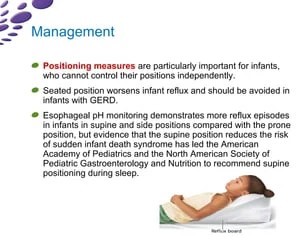
C. "Position the newborn at a 20-degree angle after feeding."
"Position the newborn at a 20-degree angle after feeding": This is the correct instruction. After feeding, it is beneficial to position the newborn at a slight angle, usually around 20 degrees, to help reduce gastroesophageal reflux. This position helps gravity keep the stomach contents down and prevents them from regurgitating back into the esophagus.
D. "Dilute formula with 1 tablespoon of water."
"Dilute formula with 1 tablespoon of water": Diluting formula with water is not a recommended practice unless specifically advised by a healthcare provider. It is important to follow the instructions on the formula packaging or the healthcare provider's guidance regarding formula preparation to ensure appropriate nutrition and hydration for the newborn.
Full Explanation
"Position the newborn at a 20-degree angle after feeding": This is the correct instruction. After feeding, it is beneficial to position the newborn at a slight angle, usually around 20 degrees, to help reduce gastroesophageal reflux. This position helps gravity keep the stomach contents down and prevents them from regurgitating back into the esophagus.
"Provide a small feeding just before bedtime": This instruction is not recommended for a newborn with gastroesophageal reflux. It is advisable to avoid feeding the baby just before bedtime as lying down can worsen the reflux symptoms. Instead, it is generally recommended to keep the baby upright for some time after feeding to allow for proper digestion and minimize reflux.
"Place the newborn in a side-lying position if vomiting": Placing the newborn in a side-lying position after vomiting is not recommended. This position does not provide adequate support to prevent choking or aspiration in case of vomiting. Instead, it is recommended to keep the newborn in an upright or slightly elevated position after feeding to minimize reflux.
"Dilute formula with 1 tablespoon of water": Diluting formula with water is not a recommended practice unless specifically advised by a healthcare provider. It is important to follow the instructions on the formula packaging or the healthcare provider's guidance regarding formula preparation to ensure appropriate nutrition and hydration for the newborn.