
Nursing practice questions with comprehensive rationales
NurseDive Free Nursing Practice Question
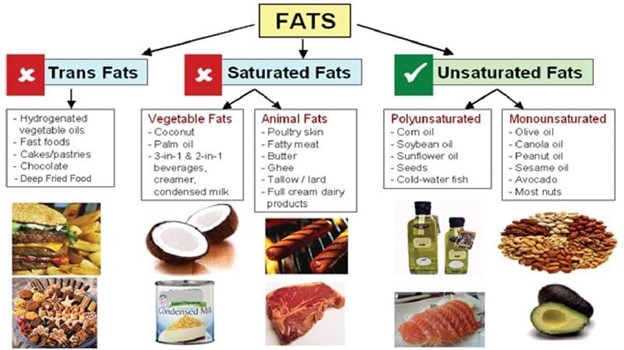
A nurse is teaching a group of clients who are at risk for heart disease about decreasing saturated fats in their diet. Which of the following fats should the nurse recommend the clients use when cooking?
A. Canola oil
Canola oil: Canola oil is a healthier option when it comes to cooking oils. It is low in saturated fat and high in monounsaturated fat, which is beneficial for heart health. Monounsaturated fats can help lower LDL (bad) cholesterol levels when used in place of saturated fats. Canola oil is a versatile oil that can be used for various cooking methods, including sautéing, baking, and grilling.
B. Palm oil
Palm oil: Palm oil is high in saturated fat and should be limited or avoided when trying to decrease saturated fats in the diet. High intake of saturated fats can raise LDL cholesterol levels and increase the risk of heart disease.
C. Peanut oil
Peanut oil: Peanut oil is another good option for cooking. It is low in saturated fat and contains a good amount of monounsaturated fat. Using peanut oil in moderation can be a healthier choice compared to oils high in saturated fat.
D. Stick margarine
Stick margarine: Stick margarine is not recommended when trying to decrease saturated fats in the diet. Most stick margarines are high in trans fats, which are even more detrimental to heart health than saturated fats. Trans fats can increase LDL cholesterol levels and decrease HDL (good) cholesterol levels, thereby increasing the risk of heart disease.
This question is an excerpt from Nurse Dive's nursing test bank - ATI RN Nutrition 2019 Proctored Exam. Take the full exam now
Full Explanation
Canola oil: Canola oil is a healthier option when it comes to cooking oils. It is low in saturated fat and high in monounsaturated fat, which is beneficial for heart health. Monounsaturated fats can help lower LDL (bad) cholesterol levels when used in place of saturated fats. Canola oil is a versatile oil that can be used for various cooking methods, including sautéing, baking, and grilling.
Palm oil: Palm oil is high in saturated fat and should be limited or avoided when trying to decrease saturated fats in the diet. High intake of saturated fats can raise LDL cholesterol levels and increase the risk of heart disease.
Peanut oil: Peanut oil is another good option for cooking. It is low in saturated fat and contains a good amount of monounsaturated fat. Using peanut oil in moderation can be a healthier choice compared to oils high in saturated fat.
Stick margarine: Stick margarine is not recommended when trying to decrease saturated fats in the diet. Most stick margarines are high in trans fats, which are even more detrimental to heart health than saturated fats. Trans fats can increase LDL cholesterol levels and decrease HDL (good) cholesterol levels, thereby increasing the risk of heart disease.
Similar Questions
A nurse is providing discharge teaching to a client who has a new diagnosis of Crohn's disease. Which of the following statements by the client indicates an understanding of the teaching?
A. "I am likely to gain weight due to this disease."
"I am likely to gain weight due to this disease": Weight loss is a more common occurrence in individuals with Crohn's disease due to factors such as decreased appetite, malabsorption, and increased metabolism. Weight gain is not typically associated with the disease, so this statement does not indicate an understanding of the teaching.
B. "I will need to take mild laxatives to help me have a bowel movement."
"I will need to take mild laxatives to help me have a bowel movement": Taking laxatives is not typically recommended for individuals with Crohn's disease unless specifically prescribed by a healthcare provider. Laxatives can further irritate the intestines and potentially worsen symptoms. Therefore, this statement does not demonstrate an understanding of the teaching
C. "I should limit the amount of fiber in my diet."
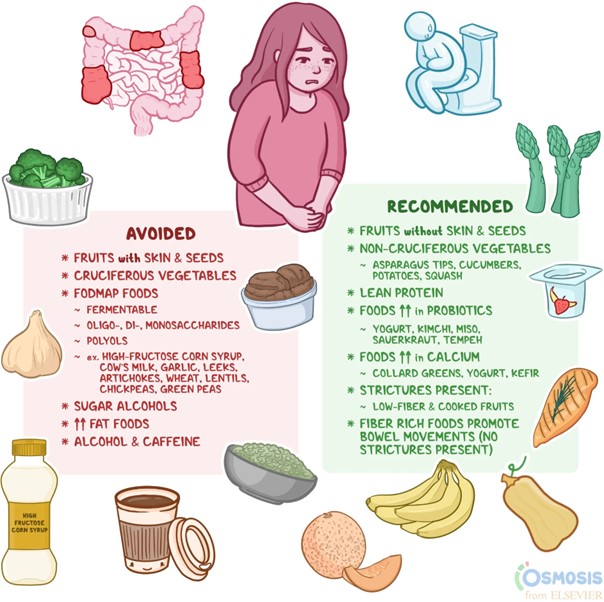
"I should limit the amount of fiber in my diet": This statement demonstrates an understanding of the teaching. In Crohn's disease, certain types of fiber can be difficult to digest and may worsen symptoms such as abdominal pain, diarrhea, and bowel obstruction. Therefore, it is often recommended to limit the intake of high-fiber foods during active disease flares.
D. "Avoiding glutamine will help me recover from this disease."
"Avoiding glutamine will help me recover from this disease": Glutamine is an amino acid that plays a role in gut health and repair. It is often considered beneficial for individuals with Crohn's disease as it supports intestinal healing. Therefore, avoiding glutamine would not be recommended for recovery from the disease. This statement does not indicate an understanding of the teaching.
Full Explanation
"I should limit the amount of fiber in my diet": This statement demonstrates an understanding of the teaching. In Crohn's disease, certain types of fiber can be difficult to digest and may worsen symptoms such as abdominal pain, diarrhea, and bowel obstruction. Therefore, it is often recommended to limit the intake of high-fiber foods during active disease flares.
"I will need to take mild laxatives to help me have a bowel movement": Taking laxatives is not typically recommended for individuals with Crohn's disease unless specifically prescribed by a healthcare provider. Laxatives can further irritate the intestines and potentially worsen symptoms. Therefore, this statement does not demonstrate an understanding of the teaching.
"I am likely to gain weight due to this disease": Weight loss is a more common occurrence in individuals with Crohn's disease due to factors such as decreased appetite, malabsorption, and increased metabolism. Weight gain is not typically associated with the disease, so this statement does not indicate an understanding of the teaching.
"Avoiding glutamine will help me recover from this disease": Glutamine is an amino acid that plays a role in gut health and repair. It is often considered beneficial for individuals with Crohn's disease as it supports intestinal healing. Therefore, avoiding glutamine would not be recommended for recovery from the disease. This statement does not indicate an understanding of the teaching.
A nurse is assessing a client who is newly prescribed atorvastatin for dyslipidemia. Which of the following questions should the nurse ask first?
A. "Do you exercise regularly?"
"Do you exercise regularly?": While exercise is an important aspect of cardiovascular health and can contribute to the management of dyslipidemia, it is not the first question to ask in this specific situation. Assessing alcohol consumption is more critical as it directly affects the metabolism and potential interactions with atorvastatin.
B. "Do you consume alcohol daily?"
When a client is newly prescribed atorvastatin for dyslipidemia, it is important to assess their alcohol consumption. Atorvastatin is metabolized by the liver, and excessive alcohol consumption can interfere with the liver's ability to process medications properly. Alcohol use can also have adverse effects on lipid profiles and contribute to liver disease. Therefore, determining the client's alcohol consumption is crucial in assessing the appropriateness of atorvastatin therapy and potential risks.
C. "Do you regularly have your eyes examined?"
"Do you regularly have your eyes examined?": Regular eye examinations are important for individuals with certain health conditions, such as diabetes, to monitor for complications like diabetic retinopathy. However, for a client who is newly prescribed atorvastatin for dyslipidemia, assessing alcohol consumption takes priority as it has a direct impact on the medication's effectiveness and potential side effects.
D. "Do you check your blood pressure daily?"
"Do you check your blood pressure daily?": Monitoring blood pressure is essential for individuals with hypertension or cardiovascular disease. However, in this case, the priority is assessing alcohol consumption due to its potential interactions with atorvastatin.
Full Explanation
When a client is newly prescribed atorvastatin for dyslipidemia, it is important to assess their alcohol consumption. Atorvastatin is metabolized by the liver, and excessive alcohol consumption can interfere with the liver's ability to process medications properly. Alcohol use can also have adverse effects on lipid profiles and contribute to liver disease. Therefore, determining the client's alcohol consumption is crucial in assessing the appropriateness of atorvastatin therapy and potential risks.
"Do you exercise regularly?": While exercise is an important aspect of cardiovascular health and can contribute to the management of dyslipidemia, it is not the first question to ask in this specific situation. Assessing alcohol consumption is more critical as it directly affects the metabolism and potential interactions with atorvastatin.
"Do you regularly have your eyes examined?": Regular eye examinations are important for individuals with certain health conditions, such as diabetes, to monitor for complications like diabetic retinopathy. However, for a client who is newly prescribed atorvastatin for dyslipidemia, assessing alcohol consumption takes priority as it has a direct impact on the medication's effectiveness and potential side effects.
"Do you check your blood pressure daily?": Monitoring blood pressure is essential for individuals with hypertension or cardiovascular disease. However, in this case, the priority is assessing alcohol consumption due to its potential interactions with atorvastatin.
A nurse is planning a class for parents of school-age children about iron intake. Which of the following should the nurse include as a manifestation of iron deficiency?
A. Lowered intellectual performance
Iron deficiency can have various manifestations, but one of the significant effects is its impact on cognitive function. Iron is essential for the proper functioning of the brain and nervous system. In children, iron deficiency can lead to lowered intellectual performance, including difficulties with concentration, learning, memory, and problem-solving skills. It can also affect overall cognitive development and academic performance.
B. Elevated temperature
"Elevated temperature": Elevated temperature or fever is not a direct manifestation of iron deficiency. Fever is commonly associated with infections, inflammatory conditions, or other illnesses, but not specifically with iron deficiency.
C. Decreased sleeping time
"Decreased sleeping time": While iron deficiency can cause various symptoms, changes in sleep patterns, such as decreased sleeping time, are not a typical manifestation. Iron deficiency may cause fatigue and general weakness, which could potentially impact sleep quality and duration, but it is not directly associated with decreased sleeping time.
D. Increased risk of infection
"Increased risk of infection": Iron deficiency can affect the immune system, making individuals more susceptible to infections. However, an increased risk of infection is a consequence of impaired immune function rather than a direct manifestation of iron deficiency itself.
Full Explanation
Iron deficiency can have various manifestations, but one of the significant effects is its impact on cognitive function. Iron is essential for the proper functioning of the brain and nervous system. In children, iron deficiency can lead to lowered intellectual performance, including difficulties with concentration, learning, memory, and problem-solving skills. It can also affect overall cognitive development and academic performance.
The other options listed are not typically associated with iron deficiency:
"Elevated temperature": Elevated temperature or fever is not a direct manifestation of iron deficiency. Fever is commonly associated with infections, inflammatory conditions, or other illnesses, but not specifically with iron deficiency.
"Decreased sleeping time": While iron deficiency can cause various symptoms, changes in sleep patterns, such as decreased sleeping time, are not a typical manifestation. Iron deficiency may cause fatigue and general weakness, which could potentially impact sleep quality and duration, but it is not directly associated with decreased sleeping time.
"Increased risk of infection": Iron deficiency can affect the immune system, making individuals more susceptible to infections. However, an increased risk of infection is a consequence of impaired immune function rather than a direct manifestation of iron deficiency itself.