Nursing practice questions with comprehensive rationales
NurseDive Free Nursing Practice Question
A nurse is teaching a newly licensed nurse about appropriate actions to take when a client threatens to harm a specific individual. Which of the following statements by the newly licensed nurse indicates understanding?
A. “I need to make sure that the potential victim is warned."
When a client threatens to harm a specific individual, it's important to take steps to ensure the safety of both the client and the potential victim. Warning the potential victim or taking appropriate measures to protect them is an important action to take.
B. "I need to keep the information confidential due to the client's right to privacy."
While respecting a client's right to privacy is important, when there's a threat of harm to an individual, it becomes a matter of safety that takes precedence over confidentiality.
C. “I can only discuss the client's threats with a court order."
This statement is incorrect. When there's a credible threat to harm an individual, waiting for a court order is not an appropriate or timely response. Immediate actions should be taken to ensure safety.
D. "I should verbally report this information to the psychiatrist."
While involving the psychiatrist is important for the client's overall care, it's essential to take more immediate steps to ensure the safety of the potential victim, such as notifying the appropriate authorities or taking appropriate precautions.
This question is an excerpt from Nurse Dive's nursing test bank - ATI Mental Health Proctored Exam. Take the full exam now
Full Explanation
A. "I need to make sure that the potential victim is warned."
Explanation: Correct Answer. When a client threatens to harm a specific individual, it's important to take steps to ensure the safety of both the client and the potential victim. Warning the potential victim or taking appropriate measures to protect them is an important action to take.
B. "I need to keep the information confidential due to the client's right to privacy."
Explanation: While respecting a client's right to privacy is important, when there's a threat of harm to an individual, it becomes a matter of safety that takes precedence over confidentiality.
C. "I can only discuss the client's threats with a court order."
Explanation: This statement is incorrect. When there's a credible threat to harm an individual, waiting for a court order is not an appropriate or timely response. Immediate actions should be taken to ensure safety.
D. "I should verbally report this information to the psychiatrist."
Explanation: While involving the psychiatrist is important for the client's overall care, it's essential to take more immediate steps to ensure the safety of the potential victim, such as notifying the appropriate authorities or taking appropriate precautions.
Similar Questions
A client becomes very dejected and states, "No one really cares what happens to me. Life isn't worth living anymore." Which of the following responses should the nurse make?
A. Tell me who you think doesn't care about you."
This response might come across as confrontational or defensive, which could discourage the client from opening up further. It's important to offer support and understanding rather than putting the client on the spot.
B. "Of course people care. Your family comes to visit every day."
While it's true that the client's family visits, depression often distorts perception and emotions. Telling the client that people care might not be fully effective in addressing their feelings of worthlessness.
C. "Why do you feel that way?
This response opens the door for the client to express their emotions and thoughts. It encourages further conversation and helps the nurse understand the underlying causes of the client's feelings.
D. "I care about you, and I am concerned that you feel so sad."
This response shows empathy and genuine concern for the client's well-being. It acknowledges the client's emotions, offers support, and validates their feelings.
Full Explanation
A. "Tell me who you think doesn't care about you."
Explanation: This response might come across as confrontational or defensive, which could discourage the client from opening up further. It's important to offer support and understanding rather than putting the client on the spot.
B. "Of course people care. Your family comes to visit every day."
Explanation: While it's true that the client's family visits, depression often distorts perception and emotions. Telling the client that people care might not be fully effective in addressing their feelings of worthlessness.
C. "Why do you feel that way?"
Explanation: This response opens the door for the client to express their emotions and thoughts. It encourages further conversation and helps the nurse understand the underlying causes of the client's feelings.
D. "I care about you, and I am concerned that you feel so sad."
Explanation: Correct Answer. This response shows empathy and genuine concern for the client's well-being. It acknowledges the client's emotions, offers support, and validates their feelings.
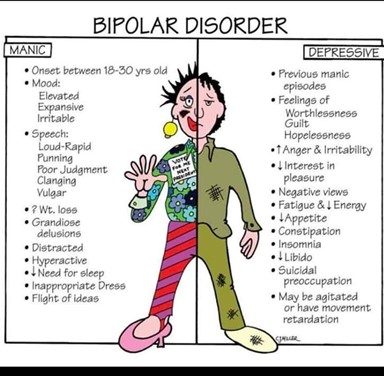
An acute mental health whit is admitting a client who has bipolar disorder. Which of the following findings supports the admitting diagnosis of acute mania?
A. The client responds to questions with disorganized speech.
Disorganized speech is a hallmark of acute mania, often reflecting racing thoughts, pressured speech, and difficulty staying on topic.
B. The client reports that voices are telling him to write a novel.
Reporting that voices are telling the client to write a novel suggests auditory hallucinations, which can occur in various psychiatric conditions, not specifically indicative of acute mania.
C. The client's spouse reports that client has recently gained weight.
Weight gain is not a typical hallmark of acute mania. In fact, during manic episodes, individuals might experience decreased appetite and sleep, leading to potential weight loss.
D. The client is dressed in all black.
Dressing in all black is not a specific sign of acute mania. While changes in clothing choices or appearance can sometimes be associated with mood changes, this finding alone is not indicative of acute mania.
Full Explanation
A. The client responds to questions with disorganized speech:
Disorganized speech is a hallmark of acute mania, often reflecting racing thoughts, pressured speech, and difficulty staying on topic.
B. The client reports that voices are telling him to write a novel:
Reporting that voices are telling the client to write a novel suggests auditory hallucinations, which can occur in various psychiatric conditions, not specifically indicative of acute mania.
C. The client's spouse reports that the client has recently gained weight:
Weight gain is not a typical hallmark of acute mania. In fact, during manic episodes, individuals might experience decreased appetite and sleep, leading to potential weight loss.
D. The client is dressed in all black:
Dressing in all black is not a specific sign of acute mania. While changes in clothing choices or appearance can sometimes be associated with mood changes, this finding alone is not indicative of acute mania.
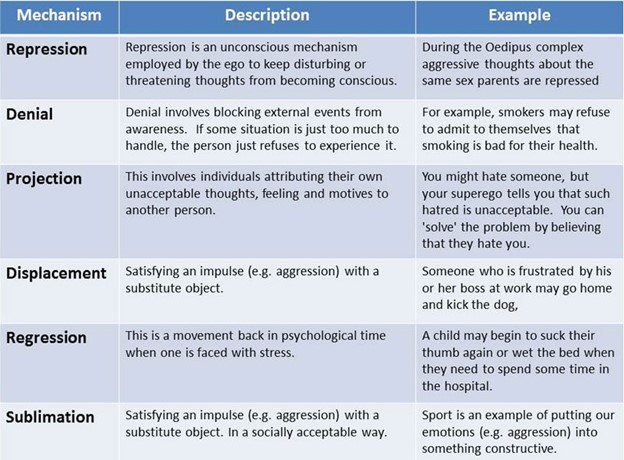
A nurse at a college campus mental health counseling center is caring for a student who just failed an examination. The student spends the session berating the teacher and the course. The nurse should recognize this behavior as which of the following defense mechanisms?
A. Regression
Regression is a defense mechanism in which a person reverts to an earlier stage of development in response to stress or anxiety. For example, an adult might start behaving like a child when faced with a difficult situation. In this case, the student berating the teacher doesn't demonstrate a return to an earlier developmental stage, so regression is not the correct choice.
B. Conversion
Conversion refers to the conversion of emotional distress into physical symptoms, such as experiencing physical pain without any apparent physical cause. This mechanism is often seen in conditions like conversion disorder. The student berating the teacher is not exhibiting physical symptoms as a response to emotional distress, so conversion is not the correct choice.
C. Projection
Projection is the act of attributing one's own unacceptable feelings or thoughts to another person. In this scenario, the student is projecting their own failure onto the teacher and the course by blaming them for the failure. They are unable to accept their own role in the failure and are instead placing the blame on external factors. This aligns with the behavior described in the scenario.
D. Undoing
Undoing involves trying to compensate for or negate an unacceptable action or thought with a contrary action. For instance, someone who had angry thoughts might engage in excessive acts of kindness to "undo" those thoughts. The student berating the teacher is not engaging in actions to negate their negative feelings or thoughts; they are expressing their frustration directly.
Full Explanation
A. Regression: Incorrect
Regression is a defense mechanism in which a person reverts to an earlier stage of development in response to stress or anxiety. For example, an adult might start behaving like a child when faced with a difficult situation. In this case, the student berating the teacher doesn't demonstrate a return to an earlier developmental stage, so regression is not the correct choice.
B. Conversion: Incorrect
Conversion refers to the conversion of emotional distress into physical symptoms, such as experiencing physical pain without any apparent physical cause. This mechanism is often seen in conditions like conversion disorder. The student berating the teacher is not exhibiting physical symptoms as a response to emotional distress, so conversion is not the correct choice.
C. Projection: Correct
Projection is the act of attributing one's own unacceptable feelings or thoughts to another person. In this scenario, the student is projecting their own failure onto the teacher and the course by blaming them for the failure. They are unable to accept their own role in the failure and are instead placing the blame on external factors. This aligns with the behavior described in the scenario.
D. Undoing: Incorrect
Undoing involves trying to compensate for or negate an unacceptable action or thought with a contrary action. For instance, someone who had angry thoughts might engage in excessive acts of kindness to "undo" those thoughts. The student berating the teacher is not engaging in actions to negate their negative feelings or thoughts; they are expressing their frustration directly.