
Nursing practice questions with comprehensive rationales
NurseDive Free Nursing Practice Question
A nurse is teaching a newly licensed nurse about measuring body temperature in clients. Which of the following clients should the nurse instruct to obtain an oral temperature?
A. A client who has haemorrhoids
A) A client who has hemorrhoids: Clients with hemorrhoids can safely have their body temperature measured orally, as hemorrhoids do not interfere with the oral route. This is an appropriate option for obtaining an accurate temperature reading.
B. A client who had recent oral surgery
B) A client who had recent oral surgery: Oral temperature measurement is contraindicated in clients with recent oral surgery, as it may cause discomfort, disrupt healing, or lead to inaccurate readings.
C. A client who has a coagulation disorder
C) A client who has a coagulation disorder: Oral temperature measurement might be risky in clients with coagulation disorders due to the potential for trauma or bleeding from the oral mucosa. A non-invasive method is preferable for safety.
D. A client who is drinking ice water
D) A client who is drinking ice water: Drinking ice water can temporarily lower the temperature in the oral cavity, leading to inaccurate readings. The nurse should wait 15–30 minutes before measuring an oral temperature.
None
This question is an excerpt from Nurse Dive's nursing test bank - NURS 100 fundamentals swami test 14.18.23 proctored exam. Take the full exam now
Full Explanation
Answer: A
Rationale:
A) A client who has hemorrhoids: An oral temperature is appropriate for this client as there are no contraindications for using the oral route. Hemorrhoids do not affect the accuracy or safety of oral temperature measurement.
B) A client who had recent oral surgery: Oral temperature measurement should be avoided for this client as it may cause discomfort or disrupt the healing process. Alternative routes, such as tympanic or axillary, are more appropriate.
C) A client who has a coagulation disorder: Oral temperature measurement might be risky in clients with coagulation disorders due to the potential for trauma or bleeding from the oral mucosa. A non-invasive method is preferable for safety.
D) A client who is drinking ice water: Drinking ice water can temporarily lower the temperature in the oral cavity, leading to inaccurate readings. The nurse should wait 15–30 minutes before measuring an oral temperature.
Similar Questions
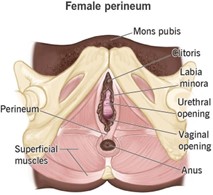
A nurse is planning to perform perineal care for a female client. Which of the following actions should the nurse plan to take?
A. Allow the client’s perineum to air dry.
B. Start at the client’s rectum and clean to the client’s perineum.
C. Use the same section of washcloth for each area cleaned.
D. Use soap and water to clean the client’s perineum.
When performing perineal care for a female client, the nurse should use soap and water to clean the client’s perineum. This helps to remove any urine or fecal mater and prevent skin irritation or infection. The nurse should also use a clean section of the washcloth for each area cleaned and should clean from front to back to prevent the spread of bacteria from the rectal area to the urethra.
Full Explanation
When performing perineal care for a female client, the nurse should use soap and water to clean the client’s perineum. This helps to remove any urine or fecal mater and prevent skin irritation or infection. The nurse should also use a clean section of the washcloth for each area cleaned and should clean from front to back to prevent the spread of bacteria from the rectal area to the urethra.

A nurse is caring for a client who has postural hypotension. The nurse assists the client gradually from a lying down to standing position. The nurse should identify that which of the following findings indicates the intervention is effective?
A. The client’s systolic blood pressure decreases from 110 mm Hg to 105 mm Hg.
Postural hypotension, also known as orthostatic hypotension, is a form of low blood pressure that occurs when standing up from a sitting or lying down position 1. An effective intervention for postural hypotension would be one that helps to prevent a significant drop in blood pressure when the client changes position. A small decrease in systolic blood pressure, such as from 110 mm Hg to 105 mm Hg, would indicate that the intervention is effective in preventing a larger drop in blood pressure.
B. The client reports nausea.
C. The client’s heart rate increases from 100/min to 108/min.
D. The client reports dizziness.
Full Explanation
Postural hypotension, also known as orthostatic hypotension, is a form of low blood pressure that occurs when standing up from a sitting or lying down position 1. An effective intervention for postural hypotension would be one that helps to prevent a significant drop in blood pressure when the client changes position. A small decrease in systolic blood pressure, such as from 110 mm Hg to 105 mm Hg, would indicate that the intervention is effective in preventing a larger drop in blood pressure.

A nurse sees smoke coming from the central supply room. Which of the following actions should the nurse take first?
A. Stay close to the ground
B. Walk to a safe area
C. Wrap clients in blankets
D. Close all the doors
In case of a fire, it is important to contain the smoke and flames by closing all doors . This can help prevent the spread of fire and smoke to other areas of the hospital and provide more time for evacuation. After closing all doors, the nurse should follow the hospital’s fire safety plan and take further actions as necessary.
Full Explanation
In case of a fire, it is important to contain the smoke and flames by closing all doors . This can help prevent the spread of fire and smoke to other areas of the hospital and provide more time for evacuation. After
closing all doors, the nurse should follow the hospital’s fire safety plan and take further actions as necessary.