
Nursing practice questions with comprehensive rationales
NurseDive Free Nursing Practice Question
A nurse is teaching the parents of a child who has diabetes mellitus about the manifestations of hypoglycemia.
Which of the following manifestations should the nurse include in the teaching?
A. Dry mucous membranes.
Choice A is not an answer because dry mucous membranes are not a common symptom of hypoglycemia.
B. Polyuria.
Choice B is not an answer because polyuria, or excessive urination, is not a common symptom of hypoglycemia.
C. Poria.
Choice C is not an answer because poria is a type of fungus and is not related to hypoglycemia.
D. Bradycardia.
Hypoglycemia, or low blood sugar, can cause an irregular or fast heartbeat 12. Bradycardia refers to a slower-than-normal heart rate, which is the opposite of what can happen during hypoglycemia.
This question is an excerpt from Nurse Dive's nursing test bank - ATI Pharmacology Endocrine and Hematology Proctored Exam. Take the full exam now
Full Explanation
Hypoglycemia, or low blood sugar, can cause an irregular or fast heartbeat 12.
Bradycardia refers to a slower-than-normal heart rate, which is the opposite of what can happen during hypoglycemia.
Choice A is not an answer because dry mucous membranes are not a common symptom of hypoglycemia.
Choice B is not an answer because polyuria, or excessive urination, is not a common symptom of hypoglycemia.
Choice C is not an answer because poria is a type of fungus and is not related to hypoglycemia.
Similar Questions
A nurse is preparing to administer aspirin 650 mg PO. Available in aspirin 325 mg tablets.
How many tablets should the nurse administer?
A. 1.
Choice A is incorrect because 1 tablet would only provide a dose of 325 mg.
B. 2.
The nurse should administer 2 tablets. Since each tablet contains 325 mg of aspirin, to administer a dose of 650 mg, the nurse should give 650 mg / 325 mg/tablet = 2 tablets.
C. 3.
Choice C is incorrect because 3 tablets would provide a dose of 975 mg.
D. 4.
Choice D is incorrect because 4 tablets would provide a dose of 1300 mg.
Full Explanation
The nurse should administer 2 tablets.
Since each tablet contains 325 mg of aspirin, to administer a dose of 650 mg, the nurse should give 650 mg / 325 mg/tablet = 2 tablets.
Choice A is incorrect because 1 tablet would only provide a dose of 325 mg.
Choice C is incorrect because 3 tablets would provide a dose of 975 mg.
Choice D is incorrect because 4 tablets would provide a dose of 1300 mg.
A nurse is collecting data from a client who has diabetes mellitus.
The client is confused, flushed, and has an acetone odor on their breath.
The nurse should anticipate a prescription for which of the following types of insulin to treat the client.
A. Regular insulin.
The client’s symptoms of confusion, flushed appearance, and acetone odor on their breath suggest that they may be experiencing diabetic ketoacidosis (DKA), a serious complication of diabetes that occurs when the body produces high levels of ketones. Treatment for DKA typically involves administering intravenous fluids and insulin to lower blood sugar levels and suppress ketone production 1. Regular insulin is a fast-acting insulin that can be given intravenously to quickly lower blood sugar levels 1.
B. NPH insulin.
is incorrect because NPH insulin is an intermediate-acting insulin that takes longer to start working and would not be appropriate for treating DKA.
C. Lispro insulin.
is incorrect because lispro insulin is a rapid-acting insulin but it is not typically given intravenously.
D. Glargine insulin.
incorrect because glargine insulin is a long-acting insulin that takes several hours to start working and would not be appropriate for treating DKA.
Full Explanation
The client’s symptoms of confusion, flushed appearance, and acetone odor on their breath suggest that they may be experiencing diabetic ketoacidosis (DKA), a serious complication of diabetes that occurs when the body produces high levels of ketones.
Treatment for DKA typically involves administering intravenous fluids and insulin to lower blood sugar levels and suppress ketone production 1.
Regular insulin is a fast-acting insulin that can be given intravenously to quickly lower blood sugar levels 1.
Choice B is incorrect because NPH insulin is an intermediate-acting insulin that takes longer to start working and would not be appropriate for treating DKA.
Choice C is incorrect because lispro insulin is a rapid-acting insulin but it is not typically given intravenously.
Choice D is incorrect because glargine insulin is a long-acting insulin that takes several hours to start working and would not be appropriate for treating DKA.
A nurse is reinforcing teaching with a client who has diabetes mellitus and a new prescription for lispro and Lantus insulins.
Which of the following statements by the client indicates an understanding of the teaching?
A. Insulin injected into the thigh is the most rapidly absorbed.
Choice A is incorrect because insulin injected into the abdomen is absorbed more rapidly than insulin injected into other areas such as the thigh.
B. Should shake the bottle of insulin before withdrawing the medication.
Choice B is incorrect because insulin should not be shaken vigorously as this can cause it to break down and become less effective. Instead, gently roll the bottle between your hands to mix it.
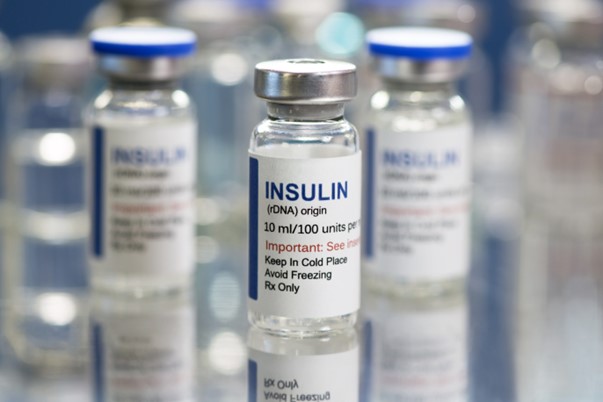
C. Unopened vials of insulin should be kept in the refrigerator.
Unopened vials of insulin should be kept in the refrigerator at a temperature between 36°F to 46°F (2°C to 8°C) 1. This helps to ensure that the insulin remains safe and effective until its expiration date.
D. All insulin types can be mixed together in the same syringe.
Choice D is incorrect because not all types of insulin can be mixed together in the same syringe. Only certain types of insulin can be mixed together and this should only be done under the guidance of a healthcare provider.
Full Explanation
Unopened vials of insulin should be kept in the refrigerator at a temperature between 36°F to 46°F (2°C to 8°C) 1.
This helps to ensure that the insulin remains safe and effective until its expiration date.
Choice A is incorrect because insulin injected into the abdomen is absorbed more rapidly than insulin injected into other areas such as the thigh.
Choice B is incorrect because insulin should not be shaken vigorously as this can cause it to break down and become less effective.
Instead, gently roll the bottle between your hands to mix it.
Choice D is incorrect because not all types of insulin can be mixed together in the same syringe.
Only certain types of insulin can be mixed together and this should only be done under the guidance of a healthcare provider.