
Nursing practice questions with comprehensive rationales
NurseDive Free Nursing Practice Question
A nurse is using Nägele's Rule to calculate the expected delivery date of a client who reports that the first day of her last menstrual cycle was July 28th.
Which of the following dates should the nurse document as the client's expected delivery date?
A. April 21st.
Choice A is incorrect because April 21st is too early according to Nägele’s Rule calculation.
B. May 5th.
Nägele’s Rule is a method for estimating the expected date of delivery (EDD) or confinement (EDC). It involves adding seven days and one year, and subtracting three months, from the first day of the last menstrual period (LMP)1. Using this rule, if the first day of the client’s last menstrual period was July 28th, then adding seven days would be August 4th. Subtracting three months would be May 4th. Adding one year would be May 4th of the following year. Therefore, the nurse should document May 5th as the client’s expected delivery date.
C. May 21st.
Choice C is incorrect because May 21st is too late according to Nägele’s Rule calculation.
D. April 4th.
Choice D is incorrect because April 4th is too early according to Nägele’s Rule calculation.
This question is an excerpt from Nurse Dive's nursing test bank - ATI RN Maternal Newborn 2019 with NGN Proctored Exam. Take the full exam now
Full Explanation
Nägele’s Rule is a method for estimating the expected date of delivery (EDD) or confinement (EDC).
It involves adding seven days and one year, and subtracting three months, from the first day of the last menstrual period (LMP)1.
Using this rule, if the first day of the client’s last menstrual period was July 28th, then adding seven days would be August 4th.
Subtracting three months would be May 4th.
Adding one year would be May 4th of the following year.
Therefore, the nurse should document May 5th as the client’s expected delivery date.
Choice A is incorrect because April 21st is too early according to Nägele’s Rule calculation.
Choice C is incorrect because May 21st is too late according to Nägele’s Rule calculation.
Choice D is incorrect because April 4th is too early according to Nägele’s Rule calculation.
Similar Questions
A nurse is caring for a client who is at 32 weeks of gestation and has gestational diabetes mellitus.
Which of the following findings should the nurse report to the provider?
A. The client has non-pitting pedal edema.
Choice A is incorrect because non-pitting pedal edema is common during late pregnancy and is usually caused by physiologic edema resulting from hormone- induced sodium retention.
B. The client has a fundal height of 38 cm.
The nurse should report a fundal height of 38 cm to the provider. Fundal height is measured from the top of the pubic bone to the top of the uterus and is used to assess fetal growth. A fundal height measurement that is larger than expected for gestational age may indicate macrosomia, which is a common complication of gestational diabetes mellitus.
C. The client reports 12 fetal movements in hr.
Choice C is incorrect because 12 fetal movements in an hour are within normal range.
D. The client has a fasting blood glucose of 90 mg/du.
Choice D is incorrect because a fasting blood glucose level of 90 mg/dL is within normal range for a pregnant woman with gestational diabetes mellitus.
Full Explanation
The nurse should report a fundal height of 38 cm to the provider.
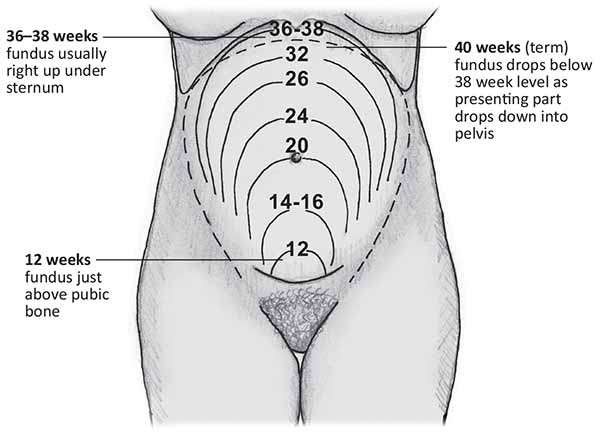
Fundal height is measured from the top of the pubic bone to the top of the uterus and is used to assess fetal growth.
A fundal height measurement that is larger than expected for gestational age may indicate macrosomia, which is a common complication of gestational diabetes mellitus.
Choice A is incorrect because non-pitting pedal edema is common during late pregnancy and is usually caused by physiologic edema resulting from hormone- induced sodium retention.
Choice C is incorrect because 12 fetal movements in an hour are within normal
range.
Choice D is incorrect because a fasting blood glucose level of 90 mg/dL is within normal range for a pregnant woman with gestational diabetes mellitus.
A nurse is providing teaching about the expected effects of magnesium sulfate to a client who is at 28 weeks of gestation and has preeclampsia.
Which of the following responses by the nurse is appropriate?
A. "This medication stabilizes the fetal heart rate."
Choice A is incorrect because magnesium sulfate does not stabilize the fetal heart rate.
B. "This medication improves tissue perfusion."
Choice B is incorrect because magnesium sulfate does not improve tissue perfusion.
C. "This medication prevents seizures."
“This medication prevents seizures.” Magnesium sulfate is a mineral that is given intravenously to women with preeclampsia to reduce the risk of seizures or eclampsia. Preeclampsia is a condition of high blood pressure and protein in the urine during pregnancy.
D. "This medication increases cardiac output.”
Choice D is incorrect because magnesium sulfate does not increase cardiac output.
Full Explanation
“This medication prevents seizures.” Magnesium sulfate is a mineral that is given intravenously to women with preeclampsia to reduce the risk of seizures or eclampsia.
Preeclampsia is a condition of high blood pressure and protein in the urine during pregnancy.
Choice A is incorrect because magnesium sulfate does not stabilize the fetal heart rate.
Choice B is incorrect because magnesium sulfate does not improve tissue perfusion.
Choice D is incorrect because magnesium sulfate does not increase cardiac output.
A nurse is providing teaching to a client who is 2 days postpartum and wants to continue using her diaphragm for contraception.
Which of the following instructions should the nurse include?
A. You should use an oil-based vaginal lubricant when inserting your diaphragm.
Choice A is incorrect because oil-based lubricants can damage the diaphragm and reduce its effectiveness. Water-based lubricants should be used instead.
B. You should store your diaphragm in sterile water after each use.
Choice B is incorrect because storing a diaphragm in sterile water is not necessary. The diaphragm should be washed with mild soap and water after each use and air-dried before being stored in its case.
C. You should keep the diaphragm in place for at least 4 hours after intercourse.
Choice C is incorrect because the diaphragm should be kept in place for at least 6 hours after intercourse, not 4 hours.
D. You should have your provider refit you for any diaphragm.
The nurse should instruct the client to have her provider refit her for a diaphragm. After childbirth, a woman’s body undergoes changes that may affect the fit of her diaphragm. It is recommended that a woman be refited for a diaphragm around 6 weeks postpartum, when the uterus and cervix have returned to normal size.
Full Explanation
The nurse should instruct the client to have her provider refit her for a diaphragm.
After childbirth, a woman’s body undergoes changes that may affect the fit of her diaphragm.
It is recommended that a woman be refited for a diaphragm around 6 weeks postpartum, when the uterus and cervix have returned to normal size.
Choice A is incorrect because oil-based lubricants can damage the diaphragm and reduce its effectiveness.
Water-based lubricants should be used instead.
Choice B is incorrect because storing a diaphragm in sterile water is not necessary.
The diaphragm should be washed with mild soap and water after each use and air-dried before being stored in its case.
Choice C is incorrect because the diaphragm should be kept in place for at least 6 hours after intercourse, not 4 hours.