
Nursing practice questions with comprehensive rationales
NurseDive Free Nursing Practice Question
A patient with Parkinson's disease asks the nurse why anticholinergics are used in the treatment. Which response by the nurse is most accurate?
A. "These drugs inhibit the action of acetylcholine
"These drugs inhibit the action of acetylcholine":This response is accurate. Anticholinergic medications work by blocking the action of acetylcholine, a neurotransmitter involved in various functions in the body, including muscle control. In Parkinson's disease, there is an imbalance between dopamine and acetylcholine, leading to motor symptoms such as tremors and rigidity. By inhibiting the action of acetylcholine, anticholinergic drugs help rebalance neurotransmitter activity and alleviate some of the motor symptoms associated with Parkinson's disease.
B. "These drugs help you urinate."
"These drugs help you urinate":This statement is not directly related to the use of anticholinergic medications in Parkinson's disease. While some anticholinergic drugs can indeed relax the smooth muscle of the bladder and improve urinary symptoms, this is not the primary indication for their use in Parkinson's disease.
C. "These drugs will decrease your eye pressure."
"These drugs will decrease your eye pressure": While anticholinergic medications can be used to dilate the pupils and decrease intraocular pressure, this is not typically the reason for their use in Parkinson's disease. While some anticholinergic medications may have ocular effects, they are primarily used to address motor symptoms associated with Parkinson's disease.
D. "These drugs will assist in lowering your heart rate."
"These drugs will assist in lowering your heart rate":While some anticholinergic medications may have effects on heart rate by blocking parasympathetic nervous system activity, this is not the primary indication for their use in Parkinson's disease. The focus of anticholinergic therapy in Parkinson's disease is primarily on addressing motor symptoms rather than cardiovascular effects.
This question is an excerpt from Nurse Dive's nursing test bank - Ati Lpn Med Surg Neuro Test 2024 Proctored Exam. Take the full exam now
Full Explanation
A. "These drugs inhibit the action of acetylcholine":
This response is accurate. Anticholinergic medications work by blocking the action of acetylcholine, a neurotransmitter involved in various functions in the body, including muscle control. In Parkinson's disease, there is an imbalance between dopamine and acetylcholine, leading to motor symptoms such as tremors and rigidity. By inhibiting the action of acetylcholine, anticholinergic drugs help rebalance neurotransmitter activity and alleviate some of the motor symptoms associated with Parkinson's disease.
B. "These drugs help you urinate":
This statement is not directly related to the use of anticholinergic medications in Parkinson's disease. While some anticholinergic drugs can indeed relax the smooth muscle of the bladder and improve urinary symptoms, this is not the primary indication for their use in Parkinson's disease.
C. "These drugs will decrease your eye pressure":
While anticholinergic medications can be used to dilate the pupils and decrease intraocular pressure, this is not typically the reason for their use in Parkinson's disease. While some anticholinergic medications may have ocular effects, they are primarily used to address motor symptoms associated with Parkinson's disease.
D. "These drugs will assist in lowering your heart rate":
While some anticholinergic medications may have effects on heart rate by blocking parasympathetic nervous system activity, this is not the primary indication for their use in Parkinson's disease. The focus of anticholinergic therapy in Parkinson's disease is primarily on addressing motor symptoms rather than cardiovascular effects.
Similar Questions
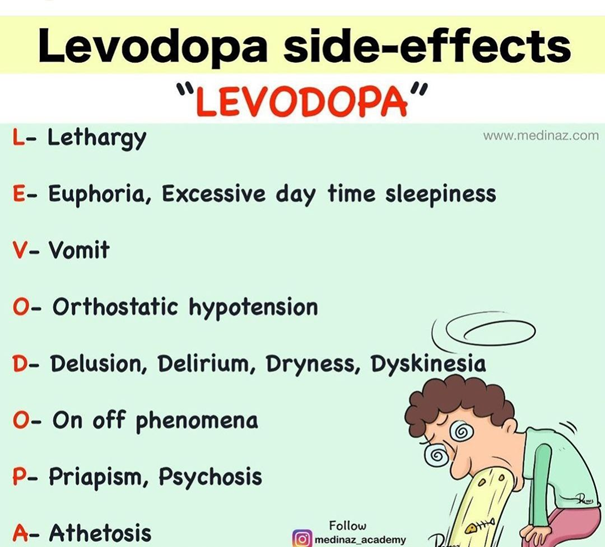
Which adverse effects associated with levodopa therapy would support the nursing diagnosis Risk for Injury?
A. Orthostatic hypotension
Orthostatic hypotension:Orthostatic hypotension, a sudden drop in blood pressure when standing up, is a potential adverse effect of levodopa therapy. This can lead to dizziness and increase the risk of falls, thus supporting the nursing diagnosis Risk for Injury.
B. Nausea and vomiting
Nausea and vomiting:Nausea and vomiting are common side effects of levodopa therapy. While they can cause discomfort and dehydration, they are less directly related to the risk of physical injury compared to orthostatic hypotension.
C. Anorexia and depression
Anorexia and depression: Anorexia (loss of appetite) and depression can occur as adverse effects of levodopa therapy. While they can affect the patient's overall well-being and quality of life, they are not directly associated with an increased risk of physical injury.
D. Tachycardia and palpitations
Tachycardia and palpitations:Tachycardia (rapid heart rate) and palpitations are less common adverse effects of levodopa therapy. While they may indicate cardiovascular issues, they are not typically associated with a direct risk of physical injury.
Full Explanation
A. Orthostatic hypotension:
Orthostatic hypotension, a sudden drop in blood pressure when standing up, is a potential adverse effect of levodopa therapy. This can lead to dizziness and increase the risk of falls, thus supporting the nursing diagnosis Risk for Injury.
B. Nausea and vomiting:
Nausea and vomiting are common side effects of levodopa therapy. While they can cause discomfort and dehydration, they are less directly related to the risk of physical injury compared to orthostatic hypotension.
C. Anorexia and depression:
Anorexia (loss of appetite) and depression can occur as adverse effects of levodopa therapy. While they can affect the patient's overall well-being and quality of life, they are not directly associated with an increased risk of physical injury.
D. Tachycardia and palpitations:
Tachycardia (rapid heart rate) and palpitations are less common adverse effects of levodopa therapy. While they may indicate cardiovascular issues, they are not typically associated with a direct risk of physical injury.
Which vitamin will reduce the therapeutic effects of levodopa?
A. B6
B6 (Pyridoxine):Vitamin B6, also known as pyridoxine, is known to reduce the therapeutic effects of levodopa. It competes with levodopa for absorption in the gastrointestinal tract and can decrease the amount of levodopa that reaches the brain, thereby diminishing its effectiveness in treating Parkinson's disease symptoms.
B. A
A (Retinol):Vitamin A, also known as retinol, is not typically associated with reducing the therapeutic effects of levodopa. Vitamin A plays important roles in vision, immune function, and cellular communication, but it does not interact with levodopa in a way that affects its therapeutic efficacy.
C. E
E (Alpha-Tocopherol): Vitamin E, also known as alpha-tocopherol, is an antioxidant that plays a role in protecting cells from oxidative damage. While vitamin E supplementation is sometimes used in Parkinson's disease management for its potential neuroprotective effects, it is not known to reduce the therapeutic effects of levodopa.
D. K
K (Phylloquinone):Vitamin K, also known as phylloquinone, is primarily involved in blood clotting and bone metabolism. It does not interact with levodopa in a way that reduces its therapeutic effects.
E. C
Vitamin C, also known as ascorbic acid, is not known to reduce the therapeutic effects of levodopa. While vitamin C has various roles in the body, including antioxidant activity and immune function support, it does not interfere with levodopa absorption or efficacy.
Full Explanation
A. B6 (Pyridoxine):
Vitamin B6, also known as pyridoxine, is known to reduce the therapeutic effects of levodopa. It competes with levodopa for absorption in the gastrointestinal tract and can decrease the amount of levodopa that reaches the brain, thereby diminishing its effectiveness in treating Parkinson's disease symptoms.
B. A (Retinol):
Vitamin A, also known as retinol, is not typically associated with reducing the therapeutic effects of levodopa. Vitamin A plays important roles in vision, immune function, and cellular communication, but it does not interact with levodopa in a way that affects its therapeutic efficacy.
C. E (Alpha-Tocopherol):
Vitamin E, also known as alpha-tocopherol, is an antioxidant that plays a role in protecting cells from oxidative damage. While vitamin E supplementation is sometimes used in Parkinson's disease management for its potential neuroprotective effects, it is not known to reduce the therapeutic effects of levodopa.
D. K (Phylloquinone):
Vitamin K, also known as phylloquinone, is primarily involved in blood clotting and bone metabolism. It does not interact with levodopa in a way that reduces its therapeutic effects.
E. C (Ascorbic Acid):
Vitamin C, also known as ascorbic acid, is not known to reduce the therapeutic effects of levodopa. While vitamin C has various roles in the body, including antioxidant activity and immune function support, it does not interfere with levodopa absorption or efficacy.
A nurse is contributing to the plan of care for a client who has a seizure disorder. Which of the following interventions should the nurse include in the plan? (Select all that apply.)
A. Provide a suction setup at the bedside.
Provide a suction setup at the bedside:This is a relevant intervention as it ensures that suction equipment is readily available in case the client experiences excessive secretions or vomiting during or after a seizure. It helps maintain a clear airway and prevent aspiration.
B. Elevate the side rails when in bed.
Elevate the side rails when in bed:Elevating the side rails can help ensure the client's safety during a seizure by preventing falls from the bed. It is a preventive measure to minimize the risk of injury.
C. Place a bite stick at the bedside.
Place a bite stick at the bedside:Placing a bite stick at the bedside is not a recommended intervention. Bite sticks can potentially injure the patient's teeth or mouth during a seizure and are generally not recommended in current practice.
D. Keep an oxygen setup at the bedside.
Keep an oxygen setup at the bedside:This is an appropriate intervention as it ensures that oxygen is readily available in case the client experiences respiratory distress or hypoxia during or after a seizure. Oxygen therapy may be needed to support respiratory function.
E. Furnish restraints at the bedside.
Furnishing restraints at the bedside is not a recommended intervention for managing seizures. Restraints should only be used in exceptional circumstances when the client's safety or the safety of others is at risk and should be applied according to institutional policies and legal regulations.
Full Explanation
A. Provide a suction setup at the bedside:
This is a relevant intervention as it ensures that suction equipment is readily available in case the client experiences excessive secretions or vomiting during or after a seizure. It helps maintain a clear airway and prevent aspiration.
B. Elevate the side rails when in bed:
Elevating the side rails can help ensure the client's safety during a seizure by preventing falls from the bed. It is a preventive measure to minimize the risk of injury.
C. Place a bite stick at the bedside:
Placing a bite stick at the bedside is not a recommended intervention. Bite sticks can potentially injure the patient's teeth or mouth during a seizure and are generally not recommended in current practice.
D. Keep an oxygen setup at the bedside:
This is an appropriate intervention as it ensures that oxygen is readily available in case the client experiences respiratory distress or hypoxia during or after a seizure. Oxygen therapy may be needed to support respiratory function.
E. Furnish restraints at the bedside:
Furnishing restraints at the bedside is not a recommended intervention for managing seizures. Restraints should only be used in exceptional circumstances when the client's safety or the safety of others is at risk and should be applied according to institutional policies and legal regulations.