Nursing practice questions with comprehensive rationales
NurseDive Free Nursing Practice Question
Which vitamin will reduce the therapeutic effects of levodopa?
A. B6
B6 (Pyridoxine):Vitamin B6, also known as pyridoxine, is known to reduce the therapeutic effects of levodopa. It competes with levodopa for absorption in the gastrointestinal tract and can decrease the amount of levodopa that reaches the brain, thereby diminishing its effectiveness in treating Parkinson's disease symptoms.
B. A
A (Retinol):Vitamin A, also known as retinol, is not typically associated with reducing the therapeutic effects of levodopa. Vitamin A plays important roles in vision, immune function, and cellular communication, but it does not interact with levodopa in a way that affects its therapeutic efficacy.
C. E
E (Alpha-Tocopherol): Vitamin E, also known as alpha-tocopherol, is an antioxidant that plays a role in protecting cells from oxidative damage. While vitamin E supplementation is sometimes used in Parkinson's disease management for its potential neuroprotective effects, it is not known to reduce the therapeutic effects of levodopa.
D. K
K (Phylloquinone):Vitamin K, also known as phylloquinone, is primarily involved in blood clotting and bone metabolism. It does not interact with levodopa in a way that reduces its therapeutic effects.
E. C
Vitamin C, also known as ascorbic acid, is not known to reduce the therapeutic effects of levodopa. While vitamin C has various roles in the body, including antioxidant activity and immune function support, it does not interfere with levodopa absorption or efficacy.
This question is an excerpt from Nurse Dive's nursing test bank - Ati Lpn Med Surg Neuro Test 2024 Proctored Exam. Take the full exam now
Full Explanation
A. B6 (Pyridoxine):
Vitamin B6, also known as pyridoxine, is known to reduce the therapeutic effects of levodopa. It competes with levodopa for absorption in the gastrointestinal tract and can decrease the amount of levodopa that reaches the brain, thereby diminishing its effectiveness in treating Parkinson's disease symptoms.
B. A (Retinol):
Vitamin A, also known as retinol, is not typically associated with reducing the therapeutic effects of levodopa. Vitamin A plays important roles in vision, immune function, and cellular communication, but it does not interact with levodopa in a way that affects its therapeutic efficacy.
C. E (Alpha-Tocopherol):
Vitamin E, also known as alpha-tocopherol, is an antioxidant that plays a role in protecting cells from oxidative damage. While vitamin E supplementation is sometimes used in Parkinson's disease management for its potential neuroprotective effects, it is not known to reduce the therapeutic effects of levodopa.
D. K (Phylloquinone):
Vitamin K, also known as phylloquinone, is primarily involved in blood clotting and bone metabolism. It does not interact with levodopa in a way that reduces its therapeutic effects.
E. C (Ascorbic Acid):
Vitamin C, also known as ascorbic acid, is not known to reduce the therapeutic effects of levodopa. While vitamin C has various roles in the body, including antioxidant activity and immune function support, it does not interfere with levodopa absorption or efficacy.
Similar Questions
A nurse is contributing to the plan of care for a client who has a seizure disorder. Which of the following interventions should the nurse include in the plan? (Select all that apply.)
A. Provide a suction setup at the bedside.
Provide a suction setup at the bedside:This is a relevant intervention as it ensures that suction equipment is readily available in case the client experiences excessive secretions or vomiting during or after a seizure. It helps maintain a clear airway and prevent aspiration.
B. Elevate the side rails when in bed.
Elevate the side rails when in bed:Elevating the side rails can help ensure the client's safety during a seizure by preventing falls from the bed. It is a preventive measure to minimize the risk of injury.
C. Place a bite stick at the bedside.
Place a bite stick at the bedside:Placing a bite stick at the bedside is not a recommended intervention. Bite sticks can potentially injure the patient's teeth or mouth during a seizure and are generally not recommended in current practice.
D. Keep an oxygen setup at the bedside.
Keep an oxygen setup at the bedside:This is an appropriate intervention as it ensures that oxygen is readily available in case the client experiences respiratory distress or hypoxia during or after a seizure. Oxygen therapy may be needed to support respiratory function.
E. Furnish restraints at the bedside.
Furnishing restraints at the bedside is not a recommended intervention for managing seizures. Restraints should only be used in exceptional circumstances when the client's safety or the safety of others is at risk and should be applied according to institutional policies and legal regulations.
Full Explanation
A. Provide a suction setup at the bedside:
This is a relevant intervention as it ensures that suction equipment is readily available in case the client experiences excessive secretions or vomiting during or after a seizure. It helps maintain a clear airway and prevent aspiration.
B. Elevate the side rails when in bed:
Elevating the side rails can help ensure the client's safety during a seizure by preventing falls from the bed. It is a preventive measure to minimize the risk of injury.
C. Place a bite stick at the bedside:
Placing a bite stick at the bedside is not a recommended intervention. Bite sticks can potentially injure the patient's teeth or mouth during a seizure and are generally not recommended in current practice.
D. Keep an oxygen setup at the bedside:
This is an appropriate intervention as it ensures that oxygen is readily available in case the client experiences respiratory distress or hypoxia during or after a seizure. Oxygen therapy may be needed to support respiratory function.
E. Furnish restraints at the bedside:
Furnishing restraints at the bedside is not a recommended intervention for managing seizures. Restraints should only be used in exceptional circumstances when the client's safety or the safety of others is at risk and should be applied according to institutional policies and legal regulations.
A nurse is reinforcing teaching with a client who has a new prescription for phenytoin. The nurse should recognize that which of the following statements by the client indicates a need for further teaching?
A. "I will notify my provider before taking any other medications."
"I will notify my provider before taking any other medications."This statement demonstrates understanding of the importance of consulting the provider before taking any other medications. It is correct because phenytoin may interact with other drugs, so notifying the provider is essential to avoid potential interactions.
B. "I have made an appointment to see my dentist next week."
"I have made an appointment to see my dentist next week."This statement indicates that the client understands the importance of dental care while taking phenytoin. Phenytoin can cause gum overgrowth (gingival hyperplasia), so regular dental check-ups are recommended to monitor oral health. This statement is correct.
C. "I will take this medication with meals."
"I will take this medication with meals." This statement suggests that the client plans to take phenytoin with meals. However, phenytoin should generally be taken on an empty stomach to enhance absorption, unless gastrointestinal upset occurs. Therefore, this statement indicates a need for further teaching.
D. "I'll be glad when my seizures stop so I can quit taking this medicine."
"I'll be glad when my seizures stop so I can quit taking this medicine."This statement reflects a misconception about the management of epilepsy. Phenytoin is typically used as a long-term treatment to prevent seizures, not as a short-term solution to stop seizures. Therefore, this statement indicates a need for further education about the chronic nature of epilepsy and the need for ongoing medication adherence.
E. “I’ll take this medication before meals.”
This statement correctly indicates the timing of phenytoin administration before meals. Taking phenytoin before meals helps enhance absorption and minimize the risk of gastrointestinal side effects. Therefore, this statement is correc
Full Explanation
A. "I will notify my provider before taking any other medications."
This statement demonstrates understanding of the importance of consulting the provider before taking any other medications. It is correct because phenytoin may interact with other drugs, so notifying the provider is essential to avoid potential interactions.
B. "I have made an appointment to see my dentist next week."
This statement indicates that the client understands the importance of dental care while taking phenytoin. Phenytoin can cause gum overgrowth (gingival hyperplasia), so regular dental check-ups are recommended to monitor oral health. This statement is correct.
C. "I will take this medication with meals."
This statement suggests that the client plans to take phenytoin with meals. However, phenytoin should generally be taken on an empty stomach to enhance absorption, unless gastrointestinal upset occurs. Therefore, this statement indicates a need for further teaching.
D. "I'll be glad when my seizures stop so I can quit taking this medicine."
This statement reflects a misconception about the management of epilepsy. Phenytoin is typically used as a long-term treatment to prevent seizures, not as a short-term solution to stop seizures. Therefore, this statement indicates a need for further education about the chronic nature of epilepsy and the need for ongoing medication adherence.
E. “I’ll take this medication before meals.”
This statement correctly indicates the timing of phenytoin administration before meals. Taking phenytoin before meals helps enhance absorption and minimize the risk of gastrointestinal side effects. Therefore, this statement is correct.
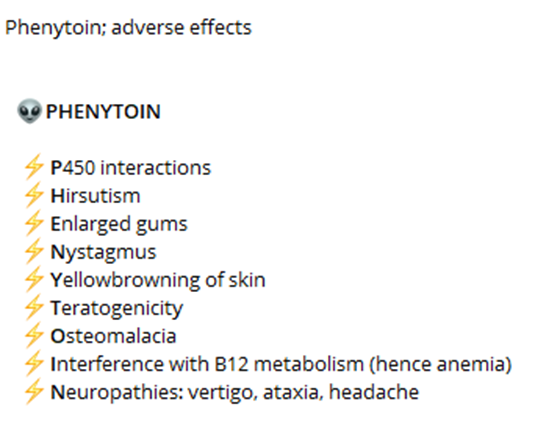
A nurse is reinforcing teaching a client who has a new prescription for phenytoin. The nurse should instruct the client to monitor and report which of the following adverse effects of this medication?
A. Diarrhea
Diarrhea:Diarrhea is not a common side effect of phenytoin. While gastrointestinal disturbances such as nausea, vomiting, and constipation may occur, diarrhea is less common. Therefore, it is not a primary adverse effect that the nurse should instruct the client to monitor and report.
B. Wrist pain
Wrist pain:Wrist pain is not a common side effect of phenytoin. Side effects related to musculoskeletal issues such as joint pain, muscle weakness, or muscle twitching can occur, but wrist pain specifically is not commonly associated with phenytoin use. Therefore, it is not a primary adverse effect that the nurse should instruct the client to monitor and report.
C. Skin rash
Skin rash: Skin rash is a potential adverse effect of phenytoin that should be monitored and reported. Phenytoin can cause various skin reactions, including a mild rash or more severe reactions such as Stevens-Johnson syndrome or toxic epidermal necrolysis. Therefore, the nurse should instruct the client to promptly report any signs of skin rash or other skin changes.
D. Metallic taste
Metallic taste:Metallic taste is a common side effect of phenytoin. While it is not usually a serious adverse effect, it can be bothersome for some individuals. Therefore, the nurse should instruct the client to monitor for this side effect and report it if it occurs persistently or becomes bothersome.
Full Explanation
A. Diarrhea:
Diarrhea is not a common side effect of phenytoin. While gastrointestinal disturbances such as nausea, vomiting, and constipation may occur, diarrhea is less common. Therefore, it is not a primary adverse effect that the nurse should instruct the client to monitor and report.
B. Wrist pain:
Wrist pain is not a common side effect of phenytoin. Side effects related to musculoskeletal issues such as joint pain, muscle weakness, or muscle twitching can occur, but wrist pain specifically is not commonly associated with phenytoin use. Therefore, it is not a primary adverse effect that the nurse should instruct the client to monitor and report.
C. Skin rash:
Skin rash is a potential adverse effect of phenytoin that should be monitored and reported. Phenytoin can cause various skin reactions, including a mild rash or more severe reactions such as Stevens-Johnson syndrome or toxic epidermal necrolysis. Therefore, the nurse should instruct the client to promptly report any signs of skin rash or other skin changes.
D. Metallic taste:
Metallic taste is a common side effect of phenytoin. While it is not usually a serious adverse effect, it can be bothersome for some individuals. Therefore, the nurse should instruct the client to monitor for this side effect and report it if it occurs persistently or becomes bothersome.