
Nursing practice questions with comprehensive rationales
NurseDive Free Nursing Practice Question
A patient's blood gases show a pH of 7.53 and bicarbonate level of 36 mEq/L. The nurse realizes that the patient is demonstrating which acid-base disorder?
A. Respiratory acidosis.
The given blood gas results show a pH of 7.53, which is alkaline (above the normal range of 7.35 to 7.45), and a high bicarbonate level of 36 mEq/L (normal range is 22 to 26 mEq/L). This combination indicates metabolic alkalosis, a condition where there is an excessive accumulation of bicarbonate in the blood, leading to increased pH.
B. Metabolic alkalosis.
Metabolic alkalosis is characterized by increased blood bicarbonate levels, which can occur due to conditions like vomiting, diuretic use, or excessive ingestion of bicarbonate-containing substances. It results in symptoms such as muscle twitching, tetany, and respiratory depression.
C. Respiratory alkalosis.
Respiratory alkalosis is characterized by an elevated blood pH and low carbon dioxide levels (hypocapnia). However, the bicarbonate level is not directly related to respiratory alkalosis, making this choice incorrect based on the given information.
D. Metabolic acidosis.
Metabolic acidosis is characterized by a decreased blood pH and low bicarbonate levels. The presented blood gas results show an alkaline pH and high bicarbonate, making this choice incorrect.
This question is an excerpt from Nurse Dive's nursing test bank - ATI custom Fluid and Electrolyte Exam Summer 2023 Proctored Exam. Take the full exam now
Full Explanation
Metabolic alkalosis.
Choice A rationale:
The given blood gas results show a pH of 7.53, which is alkaline (above the normal range of
7.35 to 7.45), and a high bicarbonate level of 36 mEq/L (normal range is 22 to 26 mEq/L). This combination indicates metabolic alkalosis, a condition where there is an excessive accumulation of bicarbonate in the blood, leading to increased pH.
Choice B rationale:
Metabolic alkalosis is characterized by increased blood bicarbonate levels, which can occur due to conditions like vomiting, diuretic use, or excessive ingestion of bicarbonate-containing substances. It results in symptoms such as muscle twitching, tetany, and respiratory depression.
Choice C rationale:
Respiratory alkalosis is characterized by an elevated blood pH and low carbon dioxide levels (hypocapnia). However, the bicarbonate level is not directly related to respiratory alkalosis, making this choice incorrect based on the given information.
Choice D rationale:
Metabolic acidosis is characterized by a decreased blood pH and low bicarbonate levels. The presented blood gas results show an alkaline pH and high bicarbonate, making this choice incorrect.
Similar Questions
A nurse is caring for a client who is receiving IV fluids to correct dehydration. Which of the following laboratory values should indicate to the nurse that the client is effectively responding to treatment?
A. Urine specific gravity 1.020.
Urine specific gravity is a measure of urine concentration, indicating the ability of the kidneys to concentrate or dilute urine. A specific gravity of 1.020 falls within the normal range (typically 1.010 to 1.030). An appropriate specific gravity indicates that the client's kidneys are responding well to the IV fluids, maintaining adequate urine output and concentration.
B. Potassium 5.2 mEq/L.
Potassium level of 5.2 mEq/L is above the normal range of 3.5 to 5 mEq/L. However, this value does not specifically indicate whether the client is responding effectively to the IV fluids for dehydration.
C. Hct 6296.
Hct (Hematocrit) of 6296 is not a valid measurement; it appears to be a typographical error or an incomplete value. Therefore, it cannot be used to assess the client's response to treatment.
D. Sodium 165 mEq/L.
Sodium level of 165 mEq/L is elevated beyond the normal range of 136 to 145 mEq/L. However, this value does not provide information about the client's response to IV fluids for dehydration.
Full Explanation
Urine specific gravity 1.020.
Choice A rationale:
Urine specific gravity is a measure of urine concentration, indicating the ability of the kidneys to concentrate or dilute urine. A specific gravity of 1.020 falls within the normal range (typically 1.010 to 1.030). An appropriate specific gravity indicates that the client's kidneys are responding well to the IV fluids, maintaining adequate urine output and concentration.
Choice B rationale:
Potassium level of 5.2 mEq/L is above the normal range of 3.5 to 5 mEq/L. However, this value does not specifically indicate whether the client is responding effectively to the IV fluids for dehydration.
Choice C rationale:
Hct (Hematocrit) of 6296 is not a valid measurement; it appears to be a typographical error or an incomplete value. Therefore, it cannot be used to assess the client's response to treatment.
Choice D rationale:
Sodium level of 165 mEq/L is elevated beyond the normal range of 136 to 145 mEq/L. However, this value does not provide information about the client's response to IV fluids for dehydration.
The nurse is concerned that a patient recovering from a thyroidectomy is developing hypocalcemia. What findings did the nurse use to come to this conclusion? Select all that apply.
A. Contraction of the facial muscles.
The nurse considered contraction of facial muscles as a finding of hypocalcemia because it is associated with Chvostek's sign, which indicates neuromuscular irritability due to low calcium levels.
B. Complaints of fingers tingling.
e: Complaints of fingers tingling are indicative of hypocalcemia since tingling sensations (paresthesias) in the extremities can result from decreased calcium levels affecting nerve function.
C. Carpal spasm with blood pressure measurement.
e: Carpal spasm with blood pressure measurement is known as Trousseau's sign and is associated with hypocalcemia. When the blood pressure cuff is inflated above systolic pressure, it can cause tetany in the hand if the calcium levels are low.
D. Asked when the foot numbness would go away.
e: Asking when foot numbness would go away does not directly relate to hypocalcemia or its symptoms. It is not a finding used to come to the conclusion of hypocalcemia in this scenario.
Full Explanation
Choice A rationale:
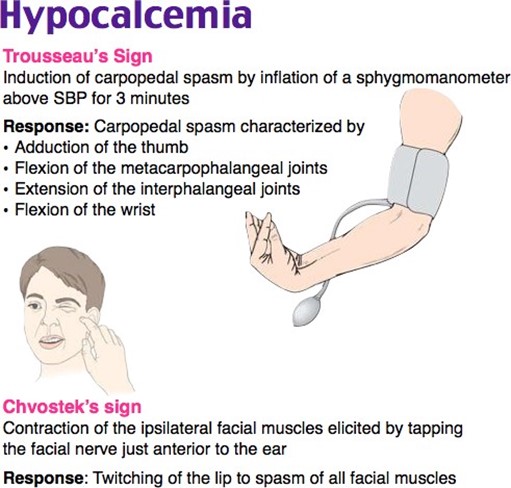
The nurse considered contraction of facial muscles as a finding of hypocalcemia because it is associated with Chvostek's sign, which indicates neuromuscular irritability due to low calcium levels.
Choice B rationale:
Complaints of fingers tingling are indicative of hypocalcemia since tingling sensations (paresthesias) in the extremities can result from decreased calcium levels affecting nerve function.
Choice C rationale:
Carpal spasm with blood pressure measurement is known as Trousseau's sign and is associated with hypocalcemia. When the blood pressure cuff is inflated above systolic pressure, it can cause tetany in the hand if the calcium levels are low.
Choice D rationale:
Asking when foot numbness would go away does not directly relate to hypocalcemia or its symptoms. It is not a finding used to come to the conclusion of hypocalcemia in this scenario.
Choice E rationale:
The heart rate being 88 and regular does not directly indicate hypocalcemia. While hypocalcemia can lead to cardiac arrhythmias, a heart rate of 88 and regular is within the normal range and not a specific finding for hypocalcemia.
A nurse is reviewing the laboratory results for four clients. The nurse should recognize which of the following clients has a manifestation of hypoparathyroidism?
A. A client who has a phosphate of 5.7 mg/dL.
The client with a phosphate level of 5.7 mg/dL likely has a manifestation of hypoparathyroidism. Hypoparathyroidism leads to decreased parathyroid hormone (PTH) secretion, which causes increased renal phosphate reabsorption, leading to elevated phosphate levels in the blood.
B. A client who has a calcium of 9.8 mg/dL.
A calcium level of 9.8 mg/dL is within the normal range (8.5-10.2 mg/dL) and does not indicate hypoparathyroidism.
C. A client who has a vitamin D of 25 ng/mL.
A vitamin D level of 25 ng/mL is within the normal range (30-100 ng/mL) and does not suggest hypoparathyroidism.
D. A client who has a magnesium of 1.8 mEq/L.
A magnesium level of 1.8 mEq/L is within the normal range (1.7-2.2 mEq/L) and does not directly indicate hypoparathyroidism.
Full Explanation
Choice A rationale:
The client with a phosphate level of 5.7 mg/dL likely has a manifestation of hypoparathyroidism. Hypoparathyroidism leads to decreased parathyroid hormone (PTH) secretion, which causes increased renal phosphate reabsorption, leading to elevated phosphate levels in the blood.
Choice B rationale:
A calcium level of 9.8 mg/dL is within the normal range (8.5-10.2 mg/dL) and does not indicate hypoparathyroidism.
Choice C rationale:
A vitamin D level of 25 ng/mL is within the normal range (30-100 ng/mL) and does not suggest hypoparathyroidism.
Choice D rationale:
A magnesium level of 1.8 mEq/L is within the normal range (1.7-2.2 mEq/L) and does not directly indicate hypoparathyroidism.