
Nursing practice questions with comprehensive rationales
NurseDive Free Nursing Practice Question
A phlebotomist should recognize that proper hand hygiene can result in which of the following?
A. A decrease in the incidence of health care-associated infections
Proper hand hygiene is one of the most effective measures to prevent the spread of infections within health care settings. By thoroughly cleaning hands, phlebotomists and other health care workers can significantly reduce the transmission of pathogens that can lead to health care-associated infections (HAIs). These infections are a major cause of morbidity and mortality among hospitalized patients and can be prevented by adhering to strict hand hygiene protocols.
B. An increase in the accuracy of laboratory results
While hand hygiene is crucial for preventing contamination and infection, it does not directly increase the accuracy of laboratory results. The accuracy of laboratory results is more dependent on the proper collection, handling, and processing of specimens, as well as the precision of the testing equipment and methodologies used.
C. A decrease in the rejection of laboratory specimens
Good hand hygiene can help decrease the rejection of laboratory specimens by preventing contamination. Contaminated specimens can lead to inaccurate results and may need to be recollected, which is inconvenient for the patient and can delay diagnosis and treatment. However, the primary outcome of proper hand hygiene is the prevention of HAIs, rather than the reduction of specimen rejection.
D. An increase in the potential sources of pathogens
Proper hand hygiene leads to a decrease, not an increase, in the potential sources of pathogens. By effectively removing germs from the hands, the risk of transmitting infectious agents is minimized. This is essential in a health care setting where patients may be vulnerable to infections due to weakened immune systems or open wounds.
This question is an excerpt from Nurse Dive's nursing test bank - Phlebotomy Certification Proctored Exam 130. Take the full exam now
Full Explanation
Choice A Reason:
Proper hand hygiene is one of the most effective measures to prevent the spread of infections within health care settings. By thoroughly cleaning hands, phlebotomists and other health care workers can significantly reduce the transmission of pathogens that can lead to health care-associated infections (HAIs). These infections are a major cause of morbidity and mortality among hospitalized patients and can be prevented by adhering to strict hand hygiene protocols.
Choice B Reason:
While hand hygiene is crucial for preventing contamination and infection, it does not directly increase the accuracy of laboratory results. The accuracy of laboratory results is more dependent on the proper collection, handling, and processing of specimens, as well as the precision of the testing equipment and methodologies used.
Choice C Reason:
Good hand hygiene can help decrease the rejection of laboratory specimens by preventing contamination. Contaminated specimens can lead to inaccurate results and may need to be recollected, which is inconvenient for the patient and can delay diagnosis and treatment. However, the primary outcome of proper hand hygiene is the prevention of HAIs, rather than the reduction of specimen rejection.
Choice D Reason:
Proper hand hygiene leads to a decrease, not an increase, in the potential sources of pathogens. By effectively removing germs from the hands, the risk of transmitting infectious agents is minimized. This is essential in a health care setting where patients may be vulnerable to infections due to weakened immune systems or open wounds.
Similar Questions
A phlebotomist should identify that a blood spot collection for inborn errors of metabolism requires which of the following?
A. The newborn must be at least 3 days old.
The age of the newborn is important for certain metabolic screenings, as some metabolites may not be present or at measurable levels immediately after birth. However, the requirement for the newborn to be at least 3 days old is not a standard for all blood spot collections for inborn errors of metabolism (IEM). Some screenings are performed within 24 to 48 hours after birth.
B. The circles on the filter paper must be at least half filled.
While it is important that the circles on the filter paper are adequately filled to ensure there is enough blood for the test, the requirement for them to be at least half filled is not specified in the guidelines. The focus is usually on ensuring the blood spot is of the right size and properly saturated through the filter paper.
C. The first drop of blood immediately following the puncture must be included.
The inclusion of the first drop of blood is not typically a requirement. In fact, the first drop is often wiped away to avoid contamination with tissue fluids that could affect the test results. Subsequent drops are used to fill the circles on the filter paper.
D. The specimen must be completely dried before the test can be processed.
The specimen must be completely dried before the test can be processed to prevent degradation or hemolysis of the blood sample. This is a critical step in the preparation of the sample for accurate testing of IEM. The drying process helps preserve the integrity of the metabolites to be analyzed.
Full Explanation
Choice A Reason:
The age of the newborn is important for certain metabolic screenings, as some metabolites may not be present or at measurable levels immediately after birth. However, the requirement for the newborn to be at least 3 days old is not a standard for all blood spot collections for inborn errors of metabolism (IEM). Some screenings are performed within 24 to 48 hours after birth.
Choice B Reason:
While it is important that the circles on the filter paper are adequately filled to ensure there is enough blood for the test, the requirement for them to be at least half filled is not specified in the guidelines. The focus is usually on ensuring the blood spot is of the right size and properly saturated through the filter paper.
Choice C Reason:
The inclusion of the first drop of blood is not typically a requirement. In fact, the first drop is often wiped away to avoid contamination with tissue fluids that could affect the test results. Subsequent drops are used to fill the circles on the filter paper.
Choice D Reason:
The specimen must be completely dried before the test can be processed to prevent degradation or hemolysis of the blood sample. This is a critical step in the preparation of the sample for accurate testing of IEM. The drying process helps preserve the integrity of the metabolites to be analyzed.
Which of the following is caused by excessive shaking of a tube?
A. Hemophilia
Hemophilia is a genetic disorder that impairs the body's ability to make blood clots, a process needed to stop bleeding. This condition is not caused by shaking a blood collection tube; it is an inherited disorder typically caused by a mutation in one of the clotting factor genes.
B. Hemoconcentration
Hemoconcentration refers to an increase in the concentration of cells and solids in the blood, usually resulting from a loss of plasma. While this can occur due to various reasons, such as dehydration, it is not caused by shaking a blood collection tube. Shaking a tube does not change the ratio of cells to plasma in the blood.
C. Hemolysis
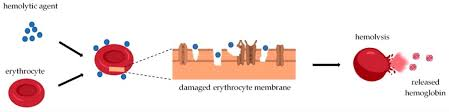
Hemolysis is the rupture of red blood cells, which can occur when a blood sample is handled roughly, such as by excessive shaking. This can cause the cells to break open and release their contents into the plasma, which can interfere with laboratory tests and lead to inaccurate results.
D. Hemostasis
Hemostasis is the process by which the body stops bleeding, which involves the clotting of blood. This process is not caused by shaking a blood collection tube. Hemostasis is a complex process that involves blood vessels, platelets, and clotting factors.
Full Explanation
Choice A Reason:
Hemophilia is a genetic disorder that impairs the body's ability to make blood clots, a process needed to stop bleeding. This condition is not caused by shaking a blood collection tube; it is an inherited disorder typically caused by a mutation in one of the clotting factor genes.
Choice B Reason:
Hemoconcentration refers to an increase in the concentration of cells and solids in the blood, usually resulting from a loss of plasma. While this can occur due to various reasons, such as dehydration, it is not caused by shaking a blood collection tube. Shaking a tube does not change the ratio of cells to plasma in the blood.
Choice C Reason:
Hemolysis is the rupture of red blood cells, which can occur when a blood sample is handled roughly, such as by excessive shaking. This can cause the cells to break open and release their contents into the plasma, which can interfere with laboratory tests and lead to inaccurate results.
Choice D Reason:
Hemostasis is the process by which the body stops bleeding, which involves the clotting of blood. This process is not caused by shaking a blood collection tube. Hemostasis is a complex process that involves blood vessels, platelets, and clotting factors.
A phlebotomist is performing a venipuncture on a patient who is allergic to alcohol. Which of the following is an appropriate antiseptic to use in place of alcohol?
A. Sterile water
Sterile water is not an antiseptic; it does not contain antimicrobial agents. While it can be used to rinse a site, it will not disinfect the area before a venipuncture procedure. Therefore, it is not an appropriate substitute for alcohol in this context.
B. Antiseptic foam
Antiseptic foam may contain alcohol or other disinfectants. If it is alcohol-free, it could be a suitable alternative. However, without specific information about the ingredients, it cannot be assumed to be an appropriate choice for a patient allergic to alcohol.
C. Chlorhexidine
Chlorhexidine is a commonly used antiseptic for skin preparation before medical procedures, including venipuncture. It is effective against a broad spectrum of bacteria and is an appropriate alternative for patients who have an allergy to alcohol-based antiseptics.
D. Saline
Saline solution is not an antiseptic. It is a sterile solution of sodium chloride in water and does not have antimicrobial properties. Like sterile water, it is not suitable for disinfecting the venipuncture site.
Full Explanation
Choice A Reason:
Sterile water is not an antiseptic; it does not contain antimicrobial agents. While it can be used to rinse a site, it will not disinfect the area before a venipuncture procedure. Therefore, it is not an appropriate substitute for alcohol in this context.
Choice B Reason:
Antiseptic foam may contain alcohol or other disinfectants. If it is alcohol-free, it could be a suitable alternative. However, without specific information about the ingredients, it cannot be assumed to be an appropriate choice for a patient allergic to alcohol.
Choice C Reason:
Chlorhexidine is a commonly used antiseptic for skin preparation before medical procedures, including venipuncture. It is effective against a broad spectrum of bacteria and is an appropriate alternative for patients who have an allergy to alcohol-based antiseptics.
Choice D Reason:
Saline solution is not an antiseptic. It is a sterile solution of sodium chloride in water and does not have antimicrobial properties. Like sterile water, it is not suitable for disinfecting the venipuncture site.