
Nursing practice questions with comprehensive rationales
NurseDive Free Nursing Practice Question
A young child is brought to the emergency department with severe dehydration secondary to acute diarrhea and vomiting. Therapeutic management of this child will begin with which intervention?
A. Clear liquids, 1 to 2 ounces at a time.
Clear liquids, 1 to 2 ounces at a time, might not be sufficient to adequately rehydrate a child with severe dehydration. Clear liquids lack the necessary electrolytes and glucose content to effectively combat dehydration and replace lost fluids.
B. Administration of antidiarrheal medication.
Administration of antidiarrheal medication is not the initial step in managing severe dehydration caused by acute diarrhea and vomiting. Antidiarrheal medications can slow down the gastrointestinal motility, which may exacerbate the problem by delaying the elimination of the causative agent and prolonging the dehydration.
C. Oral rehydration solution (ORS).
Oral rehydration solution (ORS) is the recommended initial intervention for managing severe dehydration caused by acute diarrhea and vomiting. ORS contains the appropriate balance of electrolytes (sodium, potassium, chloride) and glucose to replace lost fluids and electrolytes, thereby helping to rehydrate the child effectively. It is absorbed even when digestion is impaired due to the illness.
D. Intravenous fluids.
Intravenous fluids might be necessary if the child's condition is very severe and oral intake cannot be maintained. However, it's not the first-line intervention. Oral rehydration is preferred whenever feasible because it is less invasive and can be administered even in mild to moderate dehydration cases.
This question is an excerpt from Nurse Dive's nursing test bank - Pediatrics Midterm V1 2023 Test 3 Proctored Exam. Take the full exam now
Full Explanation
The correct answer is choice C: Oral rehydration solution (ORS).
Choice A rationale:
Clear liquids, 1 to 2 ounces at a time, might not be sufficient to adequately rehydrate a child with severe dehydration. Clear liquids lack the necessary electrolytes and glucose content to effectively combat dehydration and replace lost fluids.
Choice B rationale:
Administration of antidiarrheal medication is not the initial step in managing severe dehydration caused by acute diarrhea and vomiting. Antidiarrheal medications can slow down the gastrointestinal motility, which may exacerbate the problem by delaying the elimination of the causative agent and prolonging the dehydration.
Choice C rationale:
Oral rehydration solution (ORS) is the recommended initial intervention for managing severe dehydration caused by acute diarrhea and vomiting. ORS contains the appropriate balance of electrolytes (sodium, potassium, chloride) and glucose to replace lost fluids and electrolytes, thereby helping to rehydrate the child effectively. It is absorbed even when digestion is impaired due to the illness.
Choice D rationale:
Intravenous fluids might be necessary if the child's condition is very severe and oral intake cannot be maintained. However, it's not the first-line intervention. Oral rehydration is preferred whenever feasible because it is less invasive and can be administered even in mild to moderate dehydration cases.
Similar Questions
The recommended children's dosage of Keflex is 25 to 50 mg/kg/day in divided doses. The maximum daily safe dosage for a child weighing 42 lb is: Round to the nearest tenth.
(Number Only, do not enter mg, kg, or day with your answer)
Full Explanation
Step 1 is converting the child's weight from pounds to kilograms. (42 lb ÷ 2.2) = 19.09090909 kg
Step 2 is calculating the maximum daily dosage using the upper limit of the dosage range (50 mg/kg/day). 19.09090909 kg × 50 mg/kg/day = 954.5454545 mg/day
Step 3 is rounding the result to the nearest tenth. The answer is 954.5
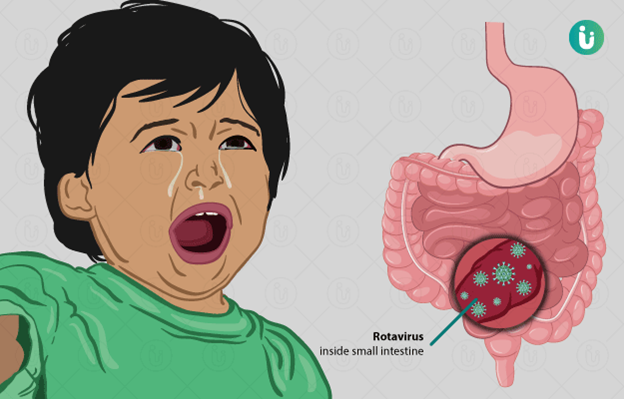
The viral pathogen that frequently causes acute diarrhea in young children is:
A. Rotavirus.
Rotavirus is a viral pathogen that frequently causes acute diarrhea in young children. It is highly contagious and is responsible for a significant portion of severe diarrhea cases worldwide. Rotavirus infections are most common in infants and young children, and they can lead to dehydration, especially in developing countries where access to clean water and proper sanitation might be limited.
B. Salmonella organisms.
Salmonella organisms can cause food poisoning and gastrointestinal infections that lead to diarrhea. However, they are more commonly associated with bacterial infections rather than viral-induced acute diarrhea.
C. Shigella organisms.
Shigella organisms are also bacterial pathogens that cause diarrhea, specifically bacillary dysentery. While they can cause severe diarrhea, they are not the viral pathogen typically responsible for acute diarrhea in young children.
D. Giardia organisms.
Giardia organisms are parasites that can cause gastrointestinal infections leading to diarrhea. However, they are not viruses, and they are less commonly associated with acute diarrhea in children compared to rotavirus.
Full Explanation
The correct answer is choice A: Rotavirus.
Choice A rationale:
Rotavirus is a viral pathogen that frequently causes acute diarrhea in young children. It is highly contagious and is responsible for a significant portion of severe diarrhea cases worldwide. Rotavirus infections are most common in infants and young children, and they can lead to dehydration, especially in developing countries where access to clean water and proper sanitation might be limited.
Choice B rationale:
Salmonella organisms can cause food poisoning and gastrointestinal infections that lead to diarrhea. However, they are more commonly associated with bacterial infections rather than viral-induced acute diarrhea.
Choice C rationale:
Shigella organisms are also bacterial pathogens that cause diarrhea, specifically bacillary dysentery. While they can cause severe diarrhea, they are not the viral pathogen typically responsible for acute diarrhea in young children.
Choice D rationale:
Giardia organisms are parasites that can cause gastrointestinal infections leading to diarrhea. However, they are not viruses, and they are less commonly associated with acute diarrhea in children compared to rotavirus.
What is the most appropriate nursing diagnosis for a child diagnosed with moderate anemia?
A. Risk for injury related to depressed sensorium.
Risk for injury related to depressed sensorium. This choice is not the most appropriate nursing diagnosis for a child with moderate anemia. While anemia can lead to fatigue and weakness, the main concern is the child's ability to tolerate physical activities, not the risk of injury due to a depressed sensorium.
B. Decreased cardiac output related to abnormal hemoglobin.
Decreased cardiac output related to abnormal hemoglobin. This choice is not the most suitable nursing diagnosis for a child with moderate anemia. While abnormal hemoglobin levels can affect cardiac output, moderate anemia typically doesn't lead to such a significant decrease in cardiac output that it becomes the primary nursing diagnosis. Activity intolerance is a more relevant concern.
C. Activity intolerance related to generalized weakness.
Activity intolerance related to generalized weakness. This is the most appropriate nursing diagnosis for a child diagnosed with moderate anemia. Moderate anemia results in a decrease in oxygen-carrying capacity, leading to generalized weakness and reduced ability to perform physical activities without becoming fatigued. The child's hemoglobin levels are likely low enough to cause noticeable activity intolerance.
D. Risk for Injury related to dehydration and abnormal hemoglobin.
Risk for Injury related to dehydration and abnormal hemoglobin. This choice is not the best nursing diagnosis for a child with moderate anemia. Dehydration may exacerbate the effects of anemia, but the primary issue here is the anemia itself causing weakness and activity intolerance, which are better addressed with the choice C diagnosis.
Full Explanation
The correct answer is choice C. Activity intolerance related to generalized weakness.
Choice A rationale:
Risk for injury related to depressed sensorium. This choice is not the most appropriate nursing diagnosis for a child with moderate anemia. While anemia can lead to fatigue and weakness, the main concern is the child's ability to tolerate physical activities, not the risk of injury due to a depressed sensorium.
Choice B rationale:
Decreased cardiac output related to abnormal hemoglobin. This choice is not the most suitable nursing diagnosis for a child with moderate anemia. While abnormal hemoglobin levels can affect cardiac output, moderate anemia typically doesn't lead to such a significant decrease in cardiac output that it becomes the primary nursing diagnosis. Activity intolerance is a more relevant concern.
Choice C rationale:
Activity intolerance related to generalized weakness. This is the most appropriate nursing diagnosis for a child diagnosed with moderate anemia. Moderate anemia results in a decrease in oxygen-carrying capacity, leading to generalized weakness and reduced ability to perform physical activities without becoming fatigued. The child's hemoglobin levels are likely low enough to cause noticeable activity intolerance.
Choice D rationale:
Risk for Injury related to dehydration and abnormal hemoglobin. This choice is not the best nursing diagnosis for a child with moderate anemia. Dehydration may exacerbate the effects of anemia, but the primary issue here is the anemia itself causing weakness and activity intolerance, which are better addressed with the choice C diagnosis.