
Nursing practice questions with comprehensive rationales
NurseDive Free Nursing Practice Question
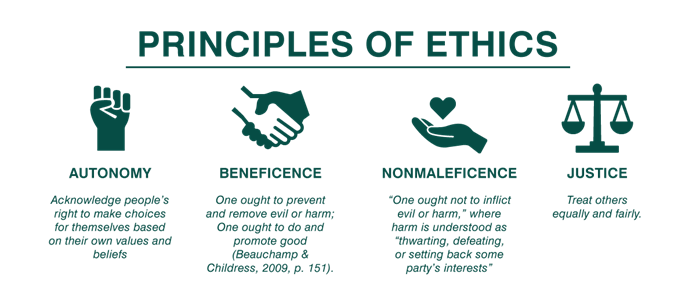
Doing no harm is?
A. Justice
refers to the fair distribution of benefits and burdens in society.
B. Nonmaleficence
Nonmaleficence is the ethical principle of doing no harm. It requires healthcare providers to avoid causing harm to their patients and to take steps to prevent harm from occurring.
C. Beneficence
refers to the obligation to do good and promote the well-being of others.
D. Veracity
refers to the obligation to tell the truth and not deceive others.
This question is an excerpt from Nurse Dive's nursing test bank - ATI PN Medical Surgical Leadership Proctored Exam. Take the full exam now
Full Explanation
Nonmaleficence is the ethical principle of doing no harm. It requires healthcare providers to avoid causing harm to their patients and to take steps to prevent harm from occurring.
The other options are also important ethical principles in healthcare, but they do not specifically refer to doing no harm. Justice [a] refers to the fair distribution of benefits and burdens in society. Beneficence [c] refers to the obligation to do good and promote the well-being of others. Veracity [d] refers to the obligation, to tell the truth and not deceive others.
Similar Questions
A nurse is assigning tasks for the upcoming shift. Which of the following tasks should the nurse delegate to assistive personnel (AP)? (Select all that apply.)
A. Providing postmortem care to a client who has just passed away.
Providing postmortem care to a client who has just passed away is a task that can be delegated to assistive personnel (AP). Postmortem care involves cleaning and preparing the body after death and is not a task that requires the specialized skills or judgement of a nurse. It is important to note that while the physical task of postmortem care can be delegated, the nurse is still responsible for providing emotional support and information to the family, coordinating with the morgue or funeral home, and completing any required documentation.
B. Instructing a client about the use of a spirometer.
Instructing a client about the use of a spirometer is not a task that should be delegated to assistive personnel. Patient education requires assessment and evaluation of the patient’s understanding, which are nursing responsibilities. A spirometer is a medical device used to measure lung function and is often used after surgery to help prevent complications like pneumonia. Proper use of the spirometer is crucial to its effectiveness, so it is important that the instruction is clear and understood by the patient.
C. Suctioning a client's newly inserted tracheostomy.
Suctioning a client’s newly inserted tracheostomy is not a task that should be delegated to assistive personnel. Tracheostomy care, especially suctioning, requires specialized skills and knowledge, as well as the ability to assess the patient’s respiratory status. Improper suctioning can cause trauma to the trachea, hypoxia, or infection. Therefore, this task should be performed by a nurse or other licensed healthcare professional.
D. Transferring a client to radiology for x-rays.
Transferring a client to radiology for x-rays is a task that can be delegated to assistive personnel. This task involves physical assistance and does not require specialized nursing skills or judgement. However, the nurse should provide the AP with any necessary information about the patient’s condition, mobility, and any precautions that need to be taken during the transfer.
E. Performing a simple dressing change on a client's arm.
Performing a simple dressing change on a client’s arm is a task that can be delegated to assistive personnel. This task involves changing the bandages on a wound, which is a task that does not require specialized nursing skills or judgement. However, the nurse should ensure that the AP has been properly trained in dressing changes, understands the importance of infection control, and knows when to report any changes in the wound’s appearance.
Full Explanation
The correct answers are Choices A, D, and E.
Choice A rationale: Providing postmortem care to a client who has just passed away is a task that can be delegated to assistive personnel (AP). Postmortem care involves cleaning and preparing the body after death and is not a task that requires the specialized skills or judgement of a nurse. It is important to note that while the physical task of postmortem care can be delegated, the nurse is still responsible for providing emotional support and information to the family, coordinating with the morgue or funeral home, and completing any required documentation.
Choice B rationale: Instructing a client about the use of a spirometer is not a task that should be delegated to assistive personnel. Patient education requires assessment and evaluation of the patient’s understanding, which are nursing responsibilities. A spirometer is a medical device used to measure lung function and is often used after surgery to help prevent complications like pneumonia. Proper use of the spirometer is crucial to its effectiveness, so it is important that the instruction is clear and understood by the patient.
Choice C rationale: Suctioning a client’s newly inserted tracheostomy is not a task that should be delegated to assistive personnel. Tracheostomy care, especially suctioning, requires specialized skills and knowledge, as well as the ability to assess the patient’s respiratory status. Improper suctioning can cause trauma to the trachea, hypoxia, or infection. Therefore, this task should be performed by a nurse or other licensed healthcare professional.
Choice D rationale: Transferring a client to radiology for x-rays is a task that can be delegated to assistive personnel. This task involves physical assistance and does not require specialized nursing skills or judgement. However, the nurse should provide the AP with any necessary information about the patient’s condition, mobility, and any precautions that need to be taken during the transfer.
Choice E rationale: Performing a simple dressing change on a client’s arm is a task that can be delegated to assistive personnel. This task involves changing the bandages on a wound, which is a task that does not require specialized nursing skills or judgement. However, the nurse should ensure that the AP has been properly trained in dressing changes, understands the importance of infection control, and knows when to report any changes in the wound’s appearance.
What is a nurse's best protection against negligence or malpractice?
A. Asking permission from the managing nurse prior to performing any duties.
B. Following the standards of practice.
A nurse's best protection against negligence or malpractice is to follow the standards of practice. These standards define the acceptable level of care that a nurse is expected to provide and are based on current evidence and professional consensus. By adhering to these standards, a nurse can demonstrate that they have provided care that meets the expected level of quality and safety.
C. Never be alone with a patient.
D. Recording patient interactions with your phone.
Full Explanation
A nurse's best protection against negligence or malpractice is to follow the standards of practice. These standards define the acceptable level of care that a nurse is expected to provide and are based on current evidence and professional consensus. By adhering to these standards, a nurse can demonstrate that they have provided care that meets the expected level of quality and safety.
The other options are not the best protection against negligence or malpractice. Asking permission from the managing nurse prior to performing any duties [a] may be helpful in some situations, but it is not a guarantee against negligence or malpractice. Never being alone with a patient [c] is not practical or necessary for providing safe and effective care. Recording patient interactions with your phone [d] may violate patient privacy and is not an effective way to prevent negligence or malpractice.
A nurse is delegating tasks to an assistive personnel (AP). Which of the following tasks should the nurse assign to the AP?
A. Assisting the client in selecting a low-residue diet.
B. Performing a complex dressing change.
C. Reviewing the steps of self-blood glucose monitoring with a client.
D. Obtaining vital signs on clients who are stable.
Assistive personnel (AP), also known as unlicensed assistive personnel (UAP), can perform tasks such as recording vital signs ¹. Obtaining vital signs on clients who are stable [d] is a task that can be delegated to an AP.
Full Explanation
Assistive personnel (AP), also known as unlicensed assistive personnel (UAP), can perform tasks such as recording vital signs ¹. Obtaining vital signs on clients who are stable [d] is a task that can be delegated to an AP.
The other options are not tasks that should be delegated to an AP. Assisting the client to select a low-residue diet [a] and reviewing the steps of self-blood glucose monitoring with a client [c] involves patient education and dietary planning, which are typically the responsibility of a licensed nurse. Performing a complex dressing change [b] is a complex task that requires specialized knowledge and skills.