Nursing practice questions with comprehensive rationales
NurseDive Free Nursing Practice Question
Following admission, a client with a vascular occlusion of the right lower extremity calls the nurse and reports difficulty sleeping because of cold feet. Which of the following nursing actions should the nurse take to promote the client’s comfort?
A. Rub the client’s feet briskly for several minutes.
Rub the client’s feet briskly for several minutes.Rubbing the feet briskly may not be appropriate for a client with vascular occlusion. Vigorous rubbing could potentially cause damage to already compromised blood vessels, and the increased friction may not be well-tolerated.
B. Obtain a pair of slipper socks for the client.
Obtain a pair of slipper socks for the client.Providing slipper socks is a non-invasive and appropriate measure to help keep the client's feet warm. Slipper socks can offer comfort without the need for vigorous interventions or potential harm. They provide insulation and can be easily applied.
C. Increase the client’s oral fluid intake.
Increase the client’s oral fluid intake. While staying well-hydrated is generally important for overall health, increasing oral fluid intake may not directly address the specific issue of cold feet associated with vascular occlusion. It is essential to address the underlying circulatory issue causing the symptom.
D. Place a moist heating pad under the client’s feet.
Place a moist heating pad under the client’s feet.Applying heat, especially in the form of a moist heating pad, may not be recommended for a client with vascular occlusion. Heat can dilate blood vessels and potentially exacerbate the issue by increasing blood flow to the compromised extremity. It's important to avoid interventions that could worsen the vascular compromise.
This question is an excerpt from Nurse Dive's nursing test bank - Ati Custom Pn Basic Care And Comfort Assessment Proctored Exam. Take the full exam now
Full Explanation
A. Rub the client’s feet briskly for several minutes.
Rubbing the feet briskly may not be appropriate for a client with vascular occlusion. Vigorous rubbing could potentially cause damage to already compromised blood vessels, and the increased friction may not be well-tolerated.
B. Obtain a pair of slipper socks for the client.
Providing slipper socks is a non-invasive and appropriate measure to help keep the client's feet warm. Slipper socks can offer comfort without the need for vigorous interventions or potential harm. They provide insulation and can be easily applied.
C. Increase the client’s oral fluid intake.
While staying well-hydrated is generally important for overall health, increasing oral fluid intake may not directly address the specific issue of cold feet associated with vascular occlusion. It is essential to address the underlying circulatory issue causing the symptom.
D. Place a moist heating pad under the client’s feet.
Applying heat, especially in the form of a moist heating pad, may not be recommended for a client with vascular occlusion. Heat can dilate blood vessels and potentially exacerbate the issue by increasing blood flow to the compromised extremity. It's important to avoid interventions that could worsen the vascular compromise.
Similar Questions
A nurse is reinforcing teaching with a client who is scheduled to have a permanent pacemaker implanted. Which of the following statements should the nurse include in the teaching?
A. “You should avoid the use of cell phones after the pacemaker is placed.”
“You should avoid the use of cell phones after the pacemaker is placed.”This statement is not accurate. In general, the use of cell phones is considered safe for individuals with pacemakers. However, it is recommended to keep the phone on the opposite side of the pacemaker to minimize any potential interference.
B. “Swelling and redness of the operative site are normal findings for the first two days following the procedure.”
“Swelling and redness of the operative site are normal findings for the first two days following the procedure.”This statement is partially accurate. Swelling and redness at the operative site can be expected immediately after the procedure. However, if these signs persist or worsen after the first two days, it may indicate a potential issue, and the healthcare provider should be notified.
C. “You will need to limit movement of the arm on the side of the pacemaker.”
“You will need to limit movement of the arm on the side of the pacemaker.”This statement is accurate. Limiting movement of the arm on the side of the pacemaker is a standard precaution to prevent dislodgement of the leads and allow proper embedding of the pacemaker leads into the surrounding tissues.
D. “Hiccups following pacemaker placement are an expected response.”
“Hiccups following pacemaker placement are an expected response.”This statement is not accurate. Hiccups are not typically associated with pacemaker placement. If the client experiences unexpected symptoms, such as hiccups, it is important to report them to the healthcare provider for further evaluation.
Full Explanation
A. “You should avoid the use of cell phones after the pacemaker is placed.”
This statement is not accurate. In general, the use of cell phones is considered safe for individuals with pacemakers. However, it is recommended to keep the phone on the opposite side of the pacemaker to minimize any potential interference.
B. “Swelling and redness of the operative site are normal findings for the first two days following the
procedure.”
This statement is partially accurate. Swelling and redness at the operative site can be expected immediately after the procedure. However, if these signs persist or worsen after the first two days, it may indicate a potential issue, and the healthcare provider should be notified.
C. “You will need to limit movement of the arm on the side of the pacemaker.”
This statement is accurate. Limiting movement of the arm on the side of the pacemaker is a standard precaution to prevent dislodgement of the leads and allow proper embedding of the pacemaker leads into the surrounding tissues.
D. “Hiccups following pacemaker placement are an expected response.”
This statement is not accurate. Hiccups are not typically associated with pacemaker placement. If the client experiences unexpected symptoms, such as hiccups, it is important to report them to the healthcare provider for further evaluation.
A nurse is caring for a client who had total hip arthroplasty 1 day ago and is receiving morphine sulfate by PCA pump for pain control. The client reports nausea and vomiting. Which of the following actions is the priority for the nurse to take?
A. Provide an antiemetic.
Provide an antiemetic.While providing an antiemetic can help alleviate the client's nausea and vomiting, it is not the priority action. Assessment should come first to determine the underlying cause.
B. Make the client NPO.
Making the client NPO might be necessary if there is concern about bowel obstruction or other gastrointestinal issues, but this decision should be based on an initial assessment, such as auscultating bowel sounds.
C. Administer a stimulant laxative.
Administer a stimulant laxative.Administering a stimulant laxative is not appropriate at this stage without first assessing bowel sounds. It could potentially worsen the situation if there is a bowel obstruction.
D. Auscultate bowel sounds.
Auscultate bowel sounds.The priority in this situation is to assess for possible complications such as bowel obstruction or paralytic ileus, which can occur postoperatively and can be exacerbated by opioid use. Auscultating bowel sounds helps determine the presence of normal, hypoactive, or absent bowel sounds, guiding further management.
Full Explanation
A. Provide an antiemetic.
While providing an antiemetic can help alleviate the client's nausea and vomiting, it is not the priority action. Assessment should come first to determine the underlying cause.
B. Make the client NPO.
Making the client NPO might be necessary if there is concern about bowel obstruction or other gastrointestinal issues, but this decision should be based on an initial assessment, such as auscultating bowel sounds.
C. Administer a stimulant laxative.
Administering a stimulant laxative is not appropriate at this stage without first assessing bowel sounds. It could potentially worsen the situation if there is a bowel obstruction.
D. Auscultate bowel sounds.
The priority in this situation is to assess for possible complications such as bowel obstruction or paralytic ileus, which can occur postoperatively and can be exacerbated by opioid use. Auscultating bowel sounds helps determine the presence of normal, hypoactive, or absent bowel sounds, guiding further management.
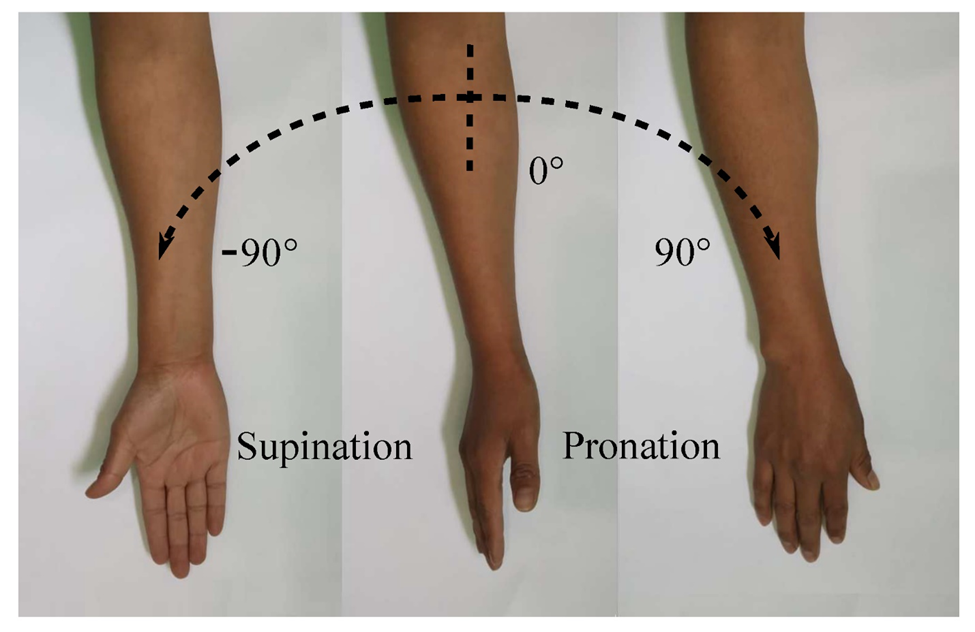
A nurse is collecting data about a client’s range of motion. Which of the following instructions should the nurse give to the client to observe the elbow rotate for supination?
A. “Turn each of your hands and forearms so your palm is facing down.”
“Turn each of your hands and forearms so your palm is facing down.”This describes pronation, not supination. In pronation, the palm faces down, and the radius crosses over the ulna.
B. “Take each of your hands and touch your shoulders.”
“Take each of your hands and touch your shoulders.”This describes flexion at the elbow joint, not supination. Flexion involves decreasing the angle between body parts.
C. “Turn each of your hands and forearms so your palm is facing up.”
“Turn each of your hands and forearms so your palm is facing up.” This is the correct choice. Supination involves turning the hands and forearms so that the palms face up, and the radius and ulna are parallel.
D. “Move each of your arms to rest at your sides.”
“Move each of your arms to rest at your sides.”This describes adduction, bringing the arms back to the sides of the body, not supination.
Full Explanation
A. “Turn each of your hands and forearms so your palm is facing down.”
This describes pronation, not supination. In pronation, the palm faces down, and the radius crosses over the ulna.
B. “Take each of your hands and touch your shoulders.”
This describes flexion at the elbow joint, not supination. Flexion involves decreasing the angle between body parts.
C. “Turn each of your hands and forearms so your palm is facing up.”
This is the correct choice. Supination involves turning the hands and forearms so that the palms face up, and the radius and ulna are parallel.
D. “Move each of your arms to rest at your sides.”
This describes adduction, bringing the arms back to the sides of the body, not supination.