
Nursing practice questions with comprehensive rationales
NurseDive Free Nursing Practice Question
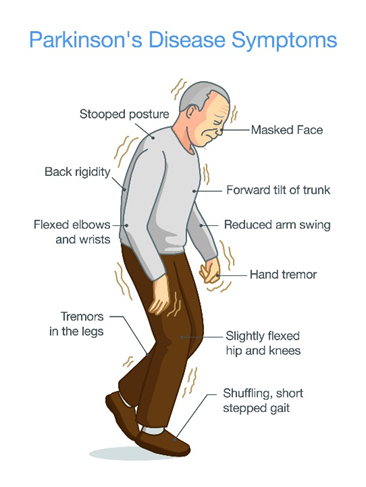
Parkinson's disease has which characteristic symptom(s)? SELECT ALL THAT APPLY
A. Muscle tremors
Muscle tremors:Muscle tremors, particularly resting tremors, are a hallmark feature of Parkinson's disease. These tremors typically occur in the hands, fingers, arms, legs, jaw, or head and may worsen with stress or inactivity.
B. Slow body movement (bradykinesia)
Slow body movement (bradykinesia):Bradykinesia refers to slowness of movement and is another key symptom of Parkinson's disease. Patients may have difficulty initiating movement, experience a decrease in spontaneous movement (hypokinesia), and demonstrate reduced range of motion.
C. Rigidity
Rigidity:Rigidity, or stiffness of the muscles, is a common symptom of Parkinson's disease. It often affects the limbs and trunk and can contribute to difficulty with movement and posture.
D. Pill rolling
Pill rolling:Pill rolling refers to a specific type of tremor characterized by rhythmic, rolling movements of the thumb and fingers, resembling the action of rolling a pill between the fingers and thumb. This tremor is commonly seen in Parkinson's disease.
E. Lack of facial expression
Parkinson's disease can lead to a reduced range of facial expressions, also known as hypomimia or "masked facies." Patients may have a fixed, expressionless facial appearance and reduced blinking.
F. Drooling
Drooling, or excessive salivation, can occur in Parkinson's disease due to impaired swallowing function (dysphagia) and reduced control over oral and facial muscles.
This question is an excerpt from Nurse Dive's nursing test bank - Ati Lpn Med Surg Neuro Test 2024 Proctored Exam. Take the full exam now
Full Explanation
A. Muscle tremors:
Muscle tremors, particularly resting tremors, are a hallmark feature of Parkinson's disease. These tremors typically occur in the hands, fingers, arms, legs, jaw, or head and may worsen with stress or inactivity.
B. Slow body movement (bradykinesia):
Bradykinesia refers to slowness of movement and is another key symptom of Parkinson's disease. Patients may have difficulty initiating movement, experience a decrease in spontaneous movement (hypokinesia), and demonstrate reduced range of motion.
C. Rigidity:
Rigidity, or stiffness of the muscles, is a common symptom of Parkinson's disease. It often affects the limbs and trunk and can contribute to difficulty with movement and posture.
D. Pill rolling:
Pill rolling refers to a specific type of tremor characterized by rhythmic, rolling movements of the thumb and fingers, resembling the action of rolling a pill between the fingers and thumb. This tremor is commonly seen in Parkinson's disease.
E. Lack of facial expression:
Parkinson's disease can lead to a reduced range of facial expressions, also known as hypomimia or "masked facies." Patients may have a fixed, expressionless facial appearance and reduced blinking.
F. Drooling:
Drooling, or excessive salivation, can occur in Parkinson's disease due to impaired swallowing function (dysphagia) and reduced control over oral and facial muscles.
Similar Questions
The nurse is caring for a patient taking a cholinergic agent. When auscultating lung sounds, the nurse notes inspiratory and expiratory wheezing bilaterally. The best action for the nurse to take would be to:
A. withhold the next dose and notify the physician
Withhold the next dose and notify the physician:Withholding the next dose of the cholinergic agent is the appropriate immediate action because the presence of inspiratory and expiratory wheezing bilaterally suggests bronchoconstriction or bronchospasm, which can be a serious adverse reaction to the medication. Notifying the physician promptly allows for further assessment and management of the patient's respiratory symptoms. The physician may need to adjust the medication regimen, order diagnostic tests, or provide treatment for bronchoconstriction.
B. give the next dose
Give the next dose:Administering the next dose of the cholinergic agent could worsen the patient's respiratory symptoms and exacerbate bronchoconstriction. This action is contraindicated in the presence of wheezing, as it may further compromise the patient's respiratory function.
C. assess heart rate
Assess heart rate: While assessing heart rate is an important aspect of patient assessment, it is not the priority in this scenario. The priority is to address the respiratory distress and potential bronchoconstriction associated with the cholinergic agent. Wheezing is a respiratory symptom that suggests airway obstruction, and immediate intervention is necessary to ensure adequate oxygenation and ventilation.
D. assess blood pressure
Assess blood pressure:Similarly, while assessing blood pressure is important in patient care, it is not the priority in this situation. The priority is to address the respiratory distress and potential bronchoconstriction associated with the cholinergic agent. Wheezing indicates respiratory compromise, and prompt action is required to prevent further respiratory deterioration.
Full Explanation
A. Withhold the next dose and notify the physician:
Withholding the next dose of the cholinergic agent is the appropriate immediate action because the presence of inspiratory and expiratory wheezing bilaterally suggests bronchoconstriction or bronchospasm, which can be a serious adverse reaction to the medication. Notifying the physician promptly allows for further assessment and management of the patient's respiratory symptoms. The physician may need to adjust the medication regimen, order diagnostic tests, or provide treatment for bronchoconstriction.
B. Give the next dose:
Administering the next dose of the cholinergic agent could worsen the patient's respiratory symptoms and exacerbate bronchoconstriction. This action is contraindicated in the presence of wheezing, as it may further compromise the patient's respiratory function.
C. Assess heart rate:
While assessing heart rate is an important aspect of patient assessment, it is not the priority in this scenario. The priority is to address the respiratory distress and potential bronchoconstriction associated with the cholinergic agent. Wheezing is a respiratory symptom that suggests airway obstruction, and immediate intervention is necessary to ensure adequate oxygenation and ventilation.
D. Assess blood pressure:
Similarly, while assessing blood pressure is important in patient care, it is not the priority in this situation. The priority is to address the respiratory distress and potential bronchoconstriction associated with the cholinergic agent. Wheezing indicates respiratory compromise, and prompt action is required to prevent further respiratory deterioration.
The nurse is preparing discharge instructions for a patient with a history of diabetes who has just been diagnosed with seizure disorder. The patient has been prescribed hydantoin therapy. What will the patient most likely experience?
A. Hyperglycemia
Hyperglycemia:Hyperglycemia refers to high blood sugar levels. While certain medications can affect glucose metabolism and potentially lead to hyperglycemia as a side effect, this is not typically associated with hydantoin therapy for seizure disorder. Therefore, it is less likely for the patient to experience hyperglycemia as a direct result of taking hydantoin medication.
B. Hunger
Hunger:Hunger is not a common side effect of hydantoin therapy for seizure disorder. While some medications may affect appetite or cause changes in eating habits, hunger is not a typical side effect of hydantoin medications such as phenytoin.
C. Hypoglycemia
Hypoglycemia: Hypoglycemia refers to low blood sugar levels, which can lead to symptoms such as confusion, dizziness, sweating, and weakness. Hydantoin medications, particularly phenytoin, can affect glucose metabolism and increase the risk of hypoglycemia, especially in patients who already have diabetes or are prone to low blood sugar. Therefore, it is important for patients taking hydantoin therapy to monitor their blood sugar levels regularly and be aware of the signs and symptoms of hypoglycemia.
D. Pupil dilation
Pupil dilation:Pupil dilation, or mydriasis, is not a common side effect of hydantoin therapy for seizure disorder. While certain medications may affect pupil size, this is not typically associated with hydantoin medications such as phenytoin.
Full Explanation
A. Hyperglycemia:
Hyperglycemia refers to high blood sugar levels. While certain medications can affect glucose metabolism and potentially lead to hyperglycemia as a side effect, this is not typically associated with hydantoin therapy for seizure disorder. Therefore, it is less likely for the patient to experience hyperglycemia as a direct result of taking hydantoin medication.
B. Hunger:
Hunger is not a common side effect of hydantoin therapy for seizure disorder. While some medications may affect appetite or cause changes in eating habits, hunger is not a typical side effect of hydantoin medications such as phenytoin.
C. Hypoglycemia:
Hypoglycemia refers to low blood sugar levels, which can lead to symptoms such as confusion, dizziness, sweating, and weakness. Hydantoin medications, particularly phenytoin, can affect glucose metabolism and increase the risk of hypoglycemia, especially in patients who already have diabetes or are prone to low blood sugar. Therefore, it is important for patients taking hydantoin therapy to monitor their blood sugar levels regularly and be aware of the signs and symptoms of hypoglycemia.
D. Pupil dilation:
Pupil dilation, or mydriasis, is not a common side effect of hydantoin therapy for seizure disorder. While certain medications may affect pupil size, this is not typically associated with hydantoin medications such as phenytoin.
Which condition would indicate to the nurse that the patient has a phenytoin (Dilantin) toxicity?
A. Nystagmus
Nystagmus:Nystagmus is an involuntary, rhythmic movement of the eyes, which can be rapid and jerky. It is a common neurological manifestation of phenytoin toxicity. Patients experiencing phenytoin toxicity may exhibit horizontal or vertical nystagmus, which can be detected upon physical examination.
B. Strabismus
Strabismus:Strabismus, also known as crossed eyes or squint, refers to a misalignment of the eyes. While strabismus can have various causes, it is not typically associated with phenytoin toxicity. Therefore, it is less likely to indicate phenytoin toxicity compared to nystagmus.
C. Blurry vision
Blurry vision: Blurry vision, or visual disturbances, can occur in patients experiencing phenytoin toxicity. However, it is a non-specific symptom and can be observed in various other conditions as well. Patients with phenytoin toxicity may experience blurry vision, double vision (diplopia), or other visual disturbances due to the effects of the medication on the central nervous system.
D. Amblyopia
Amblyopia:Amblyopia, also known as lazy eye, is a condition characterized by reduced vision in one or both eyes. It is typically associated with visual development during childhood and is not directly related to phenytoin toxicity. Therefore, it is less likely to indicate phenytoin toxicity compared to nystagmus or other neurological manifestations.
Full Explanation
A. Nystagmus:
Nystagmus is an involuntary, rhythmic movement of the eyes, which can be rapid and jerky. It is a common neurological manifestation of phenytoin toxicity. Patients experiencing phenytoin toxicity may exhibit horizontal or vertical nystagmus, which can be detected upon physical examination.
B. Strabismus:
Strabismus, also known as crossed eyes or squint, refers to a misalignment of the eyes. While strabismus can have various causes, it is not typically associated with phenytoin toxicity. Therefore, it is less likely to indicate phenytoin toxicity compared to nystagmus.
C. Blurry vision:
Blurry vision, or visual disturbances, can occur in patients experiencing phenytoin toxicity. However, it is a non-specific symptom and can be observed in various other conditions as well. Patients with phenytoin toxicity may experience blurry vision, double vision (diplopia), or other visual disturbances due to the effects of the medication on the central nervous system.
D. Amblyopia:
Amblyopia, also known as lazy eye, is a condition characterized by reduced vision in one or both eyes. It is typically associated with visual development during childhood and is not directly related to phenytoin toxicity. Therefore, it is less likely to indicate phenytoin toxicity compared to nystagmus or other neurological manifestations.