
Nursing practice questions with comprehensive rationales
NurseDive Free Nursing Practice Question
The caregiver of an elderly client asks the nurse what can be done about the chronic bilateral inflammation of the eyelid margins that keeps recurring. Which of the following is the information that the nurse will provide?
A. Instill eye drops in both eyes every hour around the clock
Reason: This choice is incorrect. Instilling eye drops in both eyes every hour around the clock is not an information that the nurse will provide, as it is not a recommended treatment for chronic bilateral inflammation of the eyelid margins. This condition is also known as blepharitis, which is a common and chronic disorder that causes redness, itching, burning, and crusting of the eyelids. Eye drops may be used to relieve symptoms, but not every hour or without a prescription.
B. Use sterile gloves when assisting with activities of daily living
Reason: This choice is incorrect. Using sterile gloves when assisting with activities of daily living is not an information that the nurse will provide, as it is not a necessary precaution for chronic bilateral inflammation of the eyelid margins. Blepharitis is not contagious or infectious, but rather caused by an overgrowth of bacteria or mites on the eyelids, or by an underlying skin condition such as seborrheic dermatitis or rosacea.
C. Use baby shampoo on the eyelid margins
Reason: This is the correct choice. Using baby shampoo on the eyelid margins is an information that the nurse will provide, as it is a simple and effective way to clean and soothe the eyelids. Baby shampoo is gentle and non-irritating, and can help remove excess oil, debris, and scales from the eyelids. The nurse will instruct the caregiver to dilute a few drops of baby shampoo with warm water, apply it to a cotton ball or washcloth, and gently rub it along the eyelid margins. The nurse will also advise to rinse well with water and pat dry with a clean towel.
D. Use a salt scrub inside the eyelid
Reason: This choice is incorrect. Using a salt scrub inside the eyelid is not an information that the nurse will provide, as it is a harmful and painful method that can damage and irritate the eye. Salt scrub is abrasive and drying, and can cause corneal abrasion, infection, or inflammation. The nurse will warn the caregiver to avoid using any harsh or unapproved products on or near the eye.
This question is an excerpt from Nurse Dive's nursing test bank - ATI Med Surg Proctored Exam 4. Take the full exam now
Full Explanation
Choice A Reason: This choice is incorrect. Instilling eye drops in both eyes every hour around the clock is not an information that the nurse will provide, as it is not a recommended treatment for chronic bilateral inflammation of the eyelid margins. This condition is also known as blepharitis, which is a common and chronic disorder that causes redness, itching, burning, and crusting of the eyelids. Eye drops may be used to relieve symptoms, but not every hour or without a prescription.
Choice B Reason: This choice is incorrect. Using sterile gloves when assisting with activities of daily living is not an information that the nurse will provide, as it is not a necessary precaution for chronic bilateral inflammation of the eyelid margins. Blepharitis is not contagious or infectious, but rather caused by an overgrowth of bacteria or mites on the eyelids, or by an underlying skin condition such as seborrheic dermatitis or rosacea.
Choice C Reason: This is the correct choice. Using baby shampoo on the eyelid margins is an information that the nurse will provide, as it is a simple and effective way to clean and soothe the eyelids. Baby shampoo is gentle and non-irritating, and can help remove excess oil, debris, and scales from the eyelids. The nurse will instruct the caregiver to dilute a few drops of baby shampoo with warm water, apply it to a cotton ball or washcloth, and gently rub it along the eyelid margins. The nurse will also advise to rinse well with water and pat dry with a clean towel.
Choice D Reason: This choice is incorrect. Using a salt scrub inside the eyelid is not an information that the nurse will provide, as it is a harmful and painful method that can damage and irritate the eye. Salt scrub is abrasive and drying, and can cause corneal abrasion, infection, or inflammation. The nurse will warn the caregiver to avoid using any harsh or unapproved products on or near the eye.
Similar Questions
A client admitted after a motor vehicle accident arrives with a Glasgow coma score (GCS) of 14 with a mild headache. 4 hours later, the client's GCS has decreased to 10, and now has a dilated pupil on the left side. Which of the following acute traumatic brain injuries does the nurse suspect the client has suffered?
A. Laceration
reason: This is incorrect because laceration is not an acute traumatic brain injury, but a type of wound that involves tearing or cutting of the skin or other tissues. Laceration can occur as a result of a motor vehicle accident, but it does not cause changes in the GCS or pupil size. The nurse should assess the client's skin for any signs of laceration, such as bleeding, swelling, or infection.
B. Acute subdural hematoma
reason: This is incorrect because acute subdural hematoma is not likely to cause a dilated pupil on the left side. Acute subdural hematoma is a type of traumatic brain injury that involves bleeding between the dura mater and the arachnoid mater, which are two layers of the meninges that cover the brain. An acute subdural hematoma can cause a rapid decrease in the GCS, but it usually causes a dilated pupil on the same side as the injury, not on the opposite side.
C. Intracerebral hemorrhage
reason: This is incorrect because intracerebral hemorrhage is not likely to cause a dilated pupil on the left side. Intracerebral hemorrhage is a type of traumatic brain injury that involves bleeding within the brain tissue itself. Intracerebral hemorrhage can cause a gradual decrease in the GCS, but it usually causes neurological deficits that correspond to the location of the bleeding, such as weakness, numbness, or aphasia, not pupillary changes.
D. Epidural hematoma
reason: This is correct because epidural hematoma can cause a dilated pupil on the left side. Epidural hematoma is a type of traumatic brain injury that involves bleeding between the dura mater and the skull. Epidural hematoma can cause a lucid interval, which is a period of normal consciousness followed by a sudden decrease in the GCS, and a dilated pupil on the opposite side of the injury, due to compression of the third cranial nerve. The nurse should notify the provider immediately and prepare for emergency surgery.
Full Explanation
Choice A reason: This is incorrect because laceration is not an acute traumatic brain injury, but a type of wound that involves tearing or cutting of the skin or other tissues. Laceration can occur as a result of a motor vehicle accident, but it does not cause changes in the GCS or pupil size. The nurse should assess the client's skin for any signs of laceration, such as bleeding, swelling, or infection.
Choice B reason: This is incorrect because acute subdural hematoma is not likely to cause a dilated pupil on the left side. Acute subdural hematoma is a type of traumatic brain injury that involves bleeding between the dura mater and the arachnoid mater, which are two layers of the meninges that cover the brain. An acute subdural hematoma can cause a rapid decrease in the GCS, but it usually causes a dilated pupil on the same side as the injury, not on the opposite side.
Choice C reason: This is incorrect because intracerebral hemorrhage is not likely to cause a dilated pupil on the left side. Intracerebral hemorrhage is a type of traumatic brain injury that involves bleeding within the brain tissue itself. Intracerebral hemorrhage can cause a gradual decrease in the GCS, but it usually causes neurological deficits that correspond to the location of the bleeding, such as weakness, numbness, or aphasia, not pupillary changes.
Choice D reason: This is correct because epidural hematoma can cause a dilated pupil on the left side. Epidural hematoma is a type of traumatic brain injury that involves bleeding between the dura mater and the skull. Epidural hematoma can cause a lucid interval, which is a period of normal consciousness followed by a sudden decrease in the GCS, and a dilated pupil on the opposite side of the injury, due to compression of the third cranial nerve. The nurse should notify the provider immediately and prepare for emergency surgery.
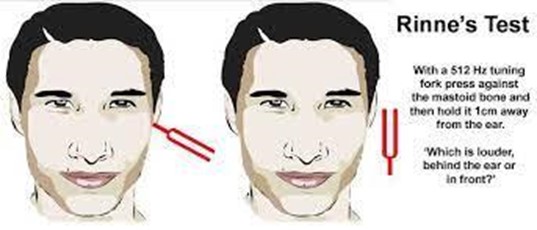
A nurse is teaching a client about the Rinne test. Which of the following client statements indicates an understanding of the teaching?
A. "I will wear earphones during this test."
Reason: This is incorrect because earphones are not used in the Rinne test. The Rinne test compares air conduction and bone conduction of sound using a tuning fork.
B. "Small electrodes are placed on my scalp."
Reason: This is incorrect because electrodes are not used in the Rinne test. Electrodes are used in electroencephalography (EEG), which measures brain activity.
C. "A small probe is placed inside my ear."
Reason: This is incorrect because a probe is not used in the Rinne test. A probe is used in tympanometry, which measures the pressure and mobility of the eardrum.
D. "A tuning fork is placed on my head."
Reason: This is correct because a tuning fork is used in the Rinne test. The tuning fork is placed on the mastoid process behind the ear and then moved near the ear canal to compare the sound perception.
Full Explanation
Choice A Reason: This is incorrect because earphones are not used in the Rinne test. The Rinne test compares air conduction and bone conduction of sound using a tuning fork.
Choice B Reason: This is incorrect because electrodes are not used in the Rinne test. Electrodes are used in electroencephalography (EEG), which measures brain activity.
Choice C Reason: This is incorrect because a probe is not used in the Rinne test. A probe is used in tympanometry, which measures the pressure and mobility of the eardrum.
Choice D Reason: This is correct because a tuning fork is used in the Rinne test. The tuning fork is placed on the mastoid process behind the ear and then moved near the ear canal to compare the sound perception.
It is night time and a client who suffers from dementia is agitated and is having difficulty staying in his bed. Which of the following actions should the nurse take first?
A. Turn off the lights and TV and close the door for privacy
Reason: This is incorrect because turning off the lights and TV and closing the door may increase the client's anxiety and confusion. The nurse should provide adequate lighting and familiar objects to help orient the client.
B. Use one wrist restraint to keep the client safe
Reason: This is incorrect because using restraints may increase the risk of injury, infection, and psychological distress for the client. The nurse should use restraints only as a last resort and with a physician's order.
C. Ask the physician for a sedative
Reason: This is incorrect because asking for a sedative may not address the underlying cause of the agitation. The nurse should use non-pharmacological interventions first, such as calming music, massage, or aromatherapy.
D. Identify if there is a cause for the agitation
Reason: This is correct because identifying the cause of the agitation may help resolve it. The nurse should assess for possible triggers, such as pain, hunger, thirst, infection, or environmental factors.
Full Explanation
Choice A Reason: This is incorrect because turning off the lights and TV and closing the door may increase the client's anxiety and confusion. The nurse should provide adequate lighting and familiar objects to help orient the client.
Choice B Reason: This is incorrect because using restraints may increase the risk of injury, infection, and psychological distress for the client. The nurse should use restraints only as a last resort and with a physician's order.
Choice C Reason: This is incorrect because asking for a sedative may not address the underlying cause of the agitation. The nurse should use non-pharmacological interventions first, such as calming music, massage, or aromatherapy.
Choice D Reason: This is correct because identifying the cause of the agitation may help resolve it. The nurse should assess for possible triggers, such as pain, hunger, thirst, infection, or environmental factors.