
Nursing practice questions with comprehensive rationales
NurseDive Free Nursing Practice Question
The client is a 32-year-old multigravida at 28 weeks' gestation, who presents to the obstetrician's office for a routine has given burn three times; once at 35 weeks (twins), once at 38 weeks (singleton) and once at 41 weeks (singleton). All of these children are alive and well. She had one spontaneous abortion at 10 weeks' gestation. Her fourth child weighed 9 pounds (4.08 kg) at 41 weeks gestation.
The client is at 28 weeks. She has been receiving prenatal care since 8 weeks gestation. Her fasting 1-hour glucose screening level, which was done 1 week prior, is 164 mg/dL (9.1 mmol/L). Her 3-hour oral glucose tolerance test results reveal a fasting blood sugar of 168 mg/dL (9.3 mmol and a two-hour postprandial of 220 mg/dL (12...mol/L).
Scheduled the client to meet with the obstetrician, Diabetic Nurse Educator, and a Registered Dietician for the next day. After a discussion about gestational diabetes and seeking the client's input, a suggested plan of care is outlined, which includes dietary control and glucose self-monitoring.
The registered dietician (RD) discusses the need to
Choose the most likely options for the information missing from the statement(s) by selecting from the lists of options provided.
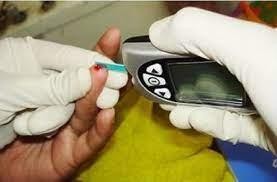
The diabetic nurse educator instructs the client to perform fingerstick blood glucose (FSBG) monitoring Select Response
A. of the night at bedtime and in the middle
Incorrect- While bedtime monitoring is important, the frequency described in this choice is not consistent with FSBG monitoring before meals.
B. prior to each meal
Correct- Performing FSBG monitoring before each meal helps the client track her blood glucose levels before consuming food, allowing her to adjust her diet or insulin regimen if necessary.
C. every two hours throughout the day
Incorrect- Monitoring every two hours may be excessive and not necessary for managing gestational diabetes.
D. during the middle of the night
Incorrect- Monitoring during the night is important for glycemic control, but it doesn't specifically address the need to monitor before meals.
This question is an excerpt from Nurse Dive's nursing test bank - HESI Exit LPN Proctored Exam 1. Take the full exam now
Full Explanation
A) Incorrect- While bedtime monitoring is important, the frequency described in this choice is not consistent with FSBG monitoring before meals.
B) Correct- Performing FSBG monitoring before each meal helps the client track her blood glucose levels before consuming food, allowing her to adjust her diet or insulin regimen if necessary.
C) Incorrect- Monitoring every two hours may be excessive and not necessary for managing gestational diabetes.
D) Incorrect- Monitoring during the night is important for glycemic control, but it doesn't specifically address the need to monitor before meals.
Similar Questions
The nurse identifies an electrolyte imbalance, elevated blood pressure, and exhibited changes in mental status for a client with chronic kidney disease. Which is the most important action for the nurse to take?
A. Auscultate for irregular heart rate.
Correct- Electrolyte imbalances, particularly involving electrolytes like potassium, can lead to cardiac arrhythmias. Elevated blood pressure can strain the cardiovascular system, and mental status changes could indicate potential neurologic and cardiovascular involvement. Auscultating for an irregular heart rate helps identify any immediate cardiac issues that require intervention.
B. Monitor daily sodium intake.
Incorrect- While monitoring sodium intake is important for clients with chronic kidney disease, it is not the most urgent action in this scenario. The presence of electrolyte imbalance, elevated blood pressure, and changes in mental status indicate a more acute concern that requires immediate assessment.
C. Document abdominal girth.
Incorrect- Documenting abdominal girth is relevant for assessing fluid status, but in this situation, the presence of electrolyte imbalance, elevated blood pressure, and mental status changes indicates a more critical issue that requires prompt intervention.
D. Measure ankle circumference
Full Explanation
A) Correct- Electrolyte imbalances, particularly involving electrolytes like potassium, can lead to cardiac arrhythmias. Elevated blood pressure can strain the cardiovascular system, and mental status changes could indicate potential neurologic and cardiovascular involvement. Auscultating for an irregular heart rate helps identify any immediate cardiac issues that require intervention.
B) Incorrect- While monitoring sodium intake is important for clients with chronic kidney disease, it is not the most urgent action in this scenario. The presence of electrolyte imbalance, elevated blood pressure, and changes in mental status indicate a more acute concern that requires immediate assessment.
C) Incorrect- Documenting abdominal girth is relevant for assessing fluid status, but in this situation, the presence of electrolyte imbalance, elevated blood pressure, and mental status changes indicates a more critical issue that requires prompt intervention.
The client is a 32-year-old multigravida at 28 weeks' gestation, who presents to the obstetrician's office for a routine prenatal visit. Obstetrical history reveals she has given birth three times; once at 35 weeks (twins), once at 38 weeks (singleton), and once at 41 weeks (singleton). All of these children are alive and well. She had one spontaneous abortion at 10 weeks' gestation. Her fourth child weighed 9 pounds (4.08 kg) at 41 weeks gestation.
The client is at 28 weeks. She has been receiving prenatal care since 8 weeks gestation. Her fasting 1-hour glucose screening level, which was done 1 week prior, is 164 mg/dl (9.1 mmol/L). Her 3-hour oral glucose tolerance test results reveal a fasting blood sugar of 168 mg/dL (9.3 mmol/L) and a two-hour postprandial of 220 mg/dL (12.2 mmol/L).
The nurse reviews nurses' notes to determine what the client's obstetric history reveals in the form of GTPAL.
Choose the most likely option for the information missing from the statement by selecting from the list of options provided.
Based on the client's obstetrical history, the client's G-T-P-A-L designation is
A. 3-2-0-1-3.
B. 5-2-1-1-4.
C. 4-1-1-1-2
D. 4-3-1-0-3
Full Explanation
Gravida: The client has been pregnant five times: three times she gave birth to term babies, once she gave birth to preterm twins, and once she had a spontaneous abortion.
Term births: She has given birth three times: at 38 weeks, 41 weeks, and 35 weeks (twins). These are all considered term births. Term pregnancies are 37 weeks and beyond. So, the number of term births is 2.
Preterm births: She had one birth at 35 weeks, which is considered preterm. So, the number of preterm births is 1.
Abortions: She had one spontaneous abortion at 10 weeks' gestation. So, the number of abortions is 1.
Living children: All of her children are alive and well. So, the number of living children is 4.
While changing the dressing of a client who is immobile, the nurse notices the boundary of the wound has increased. Given there is a positive methicillin-resistant Staphylococcus aureus (MRSA), which is the most important action for the nurse to take?
A. Reapply a sterile non-adhesive dressing.
Incorrect- reapplying a sterile non-adhesive dressing is not enough to address the infection.The nurse should also clean the wound, apply topical antimicrobial agents, and change the dressing regularly.
B. Limit visitors to immediate family only.
Incorrect- limiting visitors to immediate family only is not a sufficient infection control measure. The nurse should also use standard precautions, such as wearing gloves, gowns, masks,and eye protection, and educate the visitors about hand hygiene and proper disposal of contaminated items.
C. Administer prescribed antibiotics.
Correct- Administering prescribed antibiotics is the most important action because it can help treat the infection and prevent it from spreading to other parts of the body or to other people. MRSA is resistant to many common antibiotics, so it is essential to follow the prescription and monitor the client's response.
D. Request a nutrition consult.
Incorrect- requesting a nutrition consult is not a priority action. While nutrition is important for wound healing, it does not directly affect the infection. The nurse should first administer antibiotics and then assess the client's nutritional status and needs.
Full Explanation
A) Incorrect- reapplying a sterile non-adhesive dressing is not enough to address the infection.
The nurse should also clean the wound, apply topical antimicrobial agents, and change the dressing regularly.
B) Incorrect- limiting visitors to immediate family only is not a sufficient infection control measure. The nurse should also use standard precautions, such as wearing gloves, gowns, masks,
and eye protection, and educate the visitors about hand hygiene and proper disposal of contaminated items.
C) Correct- Administering prescribed antibiotics is the most important action because it can help treat the infection and prevent it from spreading to other parts of the body or to other people. MRSA is resistant to many common antibiotics, so it is essential to follow the prescription and monitor the client's response.
D) Incorrect- requesting a nutrition consult is not a priority action. While nutrition is important for wound healing, it does not directly affect the infection. The nurse should first administer antibiotics and then assess the client's nutritional status and needs.