
Nursing practice questions with comprehensive rationales
NurseDive Free Nursing Practice Question
The healthcare provider performs a paracentesis on a client with ascites and 3 liters of fluid are removed. Which assessment parameter is most critical for the nurse to monitor following the procedure?
A. Increased heart rate
This is because removing a large amount of fluid from the abdominal cavity can cause a sudden decrease in intra-abdominal pressure, which can lead to hypovolemia and hypotension. The body compensates by increasing the heart rate to maintain cardiac output and perfusion.
B. Increased urine production
This is not directly related to paracentesis and may indicate other conditions.
C. Increased mental alertness
This is not directly related to paracentesis and may indicate other conditions.
D. Increased breath sounds
This is not directly related to paracentesis and may indicate other conditions.
This question is an excerpt from Nurse Dive's nursing test bank - Interprofessional Care of the Client and Family Across the Lifespan II Proctored Exam. Take the full exam now
Full Explanation
Choice A rationale: This is because removing a large amount of fluid from the abdominal cavity can cause a sudden decrease in intra-abdominal pressure, which can lead to hypovolemia and hypotension. The body compensates by increasing the heart rate to maintain cardiac output and perfusion.
Choice B rationale: This is not directly related to paracentesis and may indicate other conditions.
Choice C rationale: This is not directly related to paracentesis and may indicate other conditions.
Choice D rationale: This is not directly related to paracentesis and may indicate other conditions.
Similar Questions
In caring for a client with a fracture of the femur, the nurse should be alert for compartment syndrome. What symptom is characteristic of this complication?
A. Tachycardia and petechiae over the chest wall and buccal membranes.
Tachycardia and petechiae over the chest wall and buccal membranes are signs of fat embolism syndrome, another complication of fractures that occurs when fat globules enter the bloodstream and obstruct pulmonary vessels.
B. Positive Homan's sign with calf tenderness and warmth.
Positive Homan's sign with calf tenderness and warmth are signs of deep vein thrombosis, a condition that can occur after prolonged immobilization or surgery.
C. acute cough, calm, and decreased blood pressure.
Acute cough, cyanosis, and decreased blood pressure are signs of pulmonary embolism, a life-threatening condition that occurs when a blood clot travels to the lungs and blocks blood flow.
D. Bulging, Tingling or burning sensation, numbness
These are signs of compartment syndrome, which is a serious complication of fractures that occurs when increased pressure within a closed space compromises blood flow and tissue perfusion. Compartment syndrome can lead to ischemia, necrosis, and nerve damage if not treated promptly.
Full Explanation
Choice A rationale: Tachycardia and petechiae over the chest wall and buccal membranes are signs of fat embolism syndrome, another complication of fractures that occurs when fat globules enter the bloodstream and obstruct pulmonary vessels.
Choice B rationale: Positive Homan's sign with calf tenderness and warmth are signs of deep vein thrombosis, a condition that can occur after prolonged immobilization or surgery.
Choice C rationale: Acute cough, cyanosis, and decreased blood pressure are signs of pulmonary embolism, a life-threatening condition that occurs when a blood clot travels to the lungs and blocks blood flow.
Choice D rationale: These are signs of compartment syndrome, which is a serious complication of fractures that occurs when increased pressure within a closed space compromises blood flow and tissue perfusion. Compartment syndrome can lead to ischemia, necrosis, and nerve damage if not treated promptly.
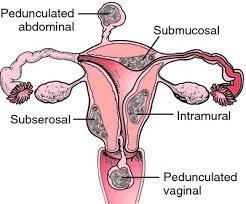
A 40-year-old female presents with cramping and excessive vaginal bleeding. Ultrasound reveals benign uterine tumors in the smooth muscle cells of the myometrium. These tumors are commonly called:
A. adenomas
Adenomas are benign tumors that originate from glandular tissue, such as the endometrium, the inner lining of the uterus.
B. leiomyomas
Leiomyomas, also known as fibroids, are benign tumors that arise from the smooth muscle cells of the myometrium, the middle layer of the uterine wall. They are the most common type of uterine tumors, affecting up to 80% of women by age 50. They can cause symptoms such as heavy menstrual bleeding, pelvic pain, pressure, and infertility.
C. endometriosis.
Endometriosis is a condition where endometrial tissue grows outside the uterus, causing inflammation and pain.
D. adenomyosis
Adenomyosis is a condition where endometrial tissue invades the myometrium, causing enlargement and distortion of the uterus.
Full Explanation
Choice A rationale: Adenomas are benign tumors that originate from glandular tissue, such as the endometrium, the inner lining of the uterus.
Choice B rationale: Leiomyomas, also known as fibroids, are benign tumors that arise from the smooth muscle cells of the myometrium, the middle layer of the uterine wall. They are the most common type of uterine tumors, affecting up to 80% of women by age 50. They can cause symptoms such as heavy menstrual bleeding, pelvic pain, pressure, and infertility.
Choice C rationale: Endometriosis is a condition where endometrial tissue grows outside the uterus, causing inflammation and pain.
Choice D rationale: Adenomyosis is a condition where endometrial tissue invades the myometrium, causing enlargement and distortion of the uterus.
The nurse is reviewing the patient lab and the following is shown on the CT: The nurse conclude the patient has :
A. Normal uterus
This is not correct since the picture depicted has uterine tissues deposited in other regions other than the uterus.
B. Endometriosis
Endometriosis is a condition where tissue similar to the endometrium (the lining of the uterus) grows outside the uterus, such as on the ovaries, fallopian tubes, pelvic wall, or bowel. This tissue responds to hormonal changes and bleeds during the menstrual cycle, causing inflammation, pain, and sometimes infertility.
C. Leiomyomas
Leiomyomas, also known as fibroids, are benign tumors that develop from the smooth muscle cells of the uterus. They can vary in size, number, and location within or outside the uterus. They can cause symptoms such as heavy bleeding, pelvic pressure, pain, and infertility.
D. Adenomyosis
Adenomyosis is a condition where endometrial-like tissue grows within the muscular wall of the uterus (the myometrium). This tissue also bleeds during the menstrual cycle, causing the uterus to enlarge and become painful and heavy .
Full Explanation
Choice A rationale: This is not correct since the picture depicted has uterine tissues deposited in other regions other than the uterus.
Choice B rationale: Endometriosis is a condition where tissue similar to the endometrium (the lining of the uterus) grows outside the uterus, such as on the ovaries, fallopian tubes, pelvic wall, or bowel. This tissue responds to hormonal changes and bleeds during the menstrual cycle, causing inflammation, pain, and sometimes infertility.
Choice C rationale: Leiomyomas, also known as fibroids, are benign tumors that develop from the smooth muscle cells of the uterus. They can vary in size, number, and location within or outside the uterus. They can cause symptoms such as heavy bleeding, pelvic pressure, pain, and infertility.
Choice D rationale: Adenomyosis is a condition where endometrial-like tissue grows within the muscular wall of the uterus (the myometrium). This tissue also bleeds during the menstrual cycle, causing the uterus to enlarge and become painful and heavy .