
Nursing practice questions with comprehensive rationales
NurseDive Free Nursing Practice Question
The nurse is caring for a child with suspected diabetes insipidus. Which clinical manifestation would be observable?
A. Oliguria
This is wrong because oliguria means decreased urine production and is not associated with diabetes insipidus.
B. Glycosuria
This is wrong because glycosuria means glucose in the urine and is associated with diabetes mellitus, not diabetes insipidus.
C. Nausea and vomiting
This is wrong because nausea and vomiting are associated with inappropriate ADH secretion (SIADH), which causes fluid retention and hyponatremia, not diabetes insipidus.
D. Polydipsia
Diabetes insipidus is a disorder of the posterior pituitary gland that causes a deficiency of antidiuretic hormone (ADH). This leads to excessive urination (polyuria) and excessive thirst (polydipsia) as the body tries to balance the fluid loss. These symptoms may be so severe that the child does little other than drink and urinate.
This question is an excerpt from Nurse Dive's nursing test bank - OB Pediatric Cumulative Exam Test 4 V 1 2023 Proctored Exam. Take the full exam now
Full Explanation
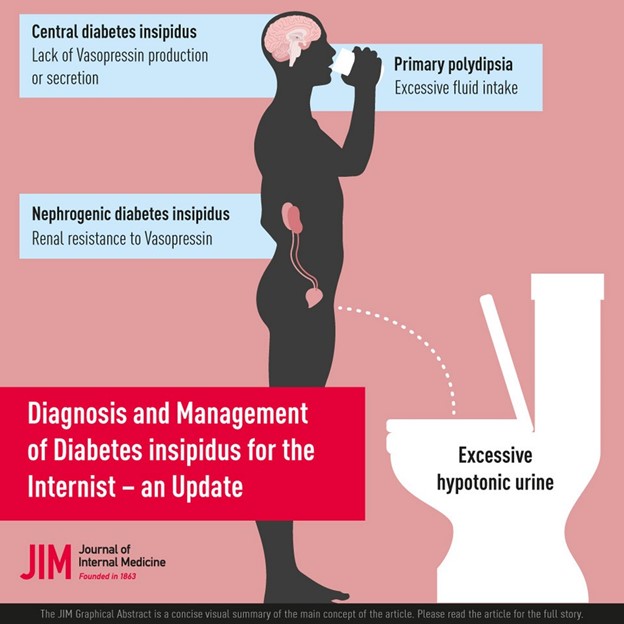
Diabetes insipidus is a disorder of the posterior pituitary gland that causes a deficiency of antidiuretic hormone (ADH). This leads to excessive urination (polyuria) and excessive thirst (polydipsia) as the body tries to balance the fluid loss. These symptoms may be so severe that the child does little other than drink and urinate.
Choice A is wrong because oliguria means decreased urine production and is not associated with diabetes insipidus.
Choice B is wrong because glycosuria means glucose in the urine and is associated with diabetes mellitus, not diabetes insipidus.
Choice C is wrong because nausea and vomiting are associated with inappropriate ADH secretion (SIADH), which causes fluid retention and hyponatremia, not diabetes insipidus.
Similar Questions
Cystic fibrosis (CF) is suspected in a toddler. Which test is essential in establishing this diagnosis?
A. Bronchoscopy
Thisis wrong because bronchoscopy is a procedure that allows the doctor to examine the airways and lungs, but it is not essential for diagnosing CF.
B. Serum calcium
This is wrong because serum calcium is a blood test that measures the level of calcium in the blood, which is not related to CF.
C. Urine creatinine
This is wrong because urine creatinine is a test that measures the amount of creatinine in the urine, which reflects the kidney function, but it is not relevant to CF. Normal ranges for sweat chloride test are: • Less than 40 millimoles per liter (mmol/L) for children and adults • Less than 30 mmol/L for infants younger than 6 months A sweat chloride level of more than 60 mmol/L is considered positive for CF.
D. Sweat chloride test
This test measures the amount of chloride in the sweat, which is abnormally high in people with cystic fibrosis (CF). CF is an inherited disorder that affects the cells that produce mucus, sweat, and digestive juices.
Full Explanation
This test measures the amount of chloride in the sweat, which is abnormally high in people with cystic fibrosis (CF). CF is an inherited disorder that affects the cells that produce mucus, sweat, and digestive juices.

Choice A is wrong because bronchoscopy is a procedure that allows the doctor to examine the airways and lungs, but it is not essential for diagnosing CF.
Choice B is wrong because serum calcium is a blood test that measures the level of calcium in the blood, which is not related to CF.
Choice C is wrong because urine creatinine is a test that measures the amount of creatinine in the urine, which reflects the kidney function, but it is not relevant to CF.
Normal ranges for sweat chloride test are:
- Less than 40 millimoles per liter (mmol/L) for children and adults
- Less than 30 mmol/L for infants younger than 6 months
A sweat chloride level of more than 60 mmol/L is considered positive for CF.
A child is diagnosed with juvenile hypothyroidism. The nurse should expect to assess which symptoms are associated with hypothyroidism. (Select all that apply.).
A. Weight loss
This is wrong because weight loss is more likely to occur in hyperthyroidism, a condition where the thyroid gland produces too much thyroid hormones.
B. Sleepiness or Fatigue
Sleepiness or fatigue around the eyes are symptoms associated with hypothyroidism. Hypothyroidism is a condition where the thyroid gland does not produce enough thyroid hormones, which regulate the body’s metabolism and energy levels.
C. Diarrhea
This is wrong because diarrhea is also more likely to occur in hyperthyroidism, as the excess thyroid hormones speed up the digestive system.
D. Puffiness around the eyes
Puffiness around the eyes is a symptom associated with hypothyroidism. Hypothyroidism is a condition where the thyroid gland does not produce enough thyroid hormones, which regulate the body’s metabolism and energy levels.
E. Limited hair growth
This is wrong because limited hair growth is not a specific symptom of hypothyroidism. Hair loss or thinning may occur in both hypothyroidism and hyperthyroidism, depending on the severity and duration of the condition. Normal ranges for thyroid hormones are: TSH: 0.4 to 4.0 mIU/L T3: 100 to 200 ng/dL T4: 4.5 to 11.2 mcg/dL
Full Explanation
Sleepiness or fatigue and puffiness around the eyes are symptoms associated with hypothyroidism. Hypothyroidism is a condition where the thyroid gland does not produce enough thyroid hormones, which regulate the body’s metabolism and energy levels.
Choice A is wrong because weight loss is more likely to occur in hyperthyroidism, a condition where the thyroid gland produces too much thyroid hormones.
Choice C is wrong because diarrhea is also more likely to occur in hyperthyroidism, as the excess thyroid hormones speed up the digestive system.
Choice E is wrong because limited hair growth is not a specific symptom of hypothyroidism. Hair loss or thinning may occur in both hypothyroidism and hyperthyroidism, depending on the severity and duration of the condition.
Normal ranges for thyroid hormones are:
- TSH: 0.4 to 4.0 mIU/L
- T3: 100 to 200 ng/dL
- T4: 4.5 to 11.2 mcg/dL
What should the nurse stress in a teaching plan for the mother of an 11-year-old diagnosed with ulcerative colitis?
A. Preventing the spread of illness to others.
This is wrong because ulcerative colitis is not an infectious disease that can spread to others.
B. Nutritional guidance and preventing constipation.
This is wrong because ulcerative colitis causes diarrhea, not constipation. Nutritional guidance is important, but not the main focus of teaching.
C. Teaching daily use of enemas.
This is wrong because the daily use of enemas is not part of the treatment plan for ulcerative colitis. Enemas can irritate the colon and cause more inflammation.
D. Coping with stress and avoiding triggers.
Ulcerative colitis is a chronic inflammatory bowel disease that causes diarrhea, pain, and bleeding in the colon. Stress and certain foods can trigger or worsen the symptoms, so it is important to teach the mother how to help her son cope with stress and avoid triggers.
Full Explanation
Ulcerative colitis is a chronic inflammatory bowel disease that causes diarrhea, pain, and bleeding in the colon. Stress and certain foods can trigger or worsen the symptoms, so it is important to teach the mother how to help her son cope with stress and avoid triggers.
Choice A is wrong because ulcerative colitis is not an infectious disease that can spread to others.
Choice B is wrong because ulcerative colitis causes diarrhea, not constipation. Nutritional guidance is important, but not the main focus of teaching.
Choice C is wrong because the daily use of enemas is not part of the treatment plan for ulcerative colitis. Enemas can irritate the colon and cause more inflammation.