
Nursing practice questions with comprehensive rationales
NurseDive Free Nursing Practice Question
The nurse is providing care to a client having surgery to repair a retinal detachment to the left eye. Which intervention should the nurse implement during the postoperative period?
A. Obtain vital signs every 2 hours during hospitalization.
Obtaining vital signs every 2 hours during hospitalization is a routine nursing intervention for postoperative care in general but is not specific to retinal detachment surgery. The frequency of vital sign monitoring may vary depending on the client's overall condition and the healthcare provider's orders.
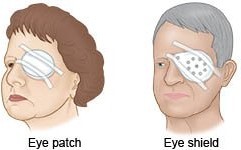
B. Provide an eye shield to be worn while sleeping.
After retinal detachment surgery, it is crucial to protect the eye and the surgical repair site from accidental trauma or pressure. Providing an eye shield helps to shield the eye during sleep when the client may not have conscious control over their movements. This can help prevent inadvertent rubbing or bumping of the eye, which could potentially disrupt the surgical repair and hinder the healing process.
C. Teach a family member to administer eye drops.
Teaching a family member to administer eye drops may be necessary for the client's ongoing care, but it is not specifically related to the immediate postoperative period. Eye drop administration instructions can be provided as part of the client's discharge teaching.
D. Encourage deep breathing and coughing exercises.
Encouraging deep breathing and coughing exercises is a general postoperative intervention that promotes respiratory function and helps prevent complications such as pneumonia. While important for overall postoperative care, it is not specific to retinal detachment surgery.
This question is an excerpt from Nurse Dive's nursing test bank - RN Hesi Exit Proctored Exam. Take the full exam now
Full Explanation
After retinal detachment surgery, it is crucial to protect the eye and the surgical repair site from accidental trauma or pressure. Providing an eye shield helps to shield the eye during sleep when the client may not have conscious control over their movements.
This can help prevent inadvertent rubbing or bumping of the eye, which could potentially disrupt the surgical repair and hinder the healing process.
Obtaining vital signs every 2 hours during hospitalization is a routine nursing intervention for postoperative care in general but is not specific to retinal detachment surgery. The frequency of vital sign monitoring may vary depending on the client's overall condition and the healthcare provider's orders.
Teaching a family member to administer eye drops may be necessary for the client's ongoing care, but it is not specifically related to the immediate postoperative period. Eye drop administration instructions can be provided as part of the client's discharge teaching.
Encouraging deep breathing and coughing exercises is a general postoperative intervention that promotes respiratory function and helps prevent complications such as pneumonia. While important for overall postoperative care, it is not specific to retinal detachment surgery.
Similar Questions
A 3-year-old boy with a congenital heart defect is brought to the clinic by his mother because he has a fever and an earache. During the assessment, the mother asks the nurse why her child is at the 5th percentile for weight and height for his age. Which response is best for the nurse to provide?
A. "Does your child seem mentally slower than his peers also?"
B. "Haven't you been feeding him according to recommended daily allowances for children?"
C. "His smaller size is probably due to the heart disease."
In this scenario, the child with a congenital heart defect is presenting with a fever and an earache. The mother expresses concern about the child's weight and height being at the 5th percentile for his age. Given the child's medical history of a congenital heart defect, it is important for the nurse to address the mother's concerns and provide an accurate response. The response that states "His smaller size is probably due to the heart disease" is appropriate because children with congenital heart defects may experience growth and developmental delays. Heart defects can affect the child's ability to obtain sufficient nutrients for growth, leading to slower weight and height gain. By acknowledging the relationship between the child's heart disease and his smaller size, the nurse provides the mother with an explanation for the child's growth pattern and helps alleviate concerns. The other response options are not appropriate or helpful. Asking about the child's mental abilities or implying that the mother has not been feeding the child adequately can be perceived as judgmental or dismissive.
D. "You should not worry about the growth tables. They are only averages for children."
Full Explanation
In this scenario, the child with a congenital heart defect is presenting with a fever and an
earache. The mother expresses concern about the child's weight and height being at the 5th percentile for his age. Given the child's medical history of a congenital heart defect, it is important for the nurse to address the mother's concerns and provide an accurate response.
The response that states "His smaller size is probably due to the heart disease" is appropriate because children with congenital heart defects may experience growth and developmental delays. Heart defects can affect the child's ability to obtain sufficient nutrients for growth, leading to slower weight and height gain. By acknowledging the relationship between the child's heart disease and his smaller size, the nurse provides the mother with an explanation for the child's growth pattern and helps alleviate concerns.
The other response options are not appropriate or helpful. Asking about the child's mental abilities or implying that the mother has not been feeding the child adequately can be perceived as judgmental or dismissive.
When performing suctioning for a client with a tracheostomy, which action should the nurse include?
A. Wear protective goggles while performing the procedure.
Wearing protective goggles is important during suctioning to protect the nurse's eyes from potential splashes or aerosolized secretions. Suctioning can generate forceful coughing, gagging, or sneezing in the client, which may cause secretions or mucus to be expelled forcefully and potentially come into contact with the nurse's eyes. Wearing goggles helps prevent eye exposure and reduces the risk of infection transmission.
B. Apply a water soluble lubricant to the catheter.
Applying a water-soluble lubricant to the catheter may be necessary to facilitate the insertion of the suction catheter into the tracheostomy tube, but it is not the most crucial action to include when performing suctioning.
C. Instill 3 mL of normal saline before suctioning.
Instilling normal saline before suctioning is not recommended as it can cause potential harm to the client's airway. Instilling saline can lead to bronchospasm, mucosal damage, and other complications. Suctioning should only be performed when necessary to remove secretions and maintain a patent airway.
D. Instruct the client to cough as the suction tip is removed.
Instructing the client to cough as the suction tip is removed is not necessary or recommended. Coughing during the suctioning process can be uncontrolled and may increase the risk of trauma to the airway. The nurse should instead provide supportive care and reassurance to the client throughout the procedure.
Full Explanation
Wearing protective goggles is important during suctioning to protect the nurse's eyes from potential splashes or aerosolized secretions. Suctioning can generate forceful coughing, gagging, or sneezing in the client, which may cause secretions or mucus to be expelled forcefully and potentially come into contact with the nurse's eyes. Wearing goggles helps prevent eye exposure and reduces the risk of infection transmission.
Applying a water-soluble lubricant to the catheter may be necessary to facilitate the insertion of the suction catheter into the tracheostomy tube, but it is not the most crucial action to include when performing suctioning.
Instilling normal saline before suctioning is not recommended as it can cause potential harm to the client's airway. Instilling saline can lead to bronchospasm, mucosal damage, and other complications. Suctioning should only be performed when necessary to remove secretions and maintain a patent airway.
Instructing the client to cough as the suction tip is removed is not necessary or recommended. Coughing during the suctioning process can be uncontrolled and may increase the risk of trauma to the airway. The nurse should instead provide supportive care and reassurance to the client throughout the procedure.
A client whose hyperthyroidism has not been responsive to medications is admitted for evaluation. During the admission assessment the client reports to the nurse of a sudden onset of feeling apprehensive and nurse notes the client is restless and very warm to touch. Which action should the nurse implement next?
A. Access laboratory results to confirm a thyroid crisis.
Accessing laboratory results to confirm a thyroid crisis is important, but the clinical presentation of the client with sudden onset symptoms and a known history of uncontrolled hyperthyroidism suggests the need for immediate intervention rather than waiting for laboratory confirmation.
B. Obtain a complete set of vital signs.
Obtaining a complete set of vital signs is an important assessment to gather comprehensive data, but in the case of a suspected thyroid crisis, immediate intervention takes precedence over obtaining vital signs.
C. Initiate intravenous access.
In this scenario, the client's sudden onset of feeling apprehensive, restlessness, and increased body temperature are consistent with symptoms of a thyroid crisis, also known as thyroid storm or thyrotoxic crisis. Thyroid crisis is a life-threatening condition that requires immediate medical intervention. Initiating IV access is crucial to ensure the prompt administration of medications and fluids to manage the thyroid crisis effectively. IV access allows for the administration of beta-blockers, antithyroid drugs, and supportive care, which are essential components of the treatment for thyroid crisis. IV access also provides a route for fluid resuscitation if necessary.
D. Encourage relaxation and slow deep breathing.
Encouraging relaxation and slow deep breathing may be beneficial in managing anxiety or discomfort, but it does not address the underlying emergency situation of a thyroid crisis. The nurse should focus on initiating appropriate medical interventions first.
Full Explanation
In this scenario, the client's sudden onset of feeling apprehensive, restlessness, and increased body temperature are consistent with symptoms of a thyroid crisis, also known as thyroid storm or thyrotoxic crisis. Thyroid crisis is a life-threatening condition that requires immediate medical intervention.
Initiating IV access is crucial to ensure the prompt administration of medications and fluids to manage the thyroid crisis effectively. IV access allows for the administration of beta-blockers, antithyroid drugs, and supportive care, which are essential components of the treatment for thyroid crisis. IV access also provides a route for fluid resuscitation if necessary.
Accessing laboratory results to confirm a thyroid crisis is important, but the clinical presentation of the client with sudden onset symptoms and a known history of uncontrolled hyperthyroidism suggests the need for immediate intervention rather than waiting for laboratory confirmation.
Obtaining a complete set of vital signs is an important assessment to gather comprehensive data, but in the case of a suspected thyroid crisis, immediate intervention takes precedence over obtaining vital signs.
Encouraging relaxation and slow deep breathing may be beneficial in managing anxiety or discomfort, but it does not address the underlying emergency situation of a thyroid crisis. The nurse should focus on initiating appropriate medical interventions first.