
Nursing practice questions with comprehensive rationales
NurseDive Free Nursing Practice Question
The nurse is reviewing the record of a client with a diagnosis of cirrhosis and notes that there is documentation of the presence of asterixis. How should the nurse assess for its presence?
A. Measure the abdominal girth
Reason: Measuring the abdominal girth is not related to asterixis, which is a tremor of the hand when the wrist is extended. It may indicate ascites, which is a complication of cirrhosis, but not asterixis.
B. Have the client extend their arms
Reason: This is the correct choice. Asterixis is a flapping tremor of the hand when the wrist is extended, sometimes said to resemble a bird flapping its wings. It is caused by abnormal function of the diencephalic motor centers that regulate the muscles involved in maintaining posture. It is a sign of hepatic encephalopathy, which is a neuropsychiatric disorder that occurs in patients with liver disease.
C. Have the client flex and extend their foot
Reason: Having the client flex and extend their foot is not related to asterixis, which affects the hand and wrist. It may test for ankle clonus, which is a rhythmic contraction of the calf muscles when the foot is dorsiflexed. It indicates an upper motor neuron lesion, but not hepatic encephalopathy.
D. Ask the client to walk heel to toe
Reason: Asking the client to walk heel to toe is not related to asterixis, which affects the hand and wrist. It may test for balance and coordination, which can be impaired in patients with hepatic encephalopathy, but it is not a specific sign of asterixis.
This question is an excerpt from Nurse Dive's nursing test bank - ATI Med Surg Proctored Exam 4. Take the full exam now
Full Explanation
Choice A Reason: Measuring the abdominal girth is not related to asterixis, which is a tremor of the hand when the wrist is extended. It may indicate ascites, which is a complication of cirrhosis, but not asterixis.
Choice B Reason: This is the correct choice. Asterixis is a flapping tremor of the hand when the wrist is extended, sometimes said to resemble a bird flapping its wings. It is caused by abnormal function of the diencephalic motor centers that regulate the muscles involved in maintaining posture. It is a sign of hepatic encephalopathy, which is a neuropsychiatric disorder that occurs in patients with liver disease.
Choice C Reason: Having the client flex and extend their foot is not related to asterixis, which affects the hand and wrist. It may test for ankle clonus, which is a rhythmic contraction of the calf muscles when the foot is dorsiflexed. It indicates an upper motor neuron lesion, but not hepatic encephalopathy.
Choice D Reason: Asking the client to walk heel to toe is not related to asterixis, which affects the hand and wrist. It may test for balance and coordination, which can be impaired in patients with hepatic encephalopathy, but it is not a specific sign of asterixis.
Similar Questions
The nurse is monitoring a client admitted to the hospital with a diagnosis of appendicitis. The client reports a sudden increase in abdominal pain and begins to vomit. On assessment, the nurse notes that the abdomen is distended and bowel sounds are diminished. Which is the best first action the nurse should take?
A. Request the charge nurse put the client on the surgery schedule
Reason: Requesting the charge nurse put the client on the surgery schedule is not the best first action, as it does not address the urgency of the situation. The client may have a perforated appendix, which is a life-threatening complication that requires immediate intervention.
B. Document the WBC count from the morning labs
Reason: Documenting the WBC count from the morning labs is not the best first action, as it does not address the client's current condition. The WBC count may be elevated due to inflammation or infection, but it does not indicate the severity of the problem.
C. Notify the healthcare provider
Reason: This is the correct choice. Notifying the healthcare provider is the best first action, as it alerts them to the possibility of a perforated appendix and allows them to order appropriate tests and treatments.
D. Provide an antiemetic
Reason: Providing an antiemetic is not the best first action, as it does not address the underlying cause of the vomiting. The client may have peritonitis, which is inflammation of the abdominal cavity due to leakage of intestinal contents. An antiemetic may mask this symptom and delay diagnosis and treatment.
Full Explanation
Choice A Reason: Requesting the charge nurse put the client on the surgery schedule is not the best first action, as it does not address the urgency of the situation. The client may have a perforated appendix, which is a life-threatening complication that requires immediate intervention.
Choice B Reason: Documenting the WBC count from the morning labs is not the best first action, as it does not address the client's current condition. The WBC count may be elevated due to inflammation or infection, but it does not indicate the severity of the problem.
Choice C Reason: This is the correct choice. Notifying the healthcare provider is the best first action, as it alerts them to the possibility of a perforated appendix and allows them to order appropriate tests and treatments.
Choice D Reason: Providing an antiemetic is not the best first action, as it does not address the underlying cause of the vomiting. The client may have peritonitis, which is inflammation of the abdominal cavity due to leakage of intestinal contents. An antiemetic may mask this symptom and delay diagnosis and treatment.
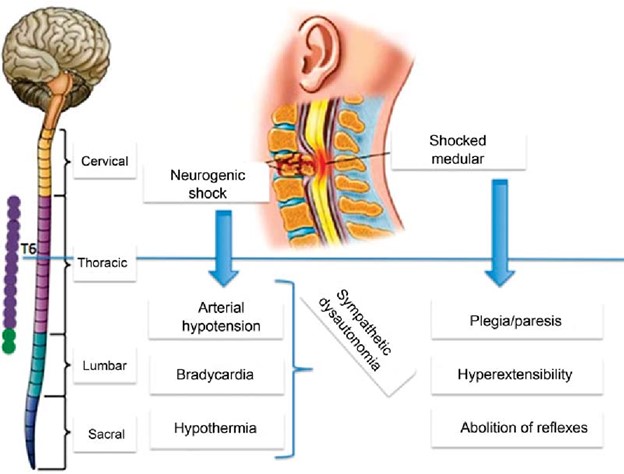
A client arrives to the emergency department after falling from a ladder. The client has a loss of sensation and flaccid paralysis. Which of the following complications of an acute spinal cord injury does the nurse suspect?
A. Hemorrhage
Reason: Hemorrhage is not a complication of an acute spinal cord injury, but rather a possible cause of it. Hemorrhage can occur due to trauma or rupture of blood vessels in or around the spinal cord, leading to compression and damage of the nerve tissue.
B. Spinal shock
Reason: This is the correct choice. Spinal shock is a complication of an acute spinal cord injury that occurs within minutes to hours after the injury. It is characterized by loss of sensation, motor function, reflexes, and autonomic function below the level of injury. It is caused by transient disruption of nerve conduction and synaptic transmission in the spinal cord.
C. Apoptosis
Reason: Apoptosis is not a complication of an acute spinal cord injury, but rather a cellular process that occurs after it. Apoptosis is programmed cell death that occurs in response to injury or stress. It can lead to further loss of neurons and glial cells in the spinal cord over time.
D. Neurogenic shock
Reason: Neurogenic shock is a complication of an acute spinal cord injury that occurs within hours to days after the injury. It is characterized by hypotension, bradycardia, and peripheral vasodilation due to loss of sympathetic tone and unopposed parasympathetic activity. It is caused by disruption of autonomic pathways in the spinal cord.
Full Explanation
Choice A Reason: Hemorrhage is not a complication of an acute spinal cord injury, but rather a possible cause of it. Hemorrhage can occur due to trauma or rupture of blood vessels in or around the spinal cord, leading to compression and damage of the nerve tissue.
Choice B Reason: This is the correct choice. Spinal shock is a complication of an acute spinal cord injury that occurs within minutes to hours after the injury. It is characterized by loss of sensation, motor function, reflexes, and autonomic function below the level of injury. It is caused by transient disruption of nerve conduction and synaptic transmission in the spinal cord.
Choice C Reason: Apoptosis is not a complication of an acute spinal cord injury, but rather a cellular process that occurs after it. Apoptosis is programmed cell death that occurs in response to injury or stress. It can lead to further loss of neurons and glial cells in the spinal cord over time.
Choice D Reason: Neurogenic shock is a complication of an acute spinal cord injury that occurs within hours to days after the injury. It is characterized by hypotension, bradycardia, and peripheral vasodilation due to loss of sympathetic tone and unopposed parasympathetic activity. It is caused by disruption of autonomic pathways in the spinal cord.
A client receiving parenteral nutrition by central venous access reports feeling unwell. The nurse assesses the client and suspects that the central line has become infected. Which of the following findings indicate that the client has developed a systemic infection? Select all that apply.
A. Edema
Choice A Reason: Edema is not a specific finding of a systemic infection, but rather a possible sign of fluid overload or impaired venous return. It can occur due to excessive infusion rate, heart failure, or obstruction of blood flow in or around the central line.
B. Purulent drainage at intravenous insertion site
Choice B Reason: This is a correct choice. Purulent drainage at intravenous insertion site is a finding of a local infection that can spread systemically. It indicates bacterial invasion and inflammation of the skin and subcutaneous tissue around the catheter.
C. Redness at insertion site
Choice C Reason: Redness at insertion site is a finding of a local infection that can spread systemically. It indicates increased blood flow and inflammation of the skin and subcutaneous tissue around the catheter.
D. Nausea
Choice D Reason: Nausea is not a specific finding of a systemic infection, but rather a possible side effect of parenteral nutrition or a symptom of another condition. It can occur due to electrolyte imbalance, hyperglycemia, or gastrointestinal disorders.
E. Leukocytosis
Choice E Reason: This is a correct choice. Leukocytosis is a finding of a systemic infection that indicates increased production and release of white blood cells in response to infection. It can be detected by a blood test.
F. Fever
Choice F Reason: This is a correct choice. Fever is a finding of a systemic infection that indicates increased body temperature due to activation of the immune system and release of pyrogens. It can be measured by a thermometer.
Full Explanation
Choice A Reason: Edema is not a specific finding of a systemic infection, but rather a possible sign of fluid overload or impaired venous return. It can occur due to excessive infusion rate, heart failure, or obstruction of blood flow in or around the central line.
Choice B Reason: This is a correct choice. Purulent drainage at intravenous insertion site is a finding of a local infection that can spread systemically. It indicates bacterial invasion and inflammation of the skin and subcutaneous tissue around the catheter.
Choice C Reason: Redness at insertion site is a finding of a local infection that can spread systemically. It indicates increased blood flow and inflammation of the skin and subcutaneous tissue around the catheter.
Choice D Reason: Nausea is not a specific finding of a systemic infection, but rather a possible side effect of parenteral nutrition or a symptom of another condition. It can occur due to electrolyte imbalance, hyperglycemia, or gastrointestinal disorders.
Choice E Reason: This is a correct choice. Leukocytosis is a finding of a systemic infection that indicates increased production and release of white blood cells in response to infection. It can be detected by a blood test.
Choice F Reason: This is a correct choice. Fever is a finding of a systemic infection that indicates increased body temperature due to activation of the immune system and release of pyrogens. It can be measured by a thermometer.