Nursing practice questions with comprehensive rationales
NurseDive Free Nursing Practice Question
The nurse-manager is involved in agency restructuring. During this re-engineering process, it is most important for the nurse to address which employee concern?
A. Potential changes in employee benefits.
B. Changes in job descriptions.
C. New management's expectations.
D. Employees' job security.
Agency restructuring can be a time of significant stress and uncertainty for employees, particularly if they feel that their jobs may be at risk. Addressing employees' job security concerns and providing clear and timely communication regarding the restructuring process can help to alleviate anxiety and maintain morale within the workplace. While changes in employee benefits, job descriptions, and management expectations are important considerations, they may be secondary to employees' immediate concerns about their job security. Once job security concerns have been addressed, it may be appropriate to provide additional information and support regarding changes in other areas. Ultimately, maintaining a positive and supportive work environment during agency restructuring can help to minimize disruption and maintain employee satisfaction and engagement.
This question is an excerpt from Nurse Dive's nursing test bank - RN Hesi Exit Proctored Exam. Take the full exam now
Similar Questions
A client receives a prescription for a fluid bolus of 0.9% sodium chloride, USP 200 mL to be infused in 30 minutes. How many mL/hr should the nurse program the infusion pump to deliver?
(Enter numerical value only.)
Full Explanation
To calculate the mL/hr rate for the infusion pump, we can use the following formula: mL/hr = (Total volume to be infused in mL) / (Time in hours)
In this case, the total volume to be infused is 200 mL, and the infusion time is 30 minutes, which is equal to 0.5 hours.
mL/hr = 200 mL / 0.5 hours mL/hr = 400 mL/hr
Therefore, the nurse should program the infusion pump to deliver 400 mL/hr.
The healthcare provider prescribes 5% Dextrose Injection, USP with 20 units of regular insulin for a client with a serum potassium level of 6.0 mEq/L (6.0 mmol/L) and glucose level of 180 mg/dL (10.0 mmol/L). Which evaluation is most important for the nurse to include in this client's plan of care?
Reference Range
- Potassium [Reference Range: 3.5 to 5.0 mEq/L (3.5 to 5.0 mmol/L)]
- Glucose [Reference Range: 0 to 50 years: 74 to 106 mg/dL (4.1 to 5.9 mmol/L)]
A. Evaluate glucose levels before and after meals.
While monitoring glucose levels before and after meals is important for clients receiving insulin therapy, in this scenario, the primary concern is the elevated potassium level.The nurse should prioritize frequent assessment of the serum potassium level to guide appropriate management and prevent complications associated with hyperkalemia.
B. Assess the serum potassium level every 4 hours.
The client's serum potassium level is elevated at 6.0 mEq/L (6.0 mmol/L), which is above the normal reference range of 3.5 to 5.0 mEq/L (3.5 to 5.0 mmol/L). Hyperkalemia can have significant cardiac implications, including the potential for life-threatening dysrhythmias. Therefore, close monitoring of the serum potassium level is crucial to assess the effectiveness of interventions and ensure that potassium levels are within a safe range.
C. Monitor and document strict intake and output.
Monitoring and documenting strict intake and output are important for assessing fluid balance and renal function, but in this case, the elevated potassium level takes precedence as it poses a more immediate risk to the client's well-being.
D. Obtain a 12-lead electrocardiogram daily.
Obtaining a 12-lead electrocardiogram (ECG) daily may be indicated in some cases of hyperkalemia, as certain ECG changes can be associated with elevated potassium levels. However, the more critical aspect is monitoring the potassium level itself, as ECG changes can occur rapidly and may not always be detectable on a daily basis.
Full Explanation
The client's serum potassium level is elevated at 6.0 mEq/L (6.0 mmol/L), which is above the normal reference range of 3.5 to 5.0 mEq/L (3.5 to 5.0 mmol/L).
Hyperkalemia can have significant cardiac implications, including the potential for life-threatening dysrhythmias. Therefore, close monitoring of the serum potassium level is crucial to assess the effectiveness of interventions and ensure that potassium levels are within a safe range.
While monitoring glucose levels before and after meals is important for clients receiving insulin therapy, in this scenario, the primary concern is the elevated potassium level.
The nurse should prioritize frequent assessment of the serum potassium level to guide appropriate management and prevent complications associated with hyperkalemia.
Monitoring and documenting strict intake and output are important for assessing fluid balance and renal function, but in this case, the elevated potassium level takes precedence as it poses a more immediate risk to the client's well-being.
Obtaining a 12-lead electrocardiogram (ECG) daily may be indicated in some cases of hyperkalemia, as certain ECG changes can be associated with elevated potassium levels. However, the more critical aspect is monitoring the potassium level itself, as ECG changes can occur rapidly and may not always be detectable on a daily basis.
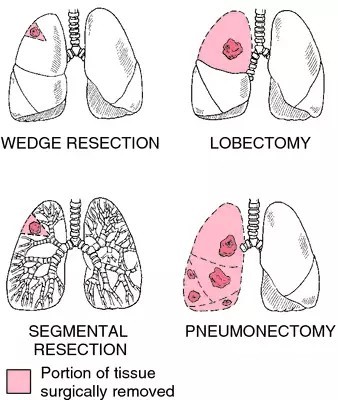
The nurse is providing discharge teaching to a client who underwent a pneumonectomy. The client wants to resume social activities with family. How should the nurse respond?
A. Encourage family gatherings to reduce feelings of isolation.
Following a pneumonectomy, it is important for the client to gradually resume normal activities and engage in social interactions. Encouraging family gatherings can provide emotional support, facilitate social connections, and help reduce feelings of isolation that the client may be experiencing. While it is generally important for clients who have undergone a pneumonectomy to take precautions to reduce the risk of respiratory infections, such as avoiding crowded places and individuals with respiratory infections, completely avoiding social contact for several weeks is not necessary or realistic in most cases. It is essential to find a balance between protecting the client's health and promoting their emotional well-being and social integration.
B. Explain the need to avoid persons with respiratory infections.
C. Reinforce the need to avoid social contact for several weeks.
D. Recommend the use of a face mask during family events.
Wearing a face mask during family events may not be necessary unless there is a specific concern about respiratory infections. The nurse can educate the client about the importance of good hand hygiene and avoiding close contact with individuals who are actively ill with respiratory infections.
Full Explanation
Following a pneumonectomy, it is important for the client to gradually resume normal activities and engage in social interactions. Encouraging family gatherings can provide emotional support, facilitate social connections, and help reduce feelings of isolation that the client may be experiencing.
While it is generally important for clients who have undergone a pneumonectomy to take precautions to reduce the risk of respiratory infections, such as avoiding crowded places and individuals with respiratory infections, completely avoiding social contact for several weeks is not necessary or realistic in most cases. It is essential to find a balance between protecting the client's health and promoting their emotional well-being and social integration.
Wearing a face mask during family events may not be necessary unless there is a specific concern about respiratory infections. The nurse can educate the client about the importance of good hand hygiene and avoiding close contact with individuals who are actively ill with respiratory infections.