
Nursing practice questions with comprehensive rationales
NurseDive Free Nursing Practice Question
The parents of a 10-year-old child in remission from leukemia are upset over the appearance of cushingoid characteristics in the child from long- term use of corticosteroids, currently being administered every other day. Which therapeutic statements would the nurse make to the parents about the cushingoid appearance? Select all that apply.
A. The manifestations are lessened by taking the prednisone every other day Instead of daily."
"The manifestations are lessened by taking the prednisone every other day instead of daily."Explanation: Cushingoid characteristics can be related to prolonged corticosteroid use. Adjusting the dosing schedule, such as administering prednisone every other day instead of daily, may help minimize these manifestations.
B. "You need to be sure to talk to the doctor about the cushingold characteristics."
"You need to be sure to talk to the doctor about the Cushingoid characteristics."Explanation: Open communication with the healthcare provider is crucial. Discussing the concerns about Cushingoid characteristics with the doctor allows for appropriate evaluation and potential adjustments to the treatment plan.
C. Which manifestations of this condition do you find mest troublesome?
"Which manifestations of this condition do you find most troublesome?"Explanation: This question opens the discussion to identify specific concerns and allows the nurse to address them individually.
D. "I am sure it will be all right they hardly look unusual
"I am sure it will be all right; they hardly look unusual."Explanation: This statement may downplay the parents' concerns. It's essential to acknowledge their worries and provide accurate information about the potential impact of corticosteroids and the plan for managing Cushingoid characteristics.
E. The cushingoid appearance will gradually disappear once the corticosteroids are tapered and discontinued."
Explanation: Cushingoid characteristics are associated with the side effects of corticosteroid use. The nurse should provide reassurance that, in many cases, these characteristics can gradually improve once the corticosteroid dose is tapered and eventually discontinued.
This question is an excerpt from Nurse Dive's nursing test bank - ATI RN Paediatric Assessment Proctored Exam 2022. Take the full exam now
Full Explanation
A."The manifestations are lessened by taking the prednisone every other day instead of daily."
Explanation: Cushingoid characteristics can be related to prolonged corticosteroid use. Adjusting the dosing schedule, such as administering prednisone every other day instead of daily, may help minimize these manifestations.
B."You need to be sure to talk to the doctor about the Cushingoid characteristics."
Explanation: Open communication with the healthcare provider is crucial. Discussing the concerns about Cushingoid characteristics with the doctor allows for appropriate evaluation and potential adjustments to the treatment plan.
C."Which manifestations of this condition do you find most troublesome?"
Explanation: This question opens the discussion to identify specific concerns and allows the nurse to address them individually.
D."I am sure it will be all right; they hardly look unusual."
Explanation: This statement may downplay the parents' concerns. It's essential to acknowledge their worries and provide accurate information about the potential impact of corticosteroids and the plan for managing Cushingoid characteristics.
E."The Cushingoid appearance will gradually disappear once the corticosteroids are tapered and discontinued."
Explanation: Cushingoid characteristics are associated with the side effects of corticosteroid use. The nurse should provide reassurance that, in many cases, these characteristics can gradually improve once the corticosteroid dose is tapered and eventually discontinued.
Similar Questions
The nurse provides home care instructions to the parents of a child with celiac disease. The nurse would teach the parents to include which food item in the child's diet?
A. Rye toast
Rye toastExplanation: Rye contains gluten, so it is not appropriate for individuals with celiac disease. Rye, like wheat and barley, should be avoided.
B. Rice
Rice Explanation:Celiac disease is a condition characterized by an immune reaction to gluten, a protein found in wheat, barley, and rye. Therefore, individuals with celiac disease need to avoid gluten-containing foods. Rice is naturally gluten-free, making it a suitable and safe option for individuals with celiac disease.
C. wheat bread
Wheat breadExplanation: Wheat contains gluten, and products made from wheat, including wheat bread, should be strictly avoided by individuals with celiac disease.
D. Oatmeal
Oatmeal Explanation: Oats themselves are gluten-free, but they are often contaminated with gluten during processing. Some individuals with celiac disease can tolerate pure, uncontaminated oats, while others may need to avoid oats altogether. It is important to choose certified gluten-free oats if including them in the diet.
Full Explanation
A. Rye toast
Explanation: Rye contains gluten, so it is not appropriate for individuals with celiac disease. Rye, like wheat and barley, should be avoided.
B. Rice
Explanation:
Celiac disease is a condition characterized by an immune reaction to gluten, a protein found in wheat, barley, and rye. Therefore, individuals with celiac disease need to avoid gluten-containing foods. Rice is naturally gluten-free, making it a suitable and safe option for individuals with celiac disease.
C. Wheat bread
Explanation: Wheat contains gluten, and products made from wheat, including wheat bread, should be strictly avoided by individuals with celiac disease.
D. Oatmeal
Explanation: Oats themselves are gluten-free, but they are often contaminated with gluten during processing. Some individuals with celiac disease can tolerate pure, uncontaminated oats, while others may need to avoid oats altogether. It is important to choose certified gluten-free oats if including them in the diet.
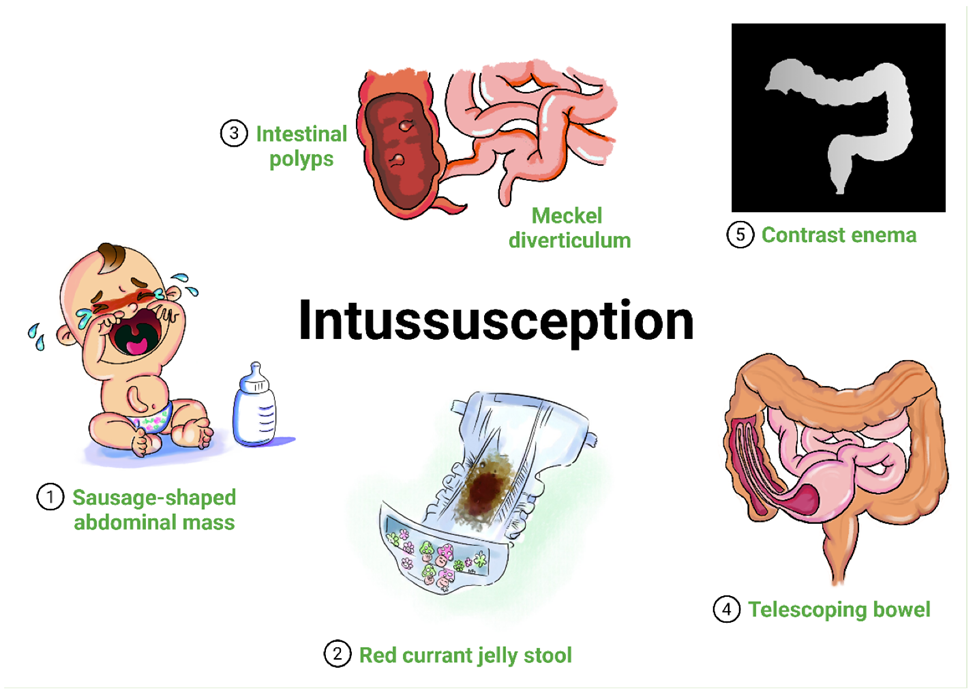
The nurse is preparing to care for a child with a diagnosis of intussusception. The nurse reviews the child's record and expects to note which sign of this disorder documented?
A. Ribbon-like stools
Ribbon-like stoolsExplanation: Ribbon-like or pencil-thin stools are associated with conditions affecting the rectum, such as colorectal cancer, but they are not a typical sign of intussusception.
B. Profuse projectile vomiting
Profuse projectile vomitingExplanation: Profuse projectile vomiting is not a typical sign of intussusception. Vomiting may occur, but it is not the primary characteristic feature.
C. Bright red blood and mucus in the stools
Bright red blood and mucus in the stools Explanation:Intussusception is a condition in which one part of the intestine slides into another, causing a blockage. One of the classic signs of intussusception is the presence of "currant jelly" stools, which are characterized by a mixture of bright red blood and mucus in the stools. This occurs due to the compression of the blood vessels in the intestine, leading to bleeding and mucosal discharge.
D. Watery diarrhea
Watery diarrhea Explanation: Watery diarrhea is not a typical sign of intussusception. The condition is more commonly associated with abdominal pain, vomiting, and the characteristic "currant jelly" stools.
Full Explanation
A. Ribbon-like stools
Explanation: Ribbon-like or pencil-thin stools are associated with conditions affecting the rectum, such as colorectal cancer, but they are not a typical sign of intussusception.
B. Profuse projectile vomiting
Explanation: Profuse projectile vomiting is not a typical sign of intussusception. Vomiting may occur, but it is not the primary characteristic feature.
C. Bright red blood and mucus in the stools
Explanation:
Intussusception is a condition in which one part of the intestine slides into another, causing a blockage. One of the classic signs of intussusception is the presence of "currant jelly" stools, which are characterized by a mixture of bright red blood and mucus in the stools. This occurs due to the compression of the blood vessels in the intestine, leading to bleeding and mucosal discharge.
D. Watery diarrhea
Explanation: Watery diarrhea is not a typical sign of intussusception. The condition is more commonly associated with abdominal pain, vomiting, and the characteristic "currant jelly" stools.
A nurse is providing nutritional teaching to the mother of a preschooler and is recommending food options to provide 1 oz of grains. Which of the following foods should the nurse recommend?
A. 1 cup cooked rice
1 cup cooked rice: This exceeds the 1 oz serving size and is more than what the nurse is recommending.
B. flour tortilla
Flour tortilla: The size of a flour tortilla can vary, but it often exceeds the 1 oz serving size, so it may provide more than the recommended amount.
C. 1 cup ready-to-eat cereal flakes
1 cup ready-to-eat cereal flakes: The volume of cereal can vary, and 1 cup of cereal may provide more than 1 oz of grains, depending on the type and density of the cereal.
D. 1 slice whole wheat bread
1 slice whole wheat bread: A standard slice of whole wheat bread typically provides around 1 oz of grains, making it an appropriate choice for the recommended serving size.
Full Explanation
A. 1 cup cooked rice: This exceeds the 1 oz serving size and is more than what the nurse is recommending.
B. Flour tortilla: The size of a flour tortilla can vary, but it often exceeds the 1 oz serving size, so it may provide more than the recommended amount.
C. 1 cup ready-to-eat cereal flakes: The volume of cereal can vary, and 1 cup of cereal may provide more than 1 oz of grains, depending on the type and density of the cereal.
D. 1 slice whole wheat bread: A standard slice of whole wheat bread typically provides around 1 oz of grains, making it an appropriate choice for the recommended serving size.