
Nursing practice questions with comprehensive rationales
NurseDive Free Nursing Practice Question
The practical nurse (PN) reports that a client who has a fingerstick glucose of 35 mg/dL (1.94 mmol/L) is alert and diaphoretic. Which action should the charge nurse take?
Reference Ranges
- Glucose [Reference Range: 0 to 50 years: 74 to 106 mg/dL (4.1 to 5.9 mmol/L)]
A. Collect a blood sample for hemoglobin Alc.
Collecting a blood sample for hemoglobin A1c (HbA1c) is not necessary in this acute situation. HbA1c reflects the average blood glucose level over the past 2-3 months and is used to assess long-term glycemic control in clients with diabetes. It does not provide immediate information or guide immediate interventions for acute hypoglycemia.
B. Give the client a glass of orange juice.
In this situation, the client has a fingerstick glucose level of 35 mg/dL (1.94 mmol/L) and is alert but diaphoretic. The charge nurse should take the following action: Give the client a glass of orange juice. A glucose level of 35 mg/dL (1.94 mmol/L) is considered significantly low (hypoglycemia), and the client's symptoms of diaphoresis indicate that the low glucose level is likely causing the symptoms. Providing the client with a glass of orange juice or another source of fast-acting carbohydrate is appropriate to quickly raise the blood sugar level and alleviate the symptoms of hypoglycemia.
C. Notify the healthcare provider.
Notifying the healthcare provider is not the first action to take in this situation. The client's low glucose level can be promptly addressed by administering a source of fast-acting carbohydrate, such as orange juice. If the client's symptoms persist or worsen despite appropriate intervention, or if there are other concerning factors, then notifying the healthcare provider would be appropriate.
D. Assess client for polyuria and polyphagia.
Assessing the client for polyuria (excessive urination) and polyphagia (excessive hunger) is important in the overall management of diabetes, but it is not the immediate action to take in this acute situation of hypoglycemia. The priority at this time is to address the low blood sugar level and relieve the client's symptoms.
This question is an excerpt from Nurse Dive's nursing test bank - RN Hesi Exit Proctored Exam. Take the full exam now
Full Explanation
In this situation, the client has a fingerstick glucose level of 35 mg/dL (1.94 mmol/L) and is alert but diaphoretic. The charge nurse should take the following action:
Give the client a glass of orange juice.
A glucose level of 35 mg/dL (1.94 mmol/L) is considered significantly low (hypoglycemia), and the client's symptoms of diaphoresis indicate that the low glucose level is likely causing the symptoms. Providing the client with a glass of orange juice or another source of fast-acting carbohydrate is appropriate to quickly raise the blood sugar level and alleviate the symptoms of hypoglycemia.
Collecting a blood sample for hemoglobin A1c (HbA1c) is not necessary in this acute situation. HbA1c reflects the average blood glucose level over the past 2-3 months and is used to assess long-term glycemic control in clients with diabetes. It does not provide immediate information or guide immediate interventions for acute hypoglycemia.
Notifying the healthcare provider is not the first action to take in this situation. The client's low glucose level can be promptly addressed by administering a source of fast-acting carbohydrate, such as orange juice. If the client's symptoms persist or worsen despite appropriate intervention, or if there are other concerning factors, then notifying the healthcare provider would be appropriate.
Assessing the client for polyuria (excessive urination) and polyphagia (excessive hunger) is important in the overall management of diabetes, but it is not the immediate action to take in this acute situation of hypoglycemia. The priority at this time is to address the low blood sugar level and relieve the client's symptoms.
Similar Questions
The nurse is caring for a client who reports running out of aspirin 1 week ago and taking ibuprofen as a replacement. Which information should the nurse obtain from the client first?
A. Reason for taking the aspirin.
The information that the nurse should obtain from the client first is: Reason for taking the aspirin. It is important to first understand why the client was taking aspirin in order to determine the potential implications of switching to ibuprofen. Aspirin and ibuprofen are both nonsteroidal anti-inflammatory drugs (NSAIDs), but they have different indications and effects. Aspirin is commonly used for its antiplatelet properties to reduce the risk of heart attacks and strokes, while ibuprofen is primarily used for its analgesic and anti-inflammatory properties. By understanding the reason for taking aspirin, the nurse can assess if the client was using it for its antiplatelet effects, which is important information to consider for the client's overall health and well-being. Once the reason for taking aspirin is determined, the nurse can proceed to inquire about the other relevant information, such as the dosage of ibuprofen taken, presence of gastric pain, and amount of pain control. These details will help in assessing the client's current medication regimen, potential side effects or complications, and overall pain management.
B. Dosage of ibuprofen taken.
C. Presence of gastric pain.
D. Amount of pain control.
Full Explanation
The information that the nurse should obtain from the client first is: Reason for taking the aspirin.
It is important to first understand why the client was taking aspirin in order to determine the potential implications of switching to ibuprofen. Aspirin and ibuprofen are both nonsteroidal anti-inflammatory drugs (NSAIDs), but they have different indications and effects. Aspirin is commonly used for its antiplatelet properties to reduce the risk of heart attacks and strokes, while ibuprofen is primarily used for its analgesic and anti-inflammatory properties.
By understanding the reason for taking aspirin, the nurse can assess if the client was using it for its antiplatelet effects, which is important information to consider for the client's overall health and well-being.
Once the reason for taking aspirin is determined, the nurse can proceed to inquire about the other relevant information, such as the dosage of ibuprofen taken, presence of gastric pain, and amount of pain control. These details will help in assessing the client's current medication regimen, potential side effects or complications, and overall pain management.
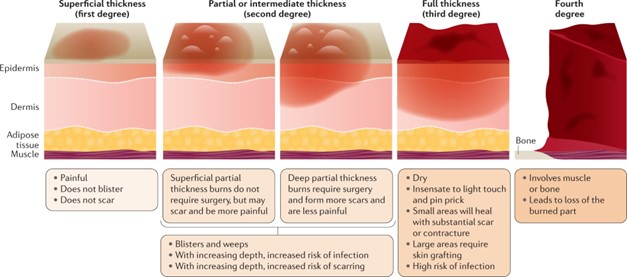
When caring for a client with full-thickness burns to both lower extremities, which assessment finding(s) warrant immediate intervention by the nurse? (Select all that apply.)
A. Sloughing tissue around wound edges.
While sloughing tissue around wound edges and weeping serosanguineous fluid from wounds are important assessment findings in the context of burn care, they do not require immediate intervention compared to the findings mentioned above. These findings should still be addressed and managed appropriately, but they are not considered immediate emergencies.
B. Change in the quality of the peripheral pulses.
Changes in the quality of peripheral pulses indicate alterations in blood flow and may suggest vascular compromise or decreased perfusion to the affected areas. This finding requires immediate intervention to prevent further damage and ensure adequate blood supply to the extremities.
C. Weeping serosanguineous fluid from wounds.
While sloughing tissue around wound edges and weeping serosanguineous fluid from wounds are important assessment findings in the context of burn care, they do not require immediate intervention compared to the findings mentioned above. These findings should still be addressed and managed appropriately, but they are not considered immediate emergencies.
D. Loss of sensation to the left lower extremity.
Loss of sensation to the left lower extremity can be indicative of nerve injury or impaired peripheral nerve function. It is important to assess for nerve damage and address it promptly to prevent complications and maximize the client's recovery.
E. Complaint of increased pain and pressure.
Complaints of increased pain and pressure are concerning because they may indicate the development of compartment syndrome, a serious complication in which pressure within the muscles and tissues builds up to dangerous levels. Prompt intervention is necessary to relieve the pressure and prevent tissue damage.
Full Explanation
These findings suggest potential complications and compromise to the client's circulation and nerve function, which require immediate attention.
Changes in the quality of peripheral pulses indicate alterations in blood flow and may suggest vascular compromise or decreased perfusion to the affected areas. This finding requires immediate intervention to prevent further damage and ensure adequate blood supply to the extremities.
Loss of sensation to the left lower extremity can be indicative of nerve injury or impaired peripheral nerve function. It is important to assess for nerve damage and address it promptly to prevent complications and maximize the client's recovery.
Complaints of increased pain and pressure are concerning because they may indicate the development of compartment syndrome, a serious complication in which pressure within the muscles and tissues builds up to dangerous levels. Prompt intervention is necessary to relieve the pressure and prevent tissue damage.
While sloughing tissue around wound edges and weeping serosanguineous fluid from wounds are important assessment findings in the context of burn care, they do not require immediate intervention compared to the findings mentioned above. These findings should still be addressed and managed appropriately, but they are not considered immediate emergencies.
The nurse is assessing an older client who is having difficulty remembering events from earlier in the day and concentrating on the questions being asked. A family member shares that the client's home was recently sold and the client has just moved in with them.
Which nursing response best promotes effective communication with the family?
A. If the dementia is a result of Alzheimer's disease, it is often reversible even in the late stages.
Stating that dementia resulting from Alzheimer's disease is often reversible even in the late stages is incorrect. Alzheimer's disease is a progressive neurodegenerative disorder that currently has no cure, and the symptoms tend to worsen over time. Reversibility is not typically associated with Alzheimer's disease.
B. The client is exhibiting symptoms of dementia and because of age, it may be permanent.
Indicating that the client's symptoms of dementia are permanent due to age is a generalization and may not be accurate. While age is a risk factor for certain types of dementia, such as Alzheimer's disease, it does not mean that all memory and cognitive difficulties in older adults are irreversible.
C. The client's delirium may be due to depression and is possibly reversible.
Given the client's difficulty with memory, concentration, and recent life changes, it is important for the nurse to acknowledge the possibility of delirium as a potential cause of the client's symptoms. Delirium is an acute state of confusion that can be caused by various factors, including physical illness, medication side effects, and emotional stressors. It is often reversible when the underlying cause is identified and treated. By mentioning the possibility of delirium and its potential reversibility, the nurse opens up the conversation to exploring other factors that may be contributing to the client's symptoms. This response also provides hope to the family by suggesting that the client's condition may improve with appropriate interventions and management.
D. Delirium is often a sign of underlying mental illness and institutionalization is often necessary.
Suggesting that delirium is often a sign of underlying mental illness and institutionalization is necessary is not appropriate. Delirium is a medical condition that requires thorough assessment and appropriate management, including addressing any underlying causes. Institutionalization may be considered in certain situations, but it is not the primary focus of communication in this context.
Full Explanation
Given the client's difficulty with memory, concentration, and recent life changes, it is
important for the nurse to acknowledge the possibility of delirium as a potential cause of the client's symptoms. Delirium is an acute state of confusion that can be caused by various factors, including physical illness, medication side effects, and emotional stressors. It is often reversible when the underlying cause is identified and treated.
By mentioning the possibility of delirium and its potential reversibility, the nurse opens up the conversation to exploring other factors that may be contributing to the client's symptoms. This response also provides hope to the family by suggesting that the client's condition may improve with appropriate interventions and management.
Stating that dementia resulting from Alzheimer's disease is often reversible even in the late stages is incorrect. Alzheimer's disease is a progressive neurodegenerative disorder that currently has no cure, and the symptoms tend to worsen over time.
Reversibility is not typically associated with Alzheimer's disease.
Indicating that the client's symptoms of dementia are permanent due to age is a generalization and may not be accurate. While age is a risk factor for certain types of dementia, such as Alzheimer's disease, it does not mean that all memory and cognitive difficulties in older adults are irreversible.
Suggesting that delirium is often a sign of underlying mental illness and institutionalization is necessary is not appropriate. Delirium is a medical condition that requires thorough assessment and appropriate management, including addressing any underlying causes. Institutionalization may be considered in certain situations, but it is not the primary focus of communication in this context.