Nursing practice questions with comprehensive rationales
NurseDive Free Nursing Practice Question
The registered nurse is discussing care of an infant diagnosed with a patent ductus arteriosus (PDA) with a nursing student. The registered nurse determines that the nursing student needs further teaching regarding a PDA when the student states that which circulatory change is a characteristic of this disorder?
A. This shunting allows oxygenated and unoxygenated blood to mix.
"This shunting allows oxygenated and unoxygenated blood to mix."Explanation: This statement is correct. In PDA, the shunting of blood between the aorta and pulmonary artery allows oxygenated and unoxygenated blood to mix, leading to decreased oxygen saturation in the systemic circulation.
B. Blood is shunted to the right side of the heart.
"Blood is shunted to the right side of the heart."Explanation: This statement is correct. In PDA, blood is shunted from the left side of the heart (aorta) to the right side of the heart (pulmonary artery).
C. This shunting results in increased pulmonary blood flow.
"This shunting results in increased pulmonary blood flow."Explanation: This statement is correct. PDA leads to increased pulmonary blood flow as a result of the shunting of blood from the aorta to the pulmonary artery.
D. Blood is shunted to the left side of the heart.
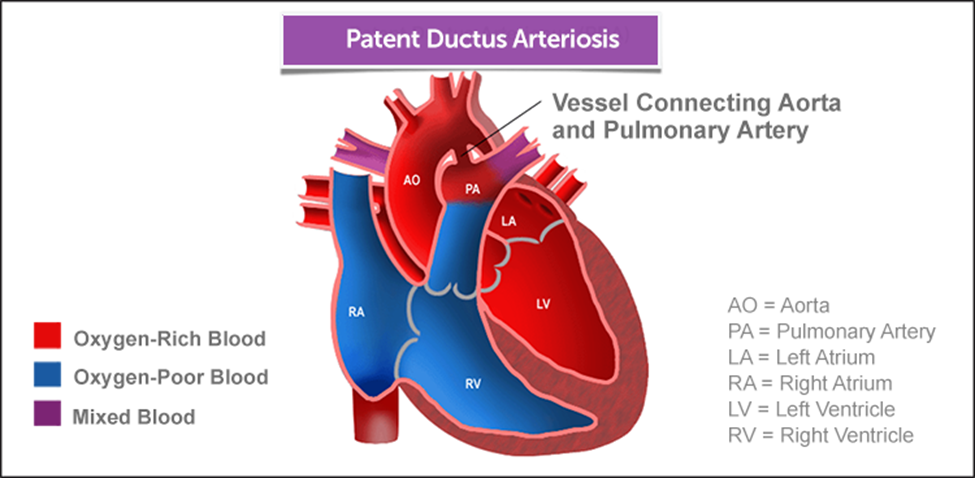
"Blood is shunted to the left side of the heart." Explanation: A patent ductus arteriosus (PDA) is a congenital heart defect where the ductus arteriosus, a fetal blood vessel that normally closes shortly after birth, remains open. In PDA, blood is shunted from the aorta (left side of the heart) to the pulmonary artery (right side of the heart), resulting in increased pulmonary blood flow. Therefore, the correct statement is that "Blood is shunted to the right side of the heart."
This question is an excerpt from Nurse Dive's nursing test bank - ATI RN Paediatric Assessment Proctored Exam 2022. Take the full exam now
Full Explanation
A. "This shunting allows oxygenated and unoxygenated blood to mix."
Explanation: This statement is correct. In PDA, the shunting of blood between the aorta and pulmonary artery allows oxygenated and unoxygenated blood to mix, leading to decreased oxygen saturation in the systemic circulation.
B. "Blood is shunted to the right side of the heart."
Explanation: This statement is correct. In PDA, blood is shunted from the left side of the heart (aorta) to the right side of the heart (pulmonary artery).
C. "This shunting results in increased pulmonary blood flow."
Explanation: This statement is correct. PDA leads to increased pulmonary blood flow as a result of the shunting of blood from the aorta to the pulmonary artery.
D. "Blood is shunted to the left side of the heart."
Explanation:
A patent ductus arteriosus (PDA) is a congenital heart defect where the ductus arteriosus, a fetal blood vessel that normally closes shortly after birth, remains open. In PDA, blood is shunted from the aorta (left side of the heart) to the pulmonary artery (right side of the heart), resulting in increased pulmonary blood flow. Therefore, the correct statement is that "Blood is shunted to the right side of the heart."
Similar Questions
A nurse is collecting data from an infant at a well-child visit. The nurse should understand that birth weight typically doubles by what age?
A. 9 months
9 months: By 9 months, most infants would have well exceeded doubling their birth weight.
B. 12 months
12 months: Doubling of birth weight usually occurs earlier, by around 5 to 6 months, rather than 12 months.
C. 6 months
6 months Explanation:The general guideline is that infants tend to double their birth weight by around 5 to 6 months of age. This doubling of birth weight is a common marker of healthy growth and development during the first few months of life.
D. 3 months
3 months: By 3 months, while infants experience significant growth, they usually haven't doubled their birth weight yet.
Full Explanation
A. 9 months: By 9 months, most infants would have well exceeded doubling their birth weight.
B. 12 months: Doubling of birth weight usually occurs earlier, by around 5 to 6 months, rather than 12 months.
C. 6 months
Explanation:
The general guideline is that infants tend to double their birth weight by around 5 to 6 months of age. This doubling of birth weight is a common marker of healthy growth and development during the first few months of life.
D. 3 months: By 3 months, while infants experience significant growth, they usually haven't doubled their birth weight yet.
A preschooler with a history of cleft palate repair comes to the clinic for a routine well-child checkup. To determine whether this child is experiencing a long-term effect of cleft palate, which question would the nurse ask the parent?
A. "Has the child had any difficulty swallowing food?"
"Has the child had any difficulty swallowing food?"Explanation:Cleft palate repair can impact various aspects of a child's development, and one potential long-term effect is difficulty with swallowing or feeding. This question is relevant to assessing the child's oral and feeding function, which can be influenced by the cleft palate repair.
B. "Does the child play with an imaginary friend?"
"Does the child play with an imaginary friend?"Explanation: Imaginary play and social interactions are not directly related to the long-term effects of cleft palate repair. This question focuses more on social and imaginative development.
C. "Does the child respond when called by name?
"Does the child respond when called by name?"Explanation: Responsiveness to one's name is a general developmental milestone and is not directly related to the long-term effects of cleft palate repair.
D. "Was the child recently treated for pneumonia?"
"Was the child recently treated for pneumonia?" Explanation: While respiratory issues can be a concern in children with a history of cleft palate, this question is more specific to recent health issues and does not address the long-term effects of cleft palate repair.
Full Explanation
A. "Has the child had any difficulty swallowing food?"
Explanation:
Cleft palate repair can impact various aspects of a child's development, and one potential long-term effect is difficulty with swallowing or feeding. This question is relevant to assessing the child's oral and feeding function, which can be influenced by the cleft palate repair.
B. "Does the child play with an imaginary friend?"
Explanation: Imaginary play and social interactions are not directly related to the long-term effects of cleft palate repair. This question focuses more on social and imaginative development.
C. "Does the child respond when called by name?"
Explanation: Responsiveness to one's name is a general developmental milestone and is not directly related to the long-term effects of cleft palate repair.
D. "Was the child recently treated for pneumonia?"
Explanation: While respiratory issues can be a concern in children with a history of cleft palate, this question is more specific to recent health issues and does not address the long-term effects of cleft palate repair.
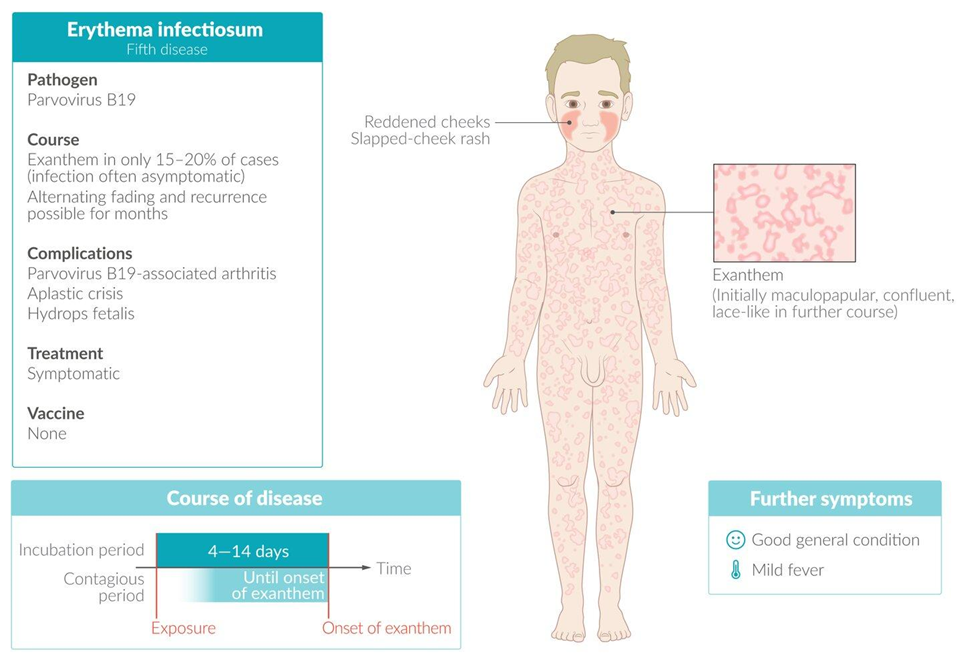
On assessment, the school nurse notes that the child has a rash. The nurse suspects that the child has erythema infectiosum (fifth disease). because the skin assessment revealed a rash that has which characteristics?
A. A highly pruritic profuse macule to papule rash on the trunk
A highly pruritic profuse macule to papule rash on the trunkExplanation: This description does not fit the typical characteristics of erythema infectiosum. Fifth disease is not typically associated with a highly pruritic rash.
B. A discrete pinkish red maculopapular rash that is spreading to the trunk
A discrete pinkish red maculopapular rash that is spreading to the trunkExplanation: While erythema infectiosum does involve a rash that can spread to the trunk, the distinctive "slapped face" appearance is a key characteristic that is not captured in this option.
C. An erythema on the face that has a "slapped face appearance
An erythema on the face that has a "slapped face" appearance. Explanation:Erythema infectiosum, commonly known as fifth disease or slapped cheek syndrome, is characterized by a distinctive facial rash that gives the appearance of a "slapped face." The rash typically starts on the face and then spreads to the trunk and extremities. It often begins with erythema on the cheeks, giving the child a flushed or slapped appearance, followed by a discrete rose-pink maculopapular rash on the trunk.
D. A discrete rose-pink maculopapular rash on the trunk
A discrete rose-pink maculopapular rash on the trunk Explanation: This description fits the typical characteristics of the rash seen in erythema infectiosum, but the key identifier is the "slapped face" appearance on the face.
Full Explanation
A. A highly pruritic profuse macule to papule rash on the trunk
Explanation: This description does not fit the typical characteristics of erythema infectiosum. Fifth disease is not typically associated with a highly pruritic rash.
B. A discrete pinkish red maculopapular rash that is spreading to the trunk
Explanation: While erythema infectiosum does involve a rash that can spread to the trunk, the distinctive "slapped face" appearance is a key characteristic that is not captured in this option.
C. An erythema on the face that has a "slapped face" appearance.
Explanation:
Erythema infectiosum, commonly known as fifth disease or slapped cheek syndrome, is characterized by a distinctive facial rash that gives the appearance of a "slapped face." The rash typically starts on the face and then spreads to the trunk and extremities. It often begins with erythema on the cheeks, giving the child a flushed or slapped appearance, followed by a discrete rose-pink maculopapular rash on the trunk.
D. A discrete rose-pink maculopapular rash on the trunk
Explanation: This description fits the typical characteristics of the rash seen in erythema infectiosum, but the key identifier is the "slapped face" appearance on the face.