
Nursing practice questions with comprehensive rationales
NurseDive Free Nursing Practice Question
What is the primary result of anemia?
A. Depressed hematopoietic system.
Anemia does not primarily result in a depressed hematopoietic system. In fact, anemia often occurs due to various factors that affect red blood cell production or lifespan. The hematopoietic system can be overactive in response to anemia, attempting to compensate for the reduced oxygen-carrying capacity of the blood.
B. Presence of abnormal hemoglobin.
While some anemias may involve the presence of abnormal hemoglobin (e.g., sickle cell anemia), this is not the primary result of anemia. The primary consequence of anemia is a decreased ability of the blood to carry oxygen to the body's tissues.
C. Decreased oxygen-carrying capacity of blood.
The correct choice. Anemia leads to a decreased oxygen-carrying capacity of the blood. Hemoglobin, the protein in red blood cells responsible for carrying oxygen, is reduced in quantity or function in various types of anemia. This results in inadequate oxygen delivery to tissues, potentially causing symptoms such as fatigue, weakness, pallor, and shortness of breath.
D. Increased blood viscosity.
Increased blood viscosity is not a primary result of anemia. Anemia tends to reduce blood viscosity because there are fewer red blood cells and less hemoglobin present, which makes the blood more fluid and less viscous. Increased blood viscosity is more commonly associated with conditions like polycythemia, where there is an excess of red blood cells.
This question is an excerpt from Nurse Dive's nursing test bank - Pediatrics Midterm V1 2023 Test 3 Proctored Exam. Take the full exam now
Full Explanation
The correct answer is choice C. Decreased oxygen-carrying capacity of blood.
Choice A rationale:
Anemia does not primarily result in a depressed hematopoietic system. In fact, anemia often occurs due to various factors that affect red blood cell production or lifespan. The hematopoietic system can be overactive in response to anemia, attempting to compensate for the reduced oxygen-carrying capacity of the blood.
Choice B rationale:
While some anemias may involve the presence of abnormal hemoglobin (e.g., sickle cell anemia), this is not the primary result of anemia. The primary consequence of anemia is a decreased ability of the blood to carry oxygen to the body's tissues.
Choice C rationale:
The correct choice. Anemia leads to a decreased oxygen-carrying capacity of the blood. Hemoglobin, the protein in red blood cells responsible for carrying oxygen, is reduced in quantity or function in various types of anemia. This results in inadequate oxygen delivery to tissues, potentially causing symptoms such as fatigue, weakness, pallor, and shortness of breath.
Choice D rationale:
Increased blood viscosity is not a primary result of anemia. Anemia tends to reduce blood viscosity because there are fewer red blood cells and less hemoglobin present, which makes the blood more fluid and less viscous. Increased blood viscosity is more commonly associated with conditions like polycythemia, where there is an excess of red blood cells.
Similar Questions
As part of the treatment for congestive heart failure, the child takes the diuretic furosemide. As part of teaching home care, the nurse encourages the family to give the child foods such as bananas, oranges, and leafy vegetables. These foods are recommended because they are high in what electrolyte?
A. Potassium.
Diuretics like furosemide are commonly used to treat congestive heart failure. They work by increasing the excretion of water and electrolytes, including potassium, from the body. Low levels of potassium (hypokalemia) can lead to various complications, including cardiac arrhythmias and muscle weakness. Since furosemide can cause potassium loss, it's important to ensure an adequate intake of potassium-rich foods. Bananas, oranges, and leafy vegetables are excellent sources of potassium. Therefore, the nurse encourages the family to include these foods in the child's diet to help maintain a healthy potassium balance.
B. Sodium.
Sodium is an important electrolyte, but in the context of congestive heart failure and diuretic use, the focus is more on avoiding excessive sodium intake. Diuretics like furosemide aim to reduce fluid retention by increasing sodium excretion, so it's not necessary to recommend high-sodium foods. Moreover, excessive sodium intake could exacerbate fluid retention and worsen the heart failure.
C. Chlorides.
Chlorides are often found in table salt (sodium chloride) and are not typically emphasized in the context of heart failure treatment or diuretic use. While they play a role in maintaining electrolyte balance, they are not the primary focus in this scenario.
D. Zinc.
Zinc is a mineral that is not directly related to the treatment of congestive heart failure or the use of diuretics. It is important for various cellular functions and immune system support, but it's not the electrolyte of concern in this situation.
Full Explanation
The correct answer is choice A. Potassium.
Choice A rationale:
Diuretics like furosemide are commonly used to treat congestive heart failure. They work by increasing the excretion of water and electrolytes, including potassium, from the body. Low levels of potassium (hypokalemia) can lead to various complications, including cardiac arrhythmias and muscle weakness. Since furosemide can cause potassium loss, it's important to ensure an adequate intake of potassium-rich foods. Bananas, oranges, and leafy vegetables are excellent sources of potassium. Therefore, the nurse encourages the family to include these foods in the child's diet to help maintain a healthy potassium balance.
Choice B rationale:
Sodium is an important electrolyte, but in the context of congestive heart failure and diuretic use, the focus is more on avoiding excessive sodium intake. Diuretics like furosemide aim to reduce fluid retention by increasing sodium excretion, so it's not necessary to recommend high-sodium foods. Moreover, excessive sodium intake could exacerbate fluid retention and worsen the heart failure.
Choice C rationale:
Chlorides are often found in table salt (sodium chloride) and are not typically emphasized in the context of heart failure treatment or diuretic use. While they play a role in maintaining electrolyte balance, they are not the primary focus in this scenario.
Choice D rationale:
Zinc is a mineral that is not directly related to the treatment of congestive heart failure or the use of diuretics. It is important for various cellular functions and immune system support, but it's not the electrolyte of concern in this situation.
A school nurse is screening children for scoliosis. Which assessment findings should the nurse expect to observe for scoliosis?
A. Unequal waist angles.
Unequal waist angles can be an indication of scoliosis, a condition characterized by abnormal lateral curvature of the spine. When the spine curves, it can cause one side of the waist to appear higher than the other, leading to unequal waist angles. This is a key physical finding in scoliosis assessment.
B. Complaints of a sore back.
Complaints of a sore back are a non-specific symptom and may not directly indicate scoliosis. While scoliosis can sometimes cause discomfort or pain, it's not the primary assessment finding that the nurse should expect to observe.
C. Inability to bend at the waist.
Inability to bend at the waist is not a typical assessment finding of scoliosis. Scoliosis primarily involves the lateral curvature of the spine, which can lead to visible asymmetry and postural changes rather than restrictions in bending.
D. An uneven hemline.
An uneven hemline can be a sign of scoliosis. When the spine curves, it can cause the hips and shoulders to become misaligned, leading to changes in the alignment of clothing and accessories, such as an uneven hemline.
E. Asymmetry of the shoulders.
Asymmetry of the shoulders is a common manifestation of scoliosis. One shoulder may appear higher than the other due to the lateral curvature of the spine. This asymmetry is often more noticeable when the child is viewed from behind.
Full Explanation
The correct answers are choices A, D, and E. Unequal waist angles, an uneven hemline, and asymmetry of the shoulders.
Choice A rationale:
Unequal waist angles can be an indication of scoliosis, a condition characterized by abnormal lateral curvature of the spine. When the spine curves, it can cause one side of the waist to appear higher than the other, leading to unequal waist angles. This is a key physical finding in scoliosis assessment.
Choice B rationale:
Complaints of a sore back are a non-specific symptom and may not directly indicate scoliosis. While scoliosis can sometimes cause discomfort or pain, it's not the primary assessment finding that the nurse should expect to observe.
Choice C rationale:
Inability to bend at the waist is not a typical assessment finding of scoliosis. Scoliosis primarily involves the lateral curvature of the spine, which can lead to visible asymmetry and postural changes rather than restrictions in bending.
Choice D rationale:
An uneven hemline can be a sign of scoliosis. When the spine curves, it can cause the hips and shoulders to become misaligned, leading to changes in the alignment of clothing and accessories, such as an uneven hemline.
Choice E rationale:
Asymmetry of the shoulders is a common manifestation of scoliosis. One shoulder may appear higher than the other due to the lateral curvature of the spine. This asymmetry is often more noticeable when the child is viewed from behind.
What distinguishing manifestation of spasmodic croup should parents be taught to identify?
A. The child has a high fever.
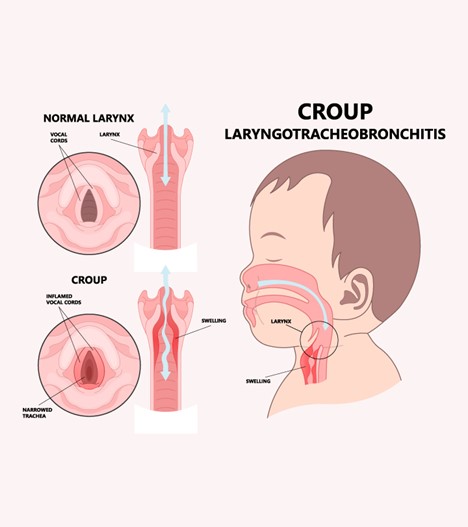
Spasmodic croup is characterized by sudden-onset symptoms, including a barking cough, but it is not typically associated with a high fever. The barky cough is caused by inflammation and narrowing of the upper airways, leading to a distinct sound when the child coughs.
B. It has a harsh, barky cough.
A harsh, barky cough is a hallmark symptom of spasmodic croup. It is caused by the swelling of the vocal cords and the upper airway, resulting in the characteristic sound. This type of croup is often triggered by viral infections and is usually not bacterial in nature.
C. It is bacterial in nature.
Spasmodic croup is usually of viral origin rather than bacterial. Bacterial infections may lead to other respiratory conditions, but they are not a distinguishing feature of spasmodic croup.
D. Wheezing is heard audibly.
Wheezing is not a typical manifestation of spasmodic croup. Wheezing is often associated with lower airway conditions such as asthma, while croup primarily affects the upper airways and vocal cords, leading to the barking cough.
Full Explanation
The correct answer is choice B. It has a harsh, barky cough.
Choice A rationale:
Spasmodic croup is characterized by sudden-onset symptoms, including a barking cough, but it is not typically associated with a high fever. The barky cough is caused by inflammation and narrowing of the upper airways, leading to a distinct sound when the child coughs.
Choice B rationale:
A harsh, barky cough is a hallmark symptom of spasmodic croup. It is caused by the swelling of the vocal cords and the upper airway, resulting in the characteristic sound. This type of croup is often triggered by viral infections and is usually not bacterial in nature.
Choice C rationale:
Spasmodic croup is usually of viral origin rather than bacterial. Bacterial infections may lead to other respiratory conditions, but they are not a distinguishing feature of spasmodic croup.
Choice D rationale:
Wheezing is not a typical manifestation of spasmodic croup. Wheezing is often associated with lower airway conditions such as asthma, while croup primarily affects the upper airways and vocal cords, leading to the barking cough.