
Nursing practice questions with comprehensive rationales
NurseDive Free Nursing Practice Question
When using the antitussive Benzonatate, also known as Tessalon Pearls, it is very important to teach the patient to
A. Eat a high-fatty meal prior to taking medication
Eating a high-fat meal prior to taking medication: There is no specific requirement to eat a high-fat meal before taking Benzonatate. However, taking it with food or a glass of water may help with ease of swallowing.
B. Medication can be taken often and whenever he feels a cough is starting
Taking medication often and whenever a cough is starting: Benzonatate should be taken as directed by the healthcare provider. It is not recommended to take it more frequently or as needed, as it can lead to an overdose or unwanted side effects.
C. Swallow whole and do not bite or chew the medication
Benzonatate is available in capsule form (such as Tessalon Pearls), and it should be swallowed whole. It is important not to chew, crush, or break the capsules as this can cause adverse effects, including local anesthesia in the oral cavity, which can lead to choking or difficulty swallowing. Swallowing the capsule whole ensures that the medication is released properly in the stomach for the desired effect.
D. Take medication with orange juice
Taking medication with orange juice: There is no specific requirement to take Benzonatate with orange juice. It can be taken with water or other non-alcoholic beverages as directed by the healthcare provider.
This question is an excerpt from Nurse Dive's nursing test bank - ATI NUR 229 Pharmacology Test #1 OEK Proctored Exam. Take the full exam now
Full Explanation
Benzonatate is available in capsule form (such as Tessalon Pearls), and it should be swallowed whole. It is important not to chew, crush, or break the capsules as this can cause adverse effects, including local anesthesia in the oral cavity, which can lead to choking or difficulty swallowing. Swallowing the capsule whole ensures that the medication is released properly in the stomach for the desired effect.
The other options mentioned are incorrect:
A. Eating a high-fat meal prior to taking medication: There is no specific requirement to eat a high-fat meal before taking Benzonatate. However, taking it with food or a glass of water may help with ease of swallowing.
B. Taking medication often and whenever a cough is starting: Benzonatate should be taken as directed by the healthcare provider. It is not recommended to take it more frequently or as needed, as it can lead to an overdose or unwanted side effects.
D. Taking medication with orange juice: There is no specific requirement to take Benzonatate with orange juice. It can be taken with water or other non-alcoholic beverages as directed by the healthcare provider.
Similar Questions
A nurse is evaluating teaching a client who has a new prescription for montelukast to treat asthma. Which of the following statements by the client indicates an understanding of the teaching?
A. "I'll rinse my mouth after taking this medication.”
"I'll rinse my mouth after taking this medication": Rinsing the mouth after taking montelukast is not necessary as it is not an inhaled medication. Rinsing the mouth is typically recommended after using inhaled corticosteroids to reduce the risk of oral thrush.
B. "I'll take this medication when I get an asthma attack.”
"I'll take this medication when I get an asthma attack": Montelukast is a long-term control medication used to prevent asthma attacks and manage chronic asthma symptoms. It is not intended for immediate relief during an asthma attack.
C. “I use a spacer device when I inhale this medication."
"I use a spacer device when I inhale this medication": Montelukast is not an inhaled medication, so the use of a spacer device is not applicable. Spacer devices are commonly used with inhaled medications to improve the delivery of the medication to the lungs.
D. “I’ll take this medication once a day in the evening.”
Montelukast is typically prescribed as a once-daily medication for the treatment of asthma. Taking it in the evening can be beneficial as it helps to control asthma symptoms throughout the day and night. It is important to follow the prescribed dosing schedule provided by the healthcare provider.
Full Explanation
Montelukast is typically prescribed as a once-daily medication for the treatment of asthma. Taking it in the evening can be beneficial as it helps to control asthma symptoms throughout the day and night. It is important to follow the prescribed dosing schedule provided by the healthcare provider.
The other statements mentioned are incorrect:
A. "I'll rinse my mouth after taking this medication": Rinsing the mouth after taking montelukast is not necessary as it is not an inhaled medication. Rinsing the mouth is typically recommended after using inhaled corticosteroids to reduce the risk of oral thrush.
B. "I'll take this medication when I get an asthma attack": Montelukast is a long-term control medication used to prevent asthma attacks and manage chronic asthma symptoms. It is not intended for immediate relief during an asthma attack.
C. "I use a spacer device when I inhale this medication": Montelukast is not an inhaled medication, so the use of a spacer device is not applicable. Spacer devices are commonly used with inhaled medications to improve the delivery of the medication to the lungs.
The nurse is reviewing the medication record of a patient with asthma and notes the patient is taking inhaled fluticasone (Flovent). The nurse know that inhaled fluticasone (Flovent) is helpful in the treatment of asthma in what way?
A. Reduces inflammation in the airway.
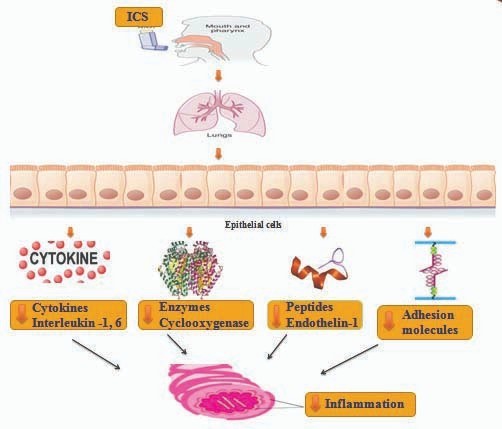
Inhaled fluticasone (Flovent) is a corticosteroid medication that is commonly used in the treatment of asthma. It works by reducing inflammation in the airway, which is a key component of asthma. By decreasing inflammation, it helps to prevent and control asthma symptoms, such as wheezing, coughing, and shortness of breath.
B. Relieves symptoms of an acute asthma attack
Relieves symptoms of an acute asthma attack: Inhaled fluticasone is not intended for immediate relief during an acute asthma attack. It is a long-term control medication used to manage and prevent asthma symptoms.
C. Causes an immediate bronchodilation,
Causes immediate bronchodilation: Fluticasone does not cause immediate bronchodilation, which refers to the widening of the airways to improve breathing. Bronchodilation is typically achieved with short-acting beta-agonist medications, such as albuterol.
D. Reduces the blood pressure and heart rate.
Reduces blood pressure and heart rate: Fluticasone is not known to have a direct effect on blood pressure or heart rate. Its primary action is to reduce inflammation in the airway for the management of asthma.
Full Explanation
Inhaled fluticasone (Flovent) is a corticosteroid medication that is commonly used in the treatment of asthma. It works by reducing inflammation in the airway, which is a key component of asthma. By decreasing inflammation, it helps to prevent and control asthma symptoms, such as wheezing, coughing, and shortness of breath.
The other options mentioned are incorrect:
B. Relieves symptoms of an acute asthma attack: Inhaled fluticasone is not intended for immediate relief during an acute asthma attack. It is a long-term control medication used to manage and prevent asthma symptoms.
C. Causes immediate bronchodilation: Fluticasone does not cause immediate bronchodilation, which refers to the widening of the airways to improve breathing. Bronchodilation is typically achieved with short-acting beta-agonist medications, such as albuterol.
D. Reduces blood pressure and heart rate: Fluticasone is not known to have a direct effect on blood pressure or heart rate. Its primary action is to reduce inflammation in the airway for the management of asthma.
A nurse is teaching an adolescent about medication therapy with oral acetylcysteine. Which of the following information should the nurse include in the teaching?
A. It is necessary to monitor your serum electrolyte levels.
It is necessary to monitor your serum electrolyte levels: Monitoring serum electrolyte levels is not typically required with oral acetylcysteine therapy. However, it is important to follow the healthcare provider's instructions regarding monitoring and follow-up appointments.
B. "You should avoid eating eggs.”
"You should avoid eating eggs": There is no specific dietary restriction or need to avoid eating eggs while taking oral acetylcysteine. However, it is always advisable to follow a balanced and healthy diet.
C. “Your mouth will become dry!"
"Your mouth will become dry!": Dry mouth is not a common side effect of oral acetylcysteine. Side effects may vary from person to person, but dry mouth is not typically associated with this medication.
D. This medication has a very unusual odor.
Acetylcysteine has a strong and distinct odor, often described as a sulfur-like smell. It is important for the adolescent to be aware of this characteristic odor so that they do not become alarmed or concerned when they encounter it.
Full Explanation
Acetylcysteine has a strong and distinct odor, often described as a sulfur-like smell. It is important for the adolescent to be aware of this characteristic odor so that they do not become alarmed or concerned when they encounter it.
The other options mentioned are incorrect:
A. It is necessary to monitor your serum electrolyte levels: Monitoring serum electrolyte levels is not typically required with oral acetylcysteine therapy. However, it is important to follow the healthcare provider's instructions regarding monitoring and follow-up appointments.
B. "You should avoid eating eggs": There is no specific dietary restriction or need to avoid eating eggs while taking oral acetylcysteine. However, it is always advisable to follow a balanced and healthy diet.
C. "Your mouth will become dry!": Dry mouth is not a common side effect of oral acetylcysteine. Side effects may vary from person to person, but dry mouth is not typically associated with this medication.