
Nursing practice questions with comprehensive rationales
NurseDive Free Nursing Practice Question
Which diagnostic test does the nurse expect the primary care provider to prescribe to confirm a diagnosis of osteoporosis?
A. A diagnostic test that will detect muscle dysfunction.
This test is not specific for confirming osteoporosis.
B. A diagnostic test that determine the mineral density of the bone.
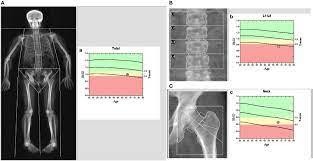
This test is called a bone mineral density (BMD) test or a dual-energy X-ray absorptiometry (DXA) scan. It measures how much calcium and other minerals are in a segment of bone.
C. A diagnostic test that generates detailed images of body structures, including the bones, tissues, organs, and nerves
This test is not specific for confirming osteoporosis.
D. A diagnostic test that generates rapid, clear two-dimensional images of the bones, organs, and tissues
This test is not specific for confirming osteoporosis.
This question is an excerpt from Nurse Dive's nursing test bank - Interprofessional Care of the Client and Family Across the Lifespan II Proctored Exam. Take the full exam now
Full Explanation
Choice A rationale: This test is not specific for confirming osteoporosis.
Choice B rationale: This test is called a bone mineral density (BMD) test or a dual-energy X-ray absorptiometry (DXA) scan. It measures how much calcium and other minerals are in a segment of bone.
Choice C rationale: This test is not specific for confirming osteoporosis.
Choice D rationale: This test is not specific for confirming osteoporosis.
Similar Questions
For which client with severe migraine headaches would the nurse question an order for sumatriptan?
A. A 58-year-old client with gastrointestinal reflux disease
Gastrointestinal reflux disease is not typically a contraindication for sumatriptan.
B. A 65-year-old client with mild emphysema
Mild emphysema is not typically a contraindication for sumatriptan.
C. A 72-year-old client with hyperthyroidism
Hyperthyroidism is not typically a contraindication for sumatriptan.
D. A 48-year-old client with hypertension
Sumatriptan, a medication used for migraines, may elevate blood pressure, so it would be questionable for a client with hypertension.
Full Explanation
Choice A rationale: Gastrointestinal reflux disease is not typically a contraindication for sumatriptan.
Choice B rationale: Mild emphysema is not typically a contraindication for sumatriptan.
Choice C rationale: Hyperthyroidism is not typically a contraindication for sumatriptan.
Choice D rationale: Sumatriptan, a medication used for migraines, may elevate blood pressure, so it would be questionable for a client with hypertension.
What change indicates recovery in a patient with nephrotic syndrome?
A. Increase in serum lipid levels.
An increase in serum lipid levels is associated with nephrotic syndrome, not recovery.
B. Decrease in blood pressure to normal.
A decrease in blood pressure to normal might be beneficial but is not a definitive indicator of recovery from nephrotic syndrome.
C. Gain in body weight.
Gain in body weight can occur due to fluid retention, which is a symptom of nephrotic syndrome, and doesn't indicate recovery.
D. Disappearance of protein from the urine.
The disappearance of protein from the urine is a sign of recovery in nephrotic syndrome.
Full Explanation
Choice A rationale: An increase in serum lipid levels is associated with nephrotic syndrome, not recovery.
Choice B rationale: A decrease in blood pressure to normal might be beneficial but is not a definitive indicator of recovery from nephrotic syndrome.
Choice C rationale: Gain in body weight can occur due to fluid retention, which is a symptom of nephrotic syndrome, and doesn't indicate recovery.
Choice D rationale: The disappearance of protein from the urine is a sign of recovery in nephrotic syndrome.
The nurse is performing an assessment of a client with possible plantar fasciitis in the right foot. What assessment finding would the nurse expect in the right foot?
A. Severe pain in the arch of the foot
Plantar fasciitis typically presents with severe pain in the arch of the foot, especially during the first steps in the morning or after prolonged periods of rest.
B. Multiple toe deformities
Multiple toe deformities are not typically associated with plantar fasciitis.
C. Redness and severe swelling
Redness and severe swelling are not typical findings in plantar fasciitis.
D. Numbness and paresthesia
Numbness and paresthesia are not common findings in plantar fasciitis.
Full Explanation
Choice A rationale: Plantar fasciitis typically presents with severe pain in the arch of the foot, especially during the first steps in the morning or after prolonged periods of rest.
Choice B rationale: Multiple toe deformities are not typically associated with plantar fasciitis.
Choice C rationale: Redness and severe swelling are not typical findings in plantar fasciitis.
Choice D rationale: Numbness and paresthesia are not common findings in plantar fasciitis.
 |