
Nursing practice questions with comprehensive rationales
NurseDive Free Nursing Practice Question
Which of the following should a phlebotomist anticipate for a patient who has been taking warfarin?
A. Fasting requirement
Warfarin does not typically require a fasting state before blood is drawn for testing. The medication's effect on clotting factors is independent of food intake. Therefore, a fasting requirement is not anticipated for patients taking warfarin unless specified for other concurrent tests.
B. Alternate antiseptic required
There is no need for an alternate antiseptic due to warfarin use. Standard antiseptic procedures are sufficient when drawing blood from patients on warfarin. The choice of antiseptic would be more influenced by patient allergies or specific institutional protocols.
C. Increased bleeding time
Patients on warfarin have an increased bleeding time because the medication is an anticoagulant, which means it works to prevent blood clots by thinning the blood. This can lead to prolonged bleeding after a venipuncture, and phlebotomists should be prepared to apply pressure for a longer time to ensure hemostasis.
D. Specimen placed on ice
Placing a specimen on ice is not a standard procedure for blood samples taken for warfarin monitoring, which is typically done through a PT/INR test. This test measures the time it takes for blood to clot and is not affected by temperature in the same way that tests for certain enzymes or gases might be.
This question is an excerpt from Nurse Dive's nursing test bank - Phlebotomy Certification Proctored Exam 130. Take the full exam now
Full Explanation
Choice A Reason:
Warfarin does not typically require a fasting state before blood is drawn for testing. The medication's effect on clotting factors is independent of food intake. Therefore, a fasting requirement is not anticipated for patients taking warfarin unless specified for other concurrent tests.
Choice B Reason:
There is no need for an alternate antiseptic due to warfarin use. Standard antiseptic procedures are sufficient when drawing blood from patients on warfarin. The choice of antiseptic would be more influenced by patient allergies or specific institutional protocols.
Choice C Reason:
Patients on warfarin have an increased bleeding time because the medication is an anticoagulant, which means it works to prevent blood clots by thinning the blood. This can lead to prolonged bleeding after a venipuncture, and phlebotomists should be prepared to apply pressure for a longer time to ensure hemostasis.
Choice D Reason:
Placing a specimen on ice is not a standard procedure for blood samples taken for warfarin monitoring, which is typically done through a PT/INR test. This test measures the time it takes for blood to clot and is not affected by temperature in the same way that tests for certain enzymes or gases might be.
Similar Questions
Which of the following complications could result from a phlebotomist inadvertently squeezing a patient's puncture site firmly during a capillary procedure?
A. Hemostasis
Hemostasis is the process of blood clotting and the cessation of bleeding. While it is a desired outcome following any puncture, squeezing the puncture site would not typically cause hemostasis as a complication. It is the body's natural response to injury to prevent excessive blood loss.
B. Hemolysis
Hemolysis refers to the rupture of red blood cells, which can occur when excessive pressure is applied to a puncture site during a capillary blood collection. This pressure can cause the cells to burst, releasing their contents into the plasma, which can interfere with various laboratory tests and lead to inaccurate results.
C. Homeostasis
Homeostasis is the body's ability to maintain a stable internal environment despite changes in external conditions. It is not a complication but rather a regulatory process. Squeezing a puncture site does not directly relate to homeostasis as a complication.
D. Hypobilirubinemia
Hypobilirubinemia is a condition where there is less than the normal amount of bilirubin in the blood. It is not a complication associated with squeezing a puncture site. Bilirubin levels are typically affected by liver function and red blood cell breakdown, not by the mechanical action of squeezing a site.
Full Explanation
Choice A Reason:
Hemostasis is the process of blood clotting and the cessation of bleeding. While it is a desired outcome following any puncture, squeezing the puncture site would not typically cause hemostasis as a complication. It is the body's natural response to injury to prevent excessive blood loss.
Choice B Reason:
Hemolysis refers to the rupture of red blood cells, which can occur when excessive pressure is applied to a puncture site during a capillary blood collection. This pressure can cause the cells to burst, releasing their contents into the plasma, which can interfere with various laboratory tests and lead to inaccurate results.
Choice C Reason:
Homeostasis is the body's ability to maintain a stable internal environment despite changes in external conditions. It is not a complication but rather a regulatory process. Squeezing a puncture site does not directly relate to homeostasis as a complication.
Choice D Reason:
Hypobilirubinemia is a condition where there is less than the normal amount of bilirubin in the blood. It is not a complication associated with squeezing a puncture site. Bilirubin levels are typically affected by liver function and red blood cell breakdown, not by the mechanical action of squeezing a site.
A phlebotomist finds a patient who is unresponsive and not breathing. In which of the following positions should the phlebotomist place the patient before initiating CPR?
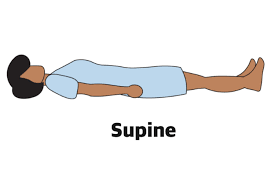
A. Supine
The supine position, where the patient lies flat on their back with the face upward, is the correct position for initiating CPR. This position allows for proper chest compressions and airway management, which are critical components of CPR.
B. Semi-Fowler's
The Semi-Fowler's position, where the patient is partially sitting up with the head of the bed raised to 30-45 degrees, is not suitable for CPR. This position would make it difficult to perform effective chest compressions.
C. Prone
The prone position, where the patient lies flat on their stomach, is not appropriate for CPR. Chest compressions cannot be effectively delivered in this position, and it would also complicate airway management.
D. Side-lying
The side-lying position is not appropriate for CPR. While this position can be used for an unconscious patient who is breathing normally to maintain an open airway and prevent aspiration, it is not suitable for CPR, which requires the patient to be on their back.
Full Explanation
Choice A Reason:
The supine position, where the patient lies flat on their back with the face upward, is the correct position for initiating CPR. This position allows for proper chest compressions and airway management, which are critical components of CPR.
Choice B Reason:
The Semi-Fowler's position, where the patient is partially sitting up with the head of the bed raised to 30-45 degrees, is not suitable for CPR. This position would make it difficult to perform effective chest compressions.
Choice C Reason:
The prone position, where the patient lies flat on their stomach, is not appropriate for CPR. Chest compressions cannot be effectively delivered in this position, and it would also complicate airway management.
Choice D Reason:
The side-lying position is not appropriate for CPR. While this position can be used for an unconscious patient who is breathing normally to maintain an open airway and prevent aspiration, it is not suitable for CPR, which requires the patient to be on their back.
A phlebotomist should recognize that proper hand hygiene can result in which of the following?
A. A decrease in the incidence of health care-associated infections
Proper hand hygiene is one of the most effective measures to prevent the spread of infections within health care settings. By thoroughly cleaning hands, phlebotomists and other health care workers can significantly reduce the transmission of pathogens that can lead to health care-associated infections (HAIs). These infections are a major cause of morbidity and mortality among hospitalized patients and can be prevented by adhering to strict hand hygiene protocols.
B. An increase in the accuracy of laboratory results
While hand hygiene is crucial for preventing contamination and infection, it does not directly increase the accuracy of laboratory results. The accuracy of laboratory results is more dependent on the proper collection, handling, and processing of specimens, as well as the precision of the testing equipment and methodologies used.
C. A decrease in the rejection of laboratory specimens
Good hand hygiene can help decrease the rejection of laboratory specimens by preventing contamination. Contaminated specimens can lead to inaccurate results and may need to be recollected, which is inconvenient for the patient and can delay diagnosis and treatment. However, the primary outcome of proper hand hygiene is the prevention of HAIs, rather than the reduction of specimen rejection.
D. An increase in the potential sources of pathogens
Proper hand hygiene leads to a decrease, not an increase, in the potential sources of pathogens. By effectively removing germs from the hands, the risk of transmitting infectious agents is minimized. This is essential in a health care setting where patients may be vulnerable to infections due to weakened immune systems or open wounds.
Full Explanation
Choice A Reason:
Proper hand hygiene is one of the most effective measures to prevent the spread of infections within health care settings. By thoroughly cleaning hands, phlebotomists and other health care workers can significantly reduce the transmission of pathogens that can lead to health care-associated infections (HAIs). These infections are a major cause of morbidity and mortality among hospitalized patients and can be prevented by adhering to strict hand hygiene protocols.
Choice B Reason:
While hand hygiene is crucial for preventing contamination and infection, it does not directly increase the accuracy of laboratory results. The accuracy of laboratory results is more dependent on the proper collection, handling, and processing of specimens, as well as the precision of the testing equipment and methodologies used.
Choice C Reason:
Good hand hygiene can help decrease the rejection of laboratory specimens by preventing contamination. Contaminated specimens can lead to inaccurate results and may need to be recollected, which is inconvenient for the patient and can delay diagnosis and treatment. However, the primary outcome of proper hand hygiene is the prevention of HAIs, rather than the reduction of specimen rejection.
Choice D Reason:
Proper hand hygiene leads to a decrease, not an increase, in the potential sources of pathogens. By effectively removing germs from the hands, the risk of transmitting infectious agents is minimized. This is essential in a health care setting where patients may be vulnerable to infections due to weakened immune systems or open wounds.