
Nursing practice questions with comprehensive rationales
NurseDive Free Nursing Practice Question
Which statement about fetal circulation is true?
A. Fetal circulation is no longer effective at birth.
Fetal circulation undergoes significant changes at birth. It becomes ineffective as the transition from intrauterine to extrauterine life occurs. The foramen ovale and ductus arteriosus, which allow blood to bypass certain fetal circulatory pathways, close as the baby breathes for the first time.
B. Fetal circulation continues until red blood cells are broken down.
Fetal circulation does not continue until red blood cells are broken down. Red blood cells in a fetus have a shorter lifespan than those in adults and are continually replaced throughout gestation. However, their breakdown is not the reason for the changes in fetal circulation.
C. Fetal circulation continues until after the stress of labor.
The correct answer. Fetal circulation continues until after the stress of labor. During labor, the baby experiences increased stress and pressure, which helps trigger various physiological changes, including the closure of specific fetal circulatory shunts.
D. Fetal circulation continues until adulthood.
Fetal circulation does not continue until adulthood. As mentioned earlier, the transition from fetal to adult circulation occurs during and after birth, with the closure of specific fetal shunts and the establishment of a fully functional adult circulatory system.
This question is an excerpt from Nurse Dive's nursing test bank - ATI Custom Maternity Newborncare Proctored Exam. Take the full exam now
Full Explanation
Fetal circulation continues until after the stress of labor.
Choice A rationale:
Fetal circulation undergoes significant changes at birth. It becomes ineffective as the transition from intrauterine to extrauterine life occurs. The foramen ovale and ductus arteriosus, which allow blood to bypass certain fetal circulatory pathways, close as the baby breathes for the first time.
Choice B rationale:
Fetal circulation does not continue until red blood cells are broken down. Red blood cells in a fetus have a shorter lifespan than those in adults and are continually replaced throughout gestation. However, their breakdown is not the reason for the changes in fetal circulation.
Choice C rationale:
The correct answer. Fetal circulation continues until after the stress of labor. During labor, the baby experiences increased stress and pressure, which helps trigger various physiological changes, including the closure of specific fetal circulatory shunts.
Choice D rationale:
Fetal circulation does not continue until adulthood. As mentioned earlier, the transition from fetal to adult circulation occurs during and after birth, with the closure of specific fetal shunts and the establishment of a fully functional adult circulatory system.
Similar Questions
A nurse is caring for several newborn clients. For which of the following findings should the nurse notify the charge nurse?
A. A blood glucose fingerstick of 40 mg/dL for an infant who is 1-hr old.
A. A blood glucose fingerstick of 40 mg/dL for an infant who is 1-hr old: A blood glucose level of 40 mg/dL is borderline low but expected in the immediate postnatal period, especially if the infant is asymptomatic. Feeding the infant is the first step to address this, and monitoring is usually sufficient unless symptoms of hypoglycemia develop.
B. A hematocrit of 60% in an infant who is 8-hr old.
B. A hematocrit of 60% in an infant who is 8-hr old: This value is at the upper end of normal for a newborn and may suggest mild polycythemia. However, it does not require urgent notification unless accompanied by symptoms such as respiratory distress or poor perfusion
C. Jaundice in an infant who is 4-hr old.
C. Jaundice in an infant who is 4-hr old: Early-onset jaundice (within the first 24 hours) is not normal and suggests a potentially dangerous underlying condition, such as hemolytic disease of the newborn or infection. Immediate reporting and further evaluation, including bilirubin levels and possible treatment with phototherapy, are essential.
D. Acrocyanosis in an infant who is 2-hr old.
D. Acrocyanosis in an infant who is 2-hr old: Acrocyanosis (bluish discoloration of the hands and feet) is a common and benign finding in the first 24 to 48 hours after birth due to immature circulation. It does not require notification or intervention.
Full Explanation
A. A blood glucose fingerstick of 40 mg/dL for an infant who is 1-hr old: A blood glucose level of 40 mg/dL is borderline low but expected in the immediate postnatal period, especially if the infant is asymptomatic. Feeding the infant is the first step to address this, and monitoring is usually sufficient unless symptoms of hypoglycemia develop.
B. A hematocrit of 60% in an infant who is 8-hr old: This value is at the upper end of normal for a newborn and may suggest mild polycythemia. However, it does not require urgent notification unless accompanied by symptoms such as respiratory distress or poor perfusion
C. Jaundice in an infant who is 4-hr old: Early-onset jaundice (within the first 24 hours) is not normal and suggests a potentially dangerous underlying condition, such as hemolytic disease of the newborn or infection. Immediate reporting and further evaluation, including bilirubin levels and possible treatment with phototherapy, are essential.
D. Acrocyanosis in an infant who is 2-hr old: Acrocyanosis (bluish discoloration of the hands and feet) is a common and benign finding in the first 24 to 48 hours after birth due to immature circulation. It does not require notification or intervention.
Exhibit 1. The names of the newborn reflexes are? Select all that apply.
A. rooting.
The newborn reflex called "rooting”. is characterized by turning the head and opening the mouth when the cheek or mouth area is touched. This reflex helps the newborn find the mother's breast for feeding.
B. stepping.
"Stepping”. is a newborn reflex where they make stepping movements when held upright with their feet touching a solid surface. This reflex is present at birth but tends to disappear after a few weeks.
C. moro.
The "Moro”. reflex is also known as the startle reflex. It is elicited by a sudden loss of support or loud noise, causing the newborn to throw their arms and legs out and then bring them back in. This reflex usually disappears around 3 to 4 months of age.
D. Babinski.
The "Babinski”. reflex is characterized by the extension of the big toe and fanning of the other toes when the sole of the foot is stroked. This reflex is present in newborns and should disappear by around 12 months of age.
Full Explanation
Choice A rationale:
The newborn reflex called "rooting”. is characterized by turning the head and opening the mouth when the cheek or mouth area is touched. This reflex helps the newborn find the mother's breast for feeding.
Choice B rationale:
"Stepping”. is a newborn reflex where they make stepping movements when held upright with their feet touching a solid surface. This reflex is present at birth but tends to disappear after a few weeks.
Choice C rationale:
The "Moro”. reflex is also known as the startle reflex. It is elicited by a sudden loss of support or loud noise, causing the newborn to throw their arms and legs out and then bring them back in. This reflex usually disappears around 3 to 4 months of age.
Choice D rationale:
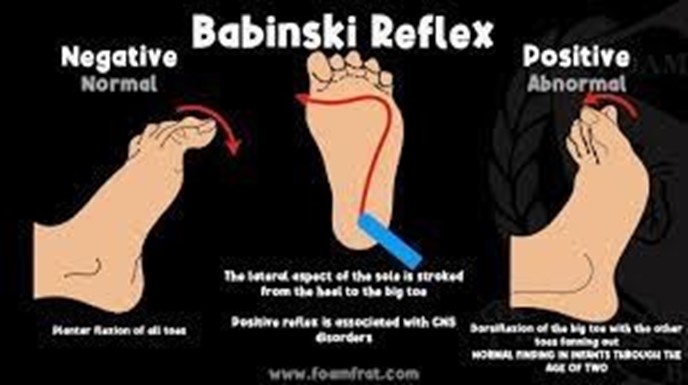
The "Babinski”. reflex is characterized by the extension of the big toe and fanning of the other toes when the sole of the foot is stroked. This reflex is present in newborns and should disappear by around 12 months of age.
Choice E rationale:
"Running”. is not a recognized newborn reflex. There is no reflex with this name related to newborns.
Choice F rationale:
The "gag”. reflex is present in newborns and helps protect the airway by causing a gagging response when the back of the throat is stimulated.
A newborn is most interested in eating in which wake and sleep state?
A. crying.
Newborns do not show interest in eating while crying. Crying is usually an indication of distress or hunger and not a state where they are interested in eating.
B. alert.
Newborns are most interested in eating when they are in an "alert”. state. During this state, the baby is awake, calm, and attentive, making it an ideal time for feeding.
C. drowsy.
In the "drowsy”. state, newborns may be sleepy and less interested in eating. They might feed less effectively in this state.
D. active alert.
"Active alert”. is a state where the newborn is awake, attentive, and active. While they may be interested in their surroundings, they may also be easily distracted during feeding.
Full Explanation
Choice A rationale:
Newborns do not show interest in eating while crying. Crying is usually an indication of distress or hunger and not a state where they are interested in eating.
Choice B rationale:
Newborns are most interested in eating when they are in an "alert”. state. During this state, the baby is awake, calm, and attentive, making it an ideal time for feeding.
Choice C rationale:
In the "drowsy”. state, newborns may be sleepy and less interested in eating. They might feed less effectively in this state.
Choice D rationale:
"Active alert”. is a state where the newborn is awake, attentive, and active. While they may be interested in their surroundings, they may also be easily distracted during feeding.