Nursing practice questions with comprehensive rationales
NurseDive Free Nursing Practice Question
Which statement by a mature adult client with advanced prostate cancer best indicates that he has reached a level of acceptance of his prognosis?
A. I have found the support I need from my faith and family
This statement indicates that the client has reached a level of acceptance of his prognosis, as he expresses a sense of peace, gratitude, and hope. He has found sources of strength and comfort from his faith and family, and he does not show signs of denial, anger, bargaining, or depression.
B. I understand this is a disease that occurs mostly in older men.
This statement indicates that the client is in the stage of rationalization, as he tries to justify or minimize his condition by stating a fact that does not address his feelings or needs.
C. I do not have any use for those who say this disease is going to win
This statement indicates that the client is in the stage of anger, as he shows resentment and hostility towards those who challenge his optimism or reality.
D. I think I had this disease for a long time, but the doctor did not find it
This statement indicates that the client has reached a level of acceptance of his prognosis, as he expresses a sense of peace, gratitude, and hope. He has found sources of strength and comfort from his faith and family, and he does not show signs of denial, anger, bargaining, or depression.
This question is an excerpt from Nurse Dive's nursing test bank - HESI PN Exit 2023 II Proctored Exam. Take the full exam now
Similar Questions
A client is scheduled for a thoracentesis that will be done at the bedside. What should the practical nurse (PN) prepare before the healthcare provider arrives to perform the procedure?
A. Gather the procedure tray and equipment.
The practical nurse should gather the necessary procedure tray and equipment to ensure everything is ready for the healthcare provider to perform the thoracentesis efficiently and safely.
B. Cleanse the site and cover with a sterile towel.
Cleansing the site and covering it with a sterile towel is part of the procedure itself and should be done by the healthcare provider performing the thoracentesis.
C. Keep the patient NPO (nothing by mouth) and encourage them to void.
Keeping the patient NPO (nothing by mouth) and encouraging them to void is not necessary for a thoracentesis. This procedure typically does not require the patient to be NPO.
D. Place the patient in an orthopneic position.
Placing the patient in an orthopneic position (sitting up and leaning forward) is important for the procedure, but it should be done closer to the time of the procedure, not necessarily as a preparatory step.
Full Explanation
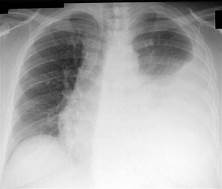
The correct answer is choice A. Gather the procedure tray and equipment.
Choice A rationale:
The practical nurse should gather the necessary procedure tray and equipment to ensure everything is ready for the healthcare provider to perform the thoracentesis efficiently and safely.
Choice B rationale:
Cleansing the site and covering it with a sterile towel is part of the procedure itself and should be done by the healthcare provider performing the thoracentesis.
Choice C rationale:
Keeping the patient NPO (nothing by mouth) and encouraging them to void is not necessary for a thoracentesis. This procedure typically does not require the patient to be NPO.
Choice D rationale:
Placing the patient in an orthopneic position (sitting up and leaning forward) is important for the procedure, but it should be done closer to the time of the procedure, not necessarily as a preparatory step.
The healthcare provider gives a pregnant woman a prescription for one prenatal vitamin with iron daily and tells her to increase iron-rich foods in her diet because her hemoglobin is 8.2 g/dL or (5.09 mmol/L).
When a list of iron-rich foods is given to the client, she tells the practical nurse (PN) that she is vegetarian and does not eat anything that "bleeds." Which instruction should the PN provide? (Select all that apply.)
A. Add lentils and black beans to soups
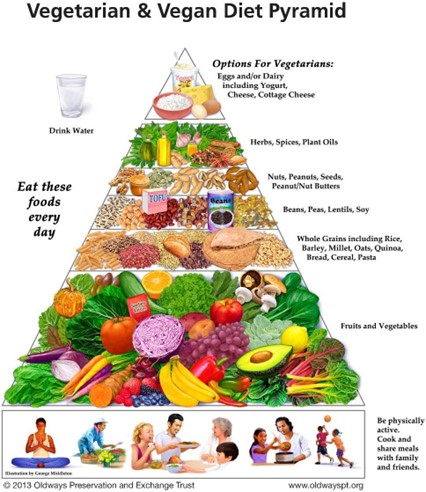
Since the pregnant woman is vegetarian and does not eat meat, the practical nurse (PN) should provide alternative sources of iron-rich foods. Lentils and black beans are excellent vegetarian sources of iron and can be added to soups to increase iron intake (option a).
B. Eat red meat just until the anemia is resolved
Option b, which suggests eating red meat just until the anemia is resolved, is not appropriate for a vegetarian client.
C. Take two prenatal vitamins with iron daily
Option c, taking two prenatal vitamins with iron daily, is not necessary unless specifically advised by the healthcare provider. It is important to follow the prescribed dosage of medication and supplements as directed by the healthcare provider.
D. Oatmeal is a good choice for breakfast
Oatmeal is a good choice for breakfast as it is often fortified with iron (option d). This can help supplement iron intake in the diet.
E. Increase green leafy vegetables in the diet
Green leafy vegetables, such as spinach, kale, and broccoli, are also rich in iron and should be increased in the client's diet (option e).
Full Explanation
Since the pregnant woman is vegetarian and does not eat meat, the practical nurse (PN) should provide alternative sources of iron-rich foods. Lentils and black beans are excellent vegetarian sources of iron and can be added to soups to increase iron intake (option a).
Oatmeal is a good choice for breakfast as it is often fortified with iron (option d). This can help supplement
iron intake in the diet.
Green leafy vegetables, such as spinach, kale, and broccoli, are also rich in iron and should be increased in the client's diet (option e).
Option b, which suggests eating red meat just until the anemia is resolved, is not appropriate for a vegetarian client.
Option c, taking two prenatal vitamins with iron daily, is not necessary unless specifically advised by the healthcare provider. It is important to follow the prescribed dosage of medication and supplements as directed by the healthcare provider.
 |
On the first day after a cesarean section, a client who is a primipara is being assisted to the bathroom for the first time.
The client experiences a sudden gush of vaginal blood and notices that several blood clots are in the toilet. Which action should the practical nurse (PN) take?
A. Insert an indwelling catheter to empty the bladder and contract the fundus
This is not the first action to take for a client who experiences a sudden gush of vaginal blood and clots after a cesarean section. Inserting an indwelling catheter requires a physician's order and may cause discomfort and infection. The client may already have a catheter in place after the surgery.
B. Check fundal consistency and continue to monitor the lochial flow amount
This is not enough to do for a client who experiences a sudden gush of vaginal blood and clots after a cesarean section. Checking fundal consistency and monitoring lochial flow are important, but they do not address the cause of bleeding or prevent further blood loss.
C. Return the client to bed and maintain bedrest until the lochial flow slows
This is not appropriate for a client who experiences a sudden gush of vaginal blood and clots after a cesarean section. Returning the client to bed and maintaining bedrest may delay ambulation and increase the risk of thromboembolism. It also does not stop the bleeding or treat the underlying cause.
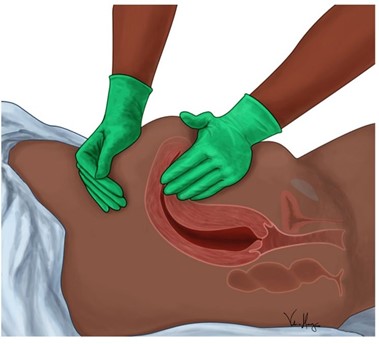
D. Massage the fundus and avoid direct pressure on the cesarean incision
This is the best action to take for a client who experiences a sudden gush of vaginal blood and clots after a cesarean section. Massaging the fundus helps to stimulate uterine contractions and reduce bleeding. Avoiding direct pressure on the incision prevents pain and wound dehiscence.
Full Explanation
The correct answer and explanation is:
d) Massage the fundus and avoid direct pressure on the cesarean incision.
This is the best action to take for a client who experiences a sudden gush of vaginal blood and clots after a
cesarean section. Massaging the fundus helps to stimulate uterine contractions and reduce bleeding.
Avoiding direct pressure on the incision prevents pain and wound dehiscence.
a) Insert an indwelling catheter to empty the bladder and contract the fundus.
This is not the first action to take for a client who experiences a sudden gush of vaginal blood and clots after a cesarean section. Inserting an indwelling catheter requires a physician's order and may cause discomfort and infection. The client may already have a catheter in place after the surgery.
b) Check fundal consistency and continue to monitor the lochial flow amount.
This is not enough to do for a client who experiences a sudden gush of vaginal blood and clots after a cesarean section. Checking fundal consistency and monitoring lochial flow are important, but they do not address the cause of bleeding or prevent further blood loss.
c) Return the client to bed and maintain bedrest until the lochial flow slows.
This is not appropriate for a client who experiences a sudden gush of vaginal blood and clots after a cesarean section. Returning the client to bed and maintaining bedrest may delay ambulation and increase the risk of thromboembolism. It also does not stop the bleeding or treat the underlying cause.