
Nursing practice questions with comprehensive rationales
NurseDive Free Nursing Practice Question
While examining a newborn, the nurse notes uneven skinfolds on the buttocks and a clunk when performing the Ortolani maneuver. These findings are likely indicative of what?
A. Webbing
Webbing typically refers to the presence of extra skin between body parts and is not associated with uneven skinfolds on the buttocks or a clunk during the Ortolani maneuver.
B. Clubfoot
Clubfoot refers to a deformity of the foot and is not associated with uneven skinfolds on the buttocks or hip abnormalities.
C. Hip dysplasia
Uneven skinfolds on the buttocks and a clunk during the Ortolani maneuver are indicative of hip dysplasia in a newborn.
D. Polydactyly
Polydactyly refers to the presence of extra fingers or toes and is unrelated to the described findings.
This question is an excerpt from Nurse Dive's nursing test bank - Ati Maternal Newborn Proctored Exam 3 Reno 2 2020. Take the full exam now
Full Explanation
A. Webbing typically refers to the presence of extra skin between body parts and is not associated with uneven skinfolds on the buttocks or a clunk during the Ortolani maneuver.
B. Clubfoot refers to a deformity of the foot and is not associated with uneven skinfolds on the buttocks or hip abnormalities.
C. Uneven skinfolds on the buttocks and a clunk during the Ortolani maneuver are indicative of hip dysplasia in a newborn.
D. Polydactyly refers to the presence of extra fingers or toes and is unrelated to the described findings.
Similar Questions
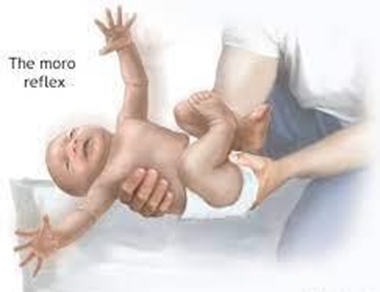
While evaluating the reflexes of a newborn, the nurse notes that with a loud noise the newborn symmetrically abducts and extends his arms, his fingers fan out and form a C with the thumb and forefinger, and he has a slight tremor. The nurse would document this finding as a positive reflex.
A. Moro reflex
The described reflex is the Moro reflex, which is a normal startle reflex in newborns.
B. Babinski reflex
The Babinski reflex involves the extension of the big toe and fanning of the other toes in response to stroking the sole of the foot.
C. Tonic neck reflex
The Tonic neck reflex involves turning the head to one side, with the arm on that side extending and the opposite arm flexing.
D. Rooting reflex
The Rooting reflex involves turning the head and opening the mouth in response to cheek or mouth stimulation.
Full Explanation
A. The described reflex is the Moro reflex, which is a normal startle reflex in newborns.
B. The Babinski reflex involves the extension of the big toe and fanning of the other toes in response to stroking the sole of the foot.
C. The Tonic neck reflex involves turning the head to one side, with the arm on that side extending and the opposite arm flexing.
D. The Rooting reflex involves turning the head and opening the mouth in response to cheek or mouth stimulation.
A nurse is caring for a client who is postpartum and finds the fundus slightly boggy and displaced to the right. Based on these findings, which of the following actions should the nurse take?
A. Encourage the client to perform Kegel exercises.
Kegel exercises are not indicated for addressing a boggy uterus; emptying the bladder is a more appropriate intervention.
B. Encourage the client to move to the left lateral position.
Moving to the left lateral position may help, but the primary concern is a full bladder contributing to uterine displacement.
C. Ask the client to rate her pain.
Pain assessment is important but does not directly address the issue of a boggy uterus and displacement.
D. Encourage the client to empty bladder by voiding
Encouraging the client to empty the bladder by voiding is essential, as a full bladder can displace the uterus and contribute to uterine atony.
Full Explanation
A. Kegel exercises are not indicated for addressing a boggy uterus; emptying the bladder is a more appropriate intervention.
B. Moving to the left lateral position may help, but the primary concern is a full bladder contributing to uterine displacement.
C. Pain assessment is important but does not directly address the issue of a boggy uterus and displacement.
D. Encouraging the client to empty the bladder by voiding is essential, as a full bladder can displace the uterus and contribute to uterine atony.
Which hormone remains elevated in the immediate postpartum period of the breastfeeding women?
A. Prolactin
Prolactin remains elevated in the immediate postpartum period of breastfeeding women to stimulate milk production.
B. Progestrone
Progesterone levels decrease rapidly after childbirth.
C. Estrogen
Estrogen levels decrease in the postpartum period, particularly during breastfeeding.
D. Human Placental Lactogen
Human Placental Lactogen (HPL) levels decrease after childbirth.
Full Explanation
A. Prolactin remains elevated in the immediate postpartum period of breastfeeding women to stimulate milk production.
B. Progesterone levels decrease rapidly after childbirth.
C. Estrogen levels decrease in the postpartum period, particularly during breastfeeding.
D. Human Placental Lactogen (HPL) levels decrease after childbirth.