
Nursing practice questions with comprehensive rationales
NurseDive Free Nursing Practice Question
While performing a routine assessment, a nurse notices fraying on the electrical cord of a client’s continuous passive motion (CPM) device.
Which of the following actions should the nurse take first?
A. Report the defect to the equipment maintenance staff.
Reporting the defect to the equipment maintenance staff is essential,but it's not the immediate priority.The primary concern is to eliminate the safety hazard posed by the frayed cord to prevent potential harm to the client and others. Delaying the removal of the device could lead to electrical shock,fire,or other serious consequences. Therefore,removing the device from the room takes precedence over reporting the defect.
B. Remove the device from the room.
Removing the device from the room is the most appropriate first action because it: Eliminates the immediate safety hazard. Prevents potential harm to the client and others. Protects the device from further damage. Ensures the safety of the environment. Demonstrates the nurse's prioritization of patient safety.
C. Initiate a requisition for a replacement CPM device.
Initiating a requisition for a replacement CPM device is necessary to ensure the client's continued treatment. However,it's not the first action because it doesn't address the immediate safety concern. The nurse should first remove the faulty device and then initiate the process for obtaining a replacement.
D. Ensure the device inspection sticker is current.
Ensuring the device inspection sticker is current is a vital part of equipment maintenance. However,it's not relevant to the immediate safety issue of the frayed cord. The presence of a current inspection sticker doesn't guarantee the device's safety or functionality at that moment. The nurse must prioritize removing the hazard and then follow up with appropriate documentation and reporting.
This question is an excerpt from Nurse Dive's nursing test bank - ATI Comprehensive Predictor 2023 Exit Proctored Exam A. Take the full exam now
Full Explanation
The correct answer is b. Remove the device from the room.
Choice A rationale:
- Reporting the defect to the equipment maintenance staff is essential, but it's not the immediate priority. The primary concern is to eliminate the safety hazard posed by the frayed cord to prevent potential harm to the client and others.
- Delaying the removal of the device could lead to electrical shock, fire, or other serious consequences.
- Therefore, removing the device from the room takes precedence over reporting the defect.
Choice B rationale:
- Removing the device from the room is the most appropriate first action because it:
- Eliminates the immediate safety hazard.
- Prevents potential harm to the client and others.
- Protects the device from further damage.
- Ensures the safety of the environment.
- Demonstrates the nurse's prioritization of patient safety.
Choice C rationale:
- Initiating a requisition for a replacement CPM device is necessary to ensure the client's continued treatment.
- However, it's not the first action because it doesn't address the immediate safety concern.
- The nurse should first remove the faulty device and then initiate the process for obtaining a replacement.
Choice D rationale:
- Ensuring the device inspection sticker is current is a vital part of equipment maintenance.
- However, it's not relevant to the immediate safety issue of the frayed cord.
- The presence of a current inspection sticker doesn't guarantee the device's safety or functionality at that moment.
- The nurse must prioritize removing the hazard and then follow up with appropriate documentation and reporting.
Similar Questions
A nurse is preparing to feed a newly admitted client who has dysphagia.
Which of the following actions should the nurse plan to take?
A. Talk with the client during her feeding.
is wrong because talking with the client during her feeding can distract her from swallowing properly and increase the risk of aspiration. The nurse should encourage the client to focus on eating and avoid conversation until the feeding is over.
B. Discourage the client from coughing during feedings
wrong because discouraging the client from coughing during feedings can prevent her from clearing her airway and expelling any food particles that might have entered the trachea. The nurse should monitor the client for coughing, choking, or changes in voice quality, which are indicators of aspiration.
C. I nstruct the client to lift her chin when swallowing
wrong because instructing the client to lift her chin when swallowing can actually make swallowing more difficult and increase the risk of aspiration. The nurse should instruct the client to tuck her chin when swallowing, which helps close off the trachea and direct food into the esophagus.
D. Sit at or below the client’s eye level during feedings
Sit at or below the client’s eye level during feedings. This action helps the client feel more comfortable and less intimidated by the nurse. It also allows the nurse to observe the client’s swallowing and signs of aspiration more easily.
Full Explanation
The correct answer is choice D. Sit at or below the client’s eye level during feedings.
This action helps the client feel more comfortable and less intimidated by the nurse. It also allows the nurse to observe the client’s swallowing and signs of aspiration more easily.
Choice A is wrong because talking with the client during her feeding can distract her from swallowing properly and increase the risk of aspiration.
The nurse should encourage the client to focus on eating and avoid conversation until the feeding is over.
Choice B is wrong because discouraging the client from coughing during feedings can prevent her from clearing her airway and expelling any food particles that might have entered the trachea.
The nurse should monitor the client for coughing, choking, or changes in voice quality, which are indicators of aspiration.
Choice C is wrong because instructing the client to lift her chin when swallowing can actually make swallowing more difficult and increase the risk of aspiration.
The nurse should instruct the client to tuck her chin when swallowing, which helps close off the trachea and direct food into the esophagus.
A nurse is assessing a client who has an abdominal incision.
Which of the following findings should the nurse report to the provider?
A. Mild swelling under the sutures near the incisional line.
wrong because mild swelling under the sutures near the incisional line is a normal finding in the early stages of wound healing. It does not indicate infection or dehiscence unless accompanied by other signs such as redness, warmth, pain, or purulent drainage.
B. Crusting of exudate on the incisional line.
wrong because crusting of exudate on the incisional line is also a normal finding that indicates the formation of a scab. A scab protects the wound from infection and helps it heal faster. The nurse should not remove the scab unless instructed by the provider.
C. Partial separation of the upper part of the incisional line.
Partial separation of the upper part of the incisional line. This is a sign of wound dehiscence, which is a serious complication that occurs when the edges of a surgical incision separate and the underlying tissues are exposed. Wound dehiscence can lead to infection, bleeding, and evisceration (protrusion of internal organs through the incision). The nurse should report this finding to the provider immediately and cover the wound with a sterile dressing moistened with sterile saline solution. Choice A is wrong because mild swelling under the sutures near the incisional line is a normal finding in the early stages of wound healing. It does not indicate infection or dehiscence unless accompanied by other signs such as redness, warmth, pain, or purulent drainage.
D. Pink-tinged coloration on the incisional line.
is wrong because pink-tinged coloration on the incisional line is another normal finding that shows healthy granulation tissue. Granulation tissue is new tissue that fills in the wound and helps it close. It is usually pink or red and moist.
Full Explanation
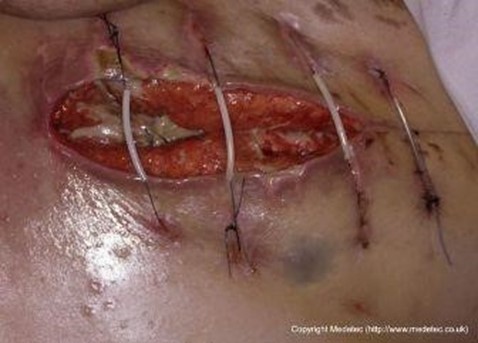
Wound dehiscence can lead to infection, bleeding, and evisceration (protrusion of internal organs through the incision). The nurse should report this finding to the provider immediately and cover the wound with a sterile dressing moistened with sterile saline solution.
Choice A is wrong because mild swelling under the sutures near the incisional line is a normal finding in the early stages of wound healing. It does not indicate infection or dehiscence unless accompanied by other signs such as redness, warmth, pain, or purulent drainage.
Choice B is wrong because crusting of exudate on the incisional line is also a normal finding that indicates the formation of a scab.
A scab protects the wound from infection and helps it heal faster. The nurse should not remove the scab unless instructed by the provider.
Choice D is wrong because pink-tinged coloration on the incisional line is another normal finding that shows healthy granulation tissue.
Granulation tissue is new tissue that fills in the wound and helps it close. It is usually pink or red and moist.
The nurse should follow these general tips for postoperative abdominal incision care:
- Always wash your hands before and after touching your incisions.
- Inspect your incisions and wounds every day for signs your healthcare provider has told you are red flags or concerning.
- Look for any bleeding.
If the incisions start to bleed, apply direct and constant pressure to the incisions.
- Avoid wearing tight clothing that might rub on your incisions.
- Try not to scratch any itchy wounds.
- You can shower starting 48 hours after your operation but no scrubbing or soaking of the abdominal wounds in a tub.
- After the initial dressing from the operating room is removed, you can leave the wound open to air unless there is drainage or you feel more comfortable with soft gauze covering the wound.
- Surgical glue (Indermil) will fall off over a period of up to 2-3 weeks.
Do not put any topical ointments or lotions on the incisions.
- Do not rub over the incisions with a washcloth or towel.
- No tub baths, hot tubs, or swimming until evaluated at your clinic appointment.
A nurse is admitting a client who is hesitant to create advance directives due to concerns about affording legal representation.
Which of the following statements should the nurse make?
A. “A social worker will assist you to find affordable legal representation.”.
A social worker may assist clients in many ways, including finding legal representation. However, this statement does not address the client’s concern about the cost of legal representation for advance directives. It’s important to note that while social workers can provide support, they do not eliminate the need for legal representation if the client chooses to seek it.
B. “Advance directives can be signed without legal representation.”.
This is the correct statement because advance directives do not require legal representation to be valid. They become legally binding when signed in front of the required witnesses. This option directly addresses the client’s concern about affording legal representation by informing them that it is not necessary for the creation of advance directives.
C. “We can initiate medical care until you get legal assistance in preparing your advance directives.”.
While medical care can be initiated without advance directives, this statement does not address the client’s concern about the cost of creating advance directives. It also implies that medical care is contingent on the completion of legal documents, which is not accurate.
D. Advance directives can be a verbal agreement between you and your provider until legal review can be obtained.
Verbal agreements are not as legally binding as written advance directives and could lead to misunderstandings or disputes later on. It is important for the client to have a clear and documented advance directive, which does not necessarily require legal review to be valid.
Full Explanation
The correct answer is: B
Choice A reason: A social worker may assist clients in many ways, including finding legal representation. However, this statement does not address the client’s concern about the cost of legal representation for advance directives. It’s important to note that while social workers can provide support, they do not eliminate the need for legal representation if the client chooses to seek it.
Choice B reason: This is the correct statement because advance directives do not require legal representation to be valid. They become legally binding when signed in front of the required witnesses. This option directly addresses the client’s concern about affording legal representation by informing them that it is not necessary for the creation of advance directives.
Choice C reason: While medical care can be initiated without advance directives, this statement does not address the client’s concern about the cost of creating advance directives. It also implies that medical care is contingent on the completion of legal documents, which is not accurate.
Choice D reason: Verbal agreements are not as legally binding as written advance directives and could lead to misunderstandings or disputes later on. It is important for the client to have a clear and documented advance directive, which does not necessarily require legal review to be valid.