
Nursing practice questions with comprehensive rationales
NurseDive Free Nursing Practice Question
Your patient has complaints of severe right-sided flank pain, nausea, vomiting and restlessness. He appears slightly pale and is diaphoretic. Vital signs are BP 140/90 mmHg, Pulse 118 beats/min., respirations 33 breaths/minute, and temperature, 98.0F. Which subjective data supports a diagnosis of renal calculi?
A. History of mild flu symptoms last week.
This is not relevant to the current condition of the patient and does not support a diagnosis of renal calculi.
B. Dark-colored coffee-ground emesis.
This is a sign of upper gastrointestinal bleeding, which can have many causes such as peptic ulcer, gastritis or esophageal varices. It is not related to renal calculi or urinary tract problems.
C. Pain radiating to the right upper quadrant.
Renal calculi usually causes pain which usually radiates anteriorly to the lower abdomen, groin, labia, testicles or the perineum depending on the location of the stone.
D. Dark, scanty urine output.
This is a sign of hematuria, which is blood in the urine caused by the passage of renal calculi (kidney stones) through the urinary tract. Hematuria can also cause the urine to appear dark or brown in color.
This question is an excerpt from Nurse Dive's nursing test bank - Interprofessional Care of the Client and Family Across the Lifespan II Proctored Exam. Take the full exam now
Full Explanation
Choice A rationale: This is not relevant to the current condition of the patient and does not support a diagnosis of renal calculi.
Choice B rationale: This is a sign of upper gastrointestinal bleeding, which can have many causes such as peptic ulcer, gastritis or esophageal varices. It is not related to renal calculi or urinary tract problems.
Choice C rationale: Renal calculi usually causes pain which usually radiates anteriorly to the lower abdomen, groin, labia, testicles or the perineum depending on the location of the stone.
Choice D rationale: This is a sign of hematuria, which is blood in the urine caused by the passage of renal calculi (kidney stones) through the urinary tract. Hematuria can also cause the urine to appear dark or brown in color.
Similar Questions
A client has received vasopressin for diabetes insipidus. Which assessment finding indicates the most therapeutic response to this therapy?
A. Urine output has increased; specific gravity has decreased.
This is a sign of worsening diabetes insipidus.
B. Urine output has increased; specific gravity has increased.
This shows signs of overhydration, as urine output is high and specific gravity is high.
C. Urine output has decreased; specific gravity has decreased.
This is a sign of worsening diabetes insipidus.
D. Urine output has decreased; specific gravity has increased.
Vasopressin is a hormone that helps the kidneys retain water and concentrate urine. Diabetes insipidus is a condition where the body does not produce enough vasopressin or does not respond to it, resulting in excessive urination and diluted urine. The goal of vasopressin therapy is to reduce urine output and increase urine concentration, which indicates that the kidneys are functioning properly and the body is hydrated.
Full Explanation
Choice A rationale: This is a sign of worsening diabetes insipidus.
Choice B rationale: This shows signs of overhydration, as urine output is high and specific gravity is high.
Choice C rationale: This is a sign of worsening diabetes insipidus.
Choice D rationale: Vasopressin is a hormone that helps the kidneys retain water and concentrate urine. Diabetes insipidus is a condition where the body does not produce enough vasopressin or does not respond to it, resulting in excessive urination and diluted urine. The goal of vasopressin therapy is to reduce urine output and increase urine concentration, which indicates that the kidneys are functioning properly and the body is hydrated.
The nurse exploring cranial nerves function and observes the following reaction: The nurse documents that the client has a:
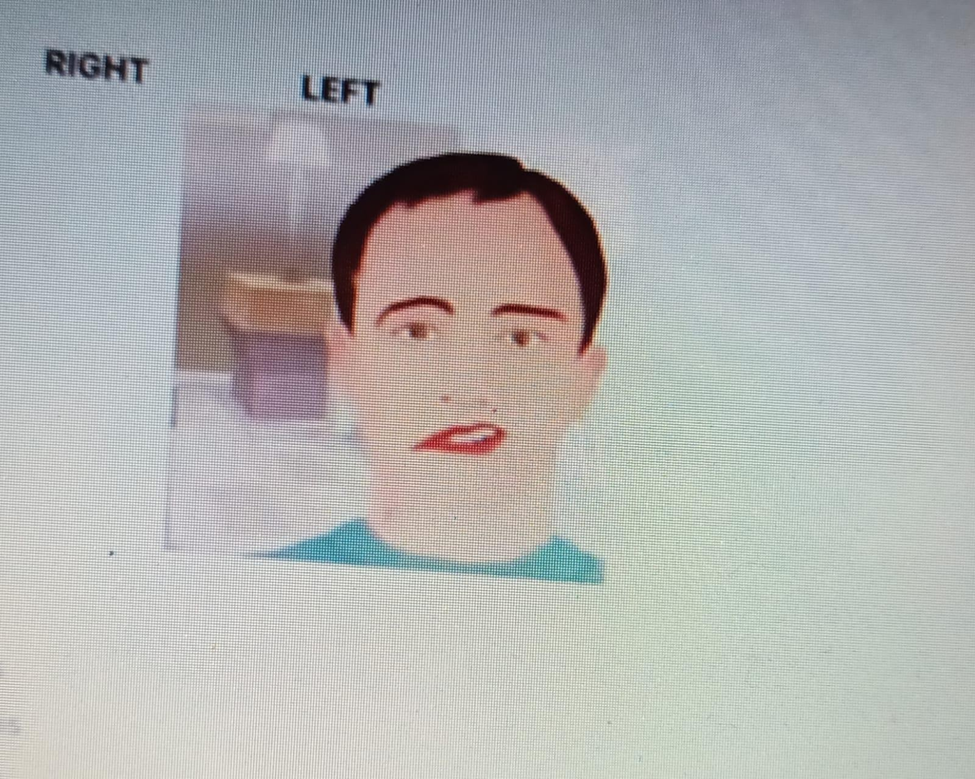
A. Left VII cranial nerve paralysis
This is not accurate since the manifestations of facial nerve paralysis are observed on the contralateral side which in this case is the left side of the face hence the right facial nerve is paralyzed.
B. Right Vll cranial nerve paralysis
Facial nerve paralysis cause symptoms such as drooping of the eyelid, cheek or mouth as depicted in the above picture. The right facial nerve is paralyzed since the nerve innervates the contralateral side hence the effects are demonstrated on the left side of the face.
C. Right V cranial nerve paralysis
trigeminal nerve paralysis causes symptoms such as weakness in muscles of mastication, altered sensation over the face and tongue, and hearing impairment and not the symptoms depicted above.
D. Left V cranial nerve paralysis
trigeminal nerve paralysis causes symptoms such as weakness in muscles of mastication, altered sensation over the face and tongue, and hearing impairment and not the symptoms depicted above.
Full Explanation
Choice A rationale: This is not accurate since the manifestations of facial nerve paralysis are observed on the contralateral side which in this case is the left side of the face hence the right facial nerve is paralyzed.
Choice B rationale: Facial nerve paralysis cause symptoms such as drooping of the eyelid, cheek or mouth as depicted in the above picture. The right facial nerve is paralyzed since the nerve innervates the contralateral side hence the effects are demonstrated on the
left side of the face.
Choice C rationale: trigeminal nerve paralysis causes symptoms such as weakness in muscles of mastication, altered sensation over the face and tongue, and hearing impairment and not the symptoms depicted above.
Choice D rationale: trigeminal nerve paralysis causes symptoms such as weakness in muscles of mastication, altered sensation over the face and tongue, and hearing impairment and not the symptoms depicted above.
Which question should the nurse ask when assessing a 60-year-old patient who has a history of benign prostatic hyperplasia (BPH)?
A. "Have you been experiencing any difficulty in achieving an erection?"
This question is not relevant to BPH, as erectile dysfunction is not a common complication of this condition. Erectile dysfunction can have other causes, such as cardiovascular disease, diabetes, medications, psychological factors, or aging.
B. "Have you noticed any unusual discharge from your penis?"
This question is not relevant to BPH, as penile discharge is not a symptom of this condition. Penile discharge can indicate an infection, such as sexually transmitted diseases, urinary tract infections, or prostatitis.
C. "Has there been a decrease in the force of your urinary stream?"
BPH is a condition that causes enlargement of the prostate gland, which can obstruct the flow of urine and cause symptoms such as difficulty in starting or stopping urination, weak or intermittent stream, dribbling, and incomplete bladder emptying. Asking about the force of the urinary stream can help assess the severity of BPH and the need for treatment.
D. "Has there been any change in your sex life in the past year?"
This question is not relevant to BPH, as sexual function is not directly affected by this condition. However, some men with BPH may experience reduced libido or satisfaction due to urinary symptoms or psychological distress.
Full Explanation
Choice A rationale: This question is not relevant to BPH, as erectile dysfunction is not a common complication of this condition. Erectile dysfunction can have other causes, such as cardiovascular disease, diabetes, medications, psychological factors, or aging.
Choice B rationale: This question is not relevant to BPH, as penile discharge is not a symptom of this condition. Penile discharge can indicate an infection, such as sexually transmitted diseases, urinary tract infections, or prostatitis.
Choice C rationale: BPH is a condition that causes enlargement of the prostate gland, which can obstruct the flow of urine and cause symptoms such as difficulty in starting or stopping urination, weak or intermittent stream, dribbling, and incomplete bladder emptying. Asking about the force of the urinary stream can help assess the severity of BPH and the need for treatment.
Choice D rationale: This question is not relevant to BPH, as sexual function is not directly affected by this condition. However, some men with BPH may experience reduced libido or satisfaction due to urinary symptoms or psychological distress.