
Nursing practice questions with comprehensive rationales
NurseDive Free Nursing Practice Question
A client who has colon cancer and is scheduled for a colon resection with a possible colostomy tells the nurse, "I'm worried about that bag."
Which of the following is an appropriate response by the nurse?
A. "Let's wait until after the surgery to discuss your concerns about your colostomy.".
Choice A is not an appropriate response because it dismisses the client’s current concern and delays addressing it until after the surgery.
B. "You are worried about having to wear a colostomy bag?".
The nurse should respond to the client’s concern by saying “You are worried about having to wear a colostomy bag?” This response acknowledges the client’s concern and allows the client to express their feelings and concerns about the potential colostomy.
C. "The surgeon will only place the colostomy if it is necessary.".
Choice C is not an appropriate response because it does not address the client’s concern about wearing a colostomy bag.
D. "Have you ever known someone who has a colostomy?".
Choice D is not an appropriate response because it shifts the focus away from the client’s concern and onto someone else.
This question is an excerpt from Nurse Dive's nursing test bank - ATI RN Fundamentals 2019 with NGN Proctored Exam. Take the full exam now
Full Explanation
The nurse should respond to the client’s concern by saying “You are worried about having to wear a colostomy bag?” This response acknowledges the client’s concern and allows the client to express their feelings and concerns about the potential colostomy.

Choice A is not an appropriate response because it dismisses the client’s current concern and delays addressing it until after the surgery.
Choice C is not an appropriate response because it does not address the client’s concern about wearing a colostomy bag.
Choice D is not an appropriate response because it shifts the focus away from the client’s concern and onto someone else.
Similar Questions
When caring for a client who is receiving a warm, moist compress to relieve lower back pain, which of the following findings should indicate to the nurse that the compress has been effective?
A. The client's skin on the lower back is intact without redness.
This indicates that the compress has been effective in relieving lower back pain and has not caused any skin irritation or damage.
B. The client states that he is able to concentrate while reading.
Choice B is wrong because the ability to concentrate while reading is not directly related to the effectiveness of a warm, moist compress for relieving lower back pain.
C. The client's vital signs are within the expected reference range.
Choice C is wrong because vital signs being within the expected reference range does not necessarily indicate that the compress has been effective in relieving lower back pain.
D. The client is laughing at a television show.
Choice D is wrong because laughing at a television show does not necessarily indicate that the compress has been effective in relieving lower back pain.
Full Explanation
This indicates that the compress has been effective in relieving lower back pain and has not caused any skin irritation or damage.
Choice B is wrong because the ability to concentrate while reading is not directly related to the effectiveness of a warm, moist compress for relieving lower back pain.
Choice C is wrong because vital signs being within the expected reference range does not necessarily indicate that the compress has been effective in relieving lower back pain.
Choice D is wrong because laughing at a television show does not necessarily indicate that the compress has been effective in relieving lower back pain.
When reviewing the medical record of a client who asks about the use of magnet therapy for pain relief, which of the following findings is a contraindication for receiving this type of therapy?
A. The client has a prescription for metoprolol.
Choice A is wrong because having a prescription for metoprolol is not a contraindication for receiving magnet therapy for pain relief.
B. The client is allergic to penicillin.
Choice B is wrong because being allergic to penicillin is not a contraindication for receiving magnet therapy for pain relief.
C. The client has an implanted defibrillator.
This is a contraindication for receiving magnet therapy for pain relief because the magnetic field generated by the therapy can interfere with the functioning of the implanted defibrillator.
D. The client has a history of alcohol use disorder.
Choice D is wrong because having a history of alcohol use disorder is not a contraindication for receiving magnet therapy for pain relief.
Full Explanation
This is a contraindication for receiving magnet therapy for pain relief because the magnetic field generated by the therapy can interfere with the functioning of the implanted defibrillator.
Choice A is wrong because having a prescription for metoprolol is not a contraindication for receiving magnet therapy for pain relief.
Choice B is wrong because being allergic to penicillin is not a contraindication for receiving magnet therapy for pain relief.
Choice D is wrong because having a history of alcohol use disorder is not a contraindication for receiving magnet therapy for pain relief.
What is the nurse's priority intervention for a client undergoing a total laryngectomy?
A. Explain the techniques of esophageal speech.
Choice A is wrong because explaining the techniques of esophageal speech is not the priority intervention for a client undergoing a total laryngectomy.
B. Review the use of an artificial larynx with the client.
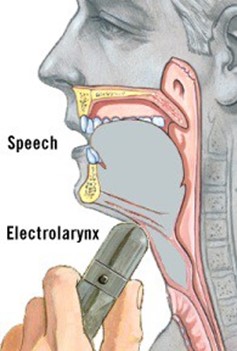
This is the nurse’s priority intervention for a client undergoing a total laryngectomy because it is important for the client to understand how to use an artificial larynx to communicate after the surgery.
C. Determine the client's reading ability.
Choice C is wrong because determining the client’s reading ability is not the priority intervention for a client undergoing a total laryngectomy.
D. Schedule a support session for the client.
Choice D is wrong because scheduling a support session for the client is not the priority intervention for a client undergoing a total laryngectomy.
Full Explanation
This is the nurse’s priority intervention for a client undergoing a total laryngectomy because it is important for the client to understand how to use an artificial larynx to communicate after the surgery.
Choice A is wrong because explaining the techniques of esophageal speech is not the priority intervention for a client undergoing a total laryngectomy.
Choice C is wrong because determining the client’s reading ability is not the priority intervention for a client undergoing a total laryngectomy.
Choice D is wrong because scheduling a support session for the client is not the priority intervention for a client undergoing a total laryngectomy.