Nursing practice questions with comprehensive rationales
NurseDive Free Nursing Practice Question
A male client who has just been told he has cancer asks the practical nurse (PN) to leave his room so he can be alone.
Which action should the PN implement?
A. Consult with the charge nurse about implementing suicide precautions
This is not the action that the PN should implement for a male client who has just been told he has cancer and asks to be left alone. Consulting with the charge nurse about implementing suicide precautions is premature and unnecessary, as there is no evidence that the client is suicidal or at risk of harming himself. The client's request to be alone is a normal and understandable reaction to a stressful and life-changing situation, not a sign of suicidal ideation or intent.
B. Sit quietly in the client's room until the client is ready to verbalize his feelings
This is not the action that the PN should implement for a male client who has just been told he has cancer and asks to be left alone. Sitting quietly in the client's room until he is ready to verbalize his feelings is intrusive and disrespectful, as it goes against the client's wishes and may make him feel uncomfortable or pressured. The PN should not impose their presence or expectations on the client, but should honor his request and give him some privacy.
C. Notify a member of the client's family of the need to come stay with the client
This is not the action that the PN should implement for a male client who has just been told he has cancer and asks to be left alone. Notifying a member of the client's family of the need to come stay with him is inappropriate and unethical, as it violates the client's confidentiality and autonomy. The PN should not share the client's diagnosis or condition with anyone without his consent, nor should they assume that he wants or needs his family's support at this time. The PN should respect the client's right to decide who he wants to involve in his care and when.
D. Leave the room after offering to return to the client's room at a later time
This is the action that the PN should implement for a male client who has just been told he has cancer and asks to be left alone. Leaving the room after offering to return later respects the client's autonomy and privacy, while also showing empathy and availability. The client may need some time and space to process the diagnosis and cope with his emotions. The PN should not force the client to talk or stay with him if he does not want to, but should also not abandon him or ignore his needs.
This question is an excerpt from Nurse Dive's nursing test bank - HESI PN Exit 2023 II Proctored Exam. Take the full exam now
Full Explanation
d) Leave the room after offering to return to the client's room at a later time.
This is the action that the PN should implement for a male client who has just been told he has cancer and asks to be left alone. Leaving the room after offering to return later respects the client's autonomy and privacy, while also showing empathy and availability. The client may need some time and space to process the diagnosis and cope with his emotions. The PN should not force the client to talk or stay with him if he does not want to, but should also not abandon him or ignore his needs.
a) Consult with the charge nurse about implementing suicide precautions.
This is not the action that the PN should implement for a male client who has just been told he has cancer and asks to be left alone. Consulting with the charge nurse about implementing suicide precautions is premature and unnecessary, as there is no evidence that the client is suicidal or at risk of harming himself. The client's request to be alone is a normal and understandable reaction to a stressful and life-changing situation, not a sign of suicidal ideation or intent.
b) Sit quietly in the client's room until the client is ready to verbalize his feelings.
This is not the action that the PN should implement for a male client who has just been told he has cancer and asks to be left alone. Sitting quietly in the client's room until he is ready to verbalize his feelings is intrusive and disrespectful, as it goes against the client's wishes and may make him feel uncomfortable or pressured. The PN should not impose their presence or expectations on the client, but should honor his request and give him some privacy.
c) Notify a member of the client's family of the need to come stay with the client.
This is not the action that the PN should implement for a male client who has just been told he has cancer and asks to be left alone. Notifying a member of the client's family of the need to come stay with him is inappropriate and unethical, as it violates the client's confidentiality and autonomy. The PN should not share the client's diagnosis or condition with anyone without his consent, nor should they assume that he wants or needs his family's support at this time. The PN should respect the client's right to decide who he wants to involve in his care and when.
Similar Questions
The child is a 2-year-old who fell into a pool. He was retrieved from the pool by a family member but was not breathing. The family member started CPR, and the ambulance brought him to the hospital.
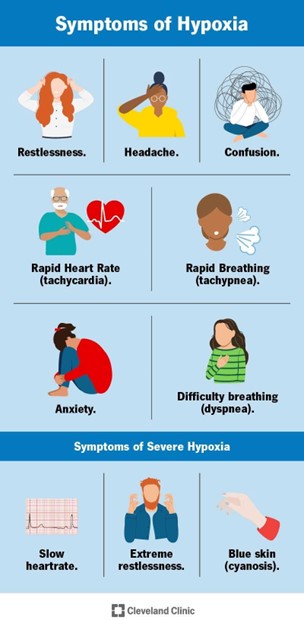
What factors are important in determining the level of hypoxemia that the child may have experienced during the submersion?
Select all that apply.
A. Temperature of water
Cold water can induce a diving reflex, which lowers the heart rate and oxygen consumption, and may protect the brain from hypoxic injury¹². Cold water can also cause laryngospasm, which prevents water aspiration but also impairs gas exchange
B. The weight of the child
This may affect the buoyancy and the ability to float or swim, but not the oxygen consumption or gas exchange during submersion¹.
C. Oxygen concentration of the ambient air
This may affect the pre-submersion oxygen saturation, but not the rate of oxygen depletion or gas exchange during submersion.
D. Whether or not anyone witnessed the fall into the pool
This may affect the time to rescue and resuscitation, but not the level of hypoxemia during submersion
E. The amount of time the child was submerged
The longer the submersion, the more severe the hypoxemia and the higher the risk of brain damage and death. The survival rate decreases significantly after 5 minutes of submersion
Full Explanation
The level of hypoxemia that the child may have experienced during the submersion depends on several factors, but the most important ones are:
- The **temperature of water**: Cold water can induce a diving reflex, which lowers the heart rate and oxygen consumption, and may protect the brain from hypoxic injury. Cold water can also cause laryngospasm, which prevents water aspiration but also impairs gas exchange.
- The **amount of time the child was submerged**: The longer the submersion, the more severe the hypoxemia and the higher the risk of brain damage and death. The survival rate decreases significantly after 5 minutes of submersion.
The other factors are less relevant or not directly related to the level of hypoxemia:
- The **weight of the child**: This may affect the buoyancy and the ability to float or swim, but not the oxygen consumption or gas exchange during submersion.
- The **oxygen concentration of the ambient air**: This may affect the pre-submersion oxygen saturation, but not the rate of oxygen depletion or gas exchange during submersion.
- The **witnessing of the fall into the pool**: This may affect the time to rescue and resuscitation, but not the level of hypoxemia during submersion.
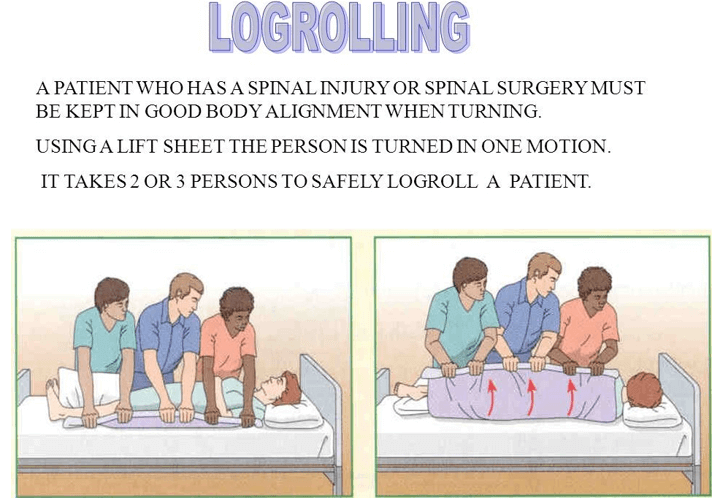
Immediately after log-rolling a client to a lateral position, which intervention should the practical nurse (PN) implement?
A. Raise the head of the bed 30 degrees
Raising the head of the bed 30 degrees is not necessary or appropriate after log-rolling a client to a lateral position, as it can cause shearing forces or compromise the spinal stability. The head of the bed should be kept flat or slightly elevated during log-rolling
B. Measure blood pressure and pulse rate
Measuring blood pressure and pulse rate is not the immediate intervention after log-rolling a client to a lateral position, as it does not ensure the comfort or safety of the client. The PN should monitor the vital signs before and after log-rolling, but not during or immediately after.
C. Flex legs and place blanket between legs
Flexing legs and placing blanket between legs is not the immediate intervention after log-rolling a client to a lateral position, as it does not support the spine or prevent pressure ulcers or nerve damage. The PN should keep the legs straight and aligned with the body during log-rolling, and place a pillow under the lower leg after log-rolling.
D. Place pillows to maintain alignment.
Log-rolling is a technique of moving a client as a unit without twisting or bending the spine, which is used for clients with spinal injuries or surgeries. After log-rolling a client to a lateral position, the PN should place pillows to maintain alignment and prevent pressure ulcers or nerve damage. The pillows should be placed under the head, neck, upper arm, chest, abdomen, pelvis, and lower leg.
Full Explanation
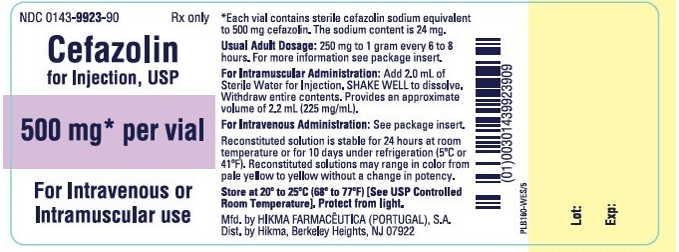
The practical nurse (PN) is preparing cefazolin 400 mg IM for a client with a gram-positive infection. The available vial is labeled, "Cefazolin 1 gram," and the instructions for reconstitution state, for IM use, add 2 mL sterile water for injection. Total volume after reconstitution is 2.5 mL. After reconstitution, how many mL should be administered to the client? (Enter numeric value only. If rounding is required, round to the whole number, nearest tenths/hundredth).
Full Explanation
This is the correct answer because the concentration of cefazolin after reconstitution is 1 gram/2.5 mL, which is equivalent to 400 mg/1 mL. Therefore, to administer 400 mg of cefazolin, the PN should draw up 1 mL of the reconstituted solution. This can be calculated using the formula:
Desired dose / Available dose = Volume to administer
400 mg / 1000 mg = x mL / 2.5 mL
x = (400 x 2.5) / 1000
x = 1 mL