Nursing practice questions with comprehensive rationales
NurseDive Free Nursing Practice Question
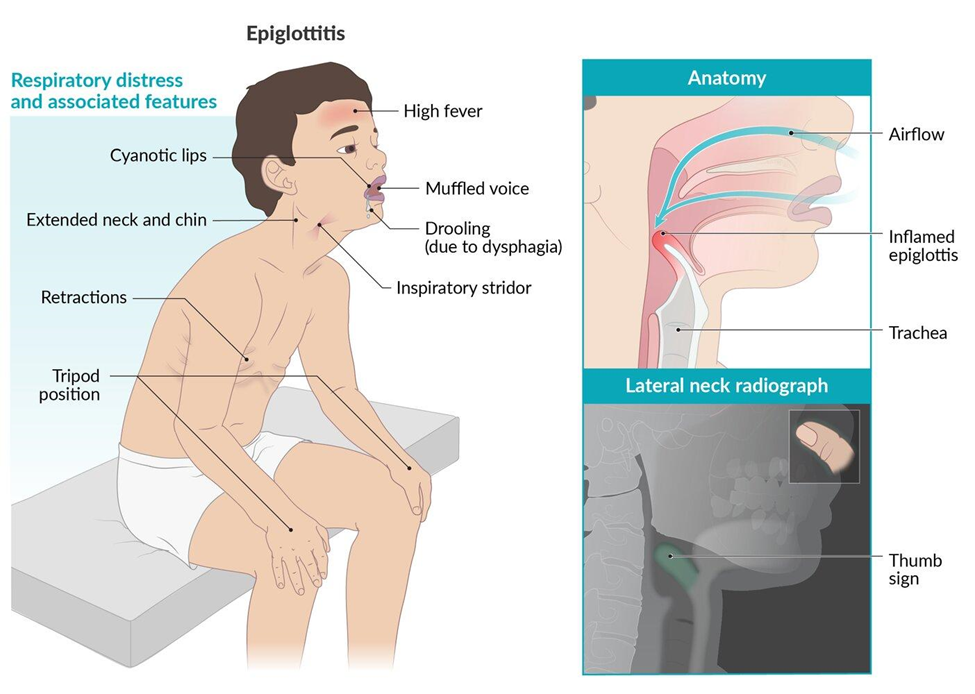
A nurse is admitting a child who has suspected epiglottitis. Which of the following actions should the nurse take first?
A. Administer 0,9% sodium chloride IV solution.
Administer 0.9% sodium chloride IV solution: Although IV fluids might be necessary to maintain hydration and circulation, this is not the priority over preventing the spread of infection.
B. Assist with obtaining an x-ray of the child's neck
Assist with obtaining an x-ray of the child's neck.Imaging can help confirm the diagnosis but should be done after ensuring infection control measures.
C. Initiate IV antibiotics.
Initiate IV antibiotics. Antibiotics are crucial for treatment but should follow the implementation of droplet precautions to prevent the spread of infection.
D. Place the child on droplet precautions
Place the child on droplet precautions.Epiglottitis is a medical emergency primarily caused by bacterial infections, such as Haemophilus influenzae type B (Hib). The first priority is to ensure the safety of both the patient and others by preventing the spread of infection. Placing the child on droplet precautions helps to contain the bacteria and protect healthcare workers and other patients.
This question is an excerpt from Nurse Dive's nursing test bank - ATI RN Paediatric Assessment Proctored Exam 2022. Take the full exam now
Full Explanation
A. Administer 0.9% sodium chloride IV solution: Although IV fluids might be necessary to maintain hydration and circulation, this is not the priority over preventing the spread of infection.
B. Assist with obtaining an x-ray of the child's neck. Imaging can help confirm the diagnosis but should be done after ensuring infection control measures.
C. Initiate IV antibiotics. Antibiotics are crucial for treatment but should follow the implementation of droplet precautions to prevent the spread of infection.
D. Place the child on droplet precautions.
Epiglottitis is a medical emergency primarily caused by bacterial infections, such as Haemophilus influenzae type B (Hib). The first priority is to ensure the safety of both the patient and others by preventing the spread of infection. Placing the child on droplet precautions helps to contain the bacteria and protect healthcare workers and other patients.
Similar Questions
The parents of a child recently diagnosed with cerebral palsy ask the nurse about the limitations of the disorder. The nurse responds by explaining that the limitations occur as a result of which pathophysiological process?
A. An infectious disease of the central nervous system
An infectious disease of the central nervous systemExplanation: Cerebral palsy is not caused by an infectious disease of the central nervous system. It is a non-progressive neurological disorder that arises from brain damage, often during prenatal development.
B. An inflammation of the brain as a result of a viral illness
An inflammation of the brain as a result of a viral illnessExplanation: While inflammation of the brain due to a viral illness can lead to neurological complications, cerebral palsy is not specifically caused by inflammation resulting from a viral illness.
C. A chronic disability characterized by impaired muscle movement and posture
A chronic disability characterized by impaired muscle movement and posture Explanation:Cerebral palsy is a chronic condition that primarily affects motor function and posture. It results from damage to the developing brain, often occurring before or during birth. The impaired muscle movement and posture associated with cerebral palsy can lead to limitations in activities of daily living and mobility.
D. A congenital condition that results in moderate to severe intellectual disabilities
A congenital condition that results in moderate to severe intellectual disabilities Explanation: Cerebral palsy primarily affects motor function, and intellectual disabilities are not an inherent component of cerebral palsy. While some individuals with cerebral palsy may have associated cognitive impairments, it is not a defining characteristic of the disorder.
Full Explanation
A. An infectious disease of the central nervous system
Explanation: Cerebral palsy is not caused by an infectious disease of the central nervous system. It is a non-progressive neurological disorder that arises from brain damage, often during prenatal development.
B. An inflammation of the brain as a result of a viral illness
Explanation: While inflammation of the brain due to a viral illness can lead to neurological complications, cerebral palsy is not specifically caused by inflammation resulting from a viral illness.
C. A chronic disability characterized by impaired muscle movement and posture
Explanation:
Cerebral palsy is a chronic condition that primarily affects motor function and posture. It results from damage to the developing brain, often occurring before or during birth. The impaired muscle movement and posture associated with cerebral palsy can lead to limitations in activities of daily living and mobility.
D. A congenital condition that results in moderate to severe intellectual disabilities
Explanation: Cerebral palsy primarily affects motor function, and intellectual disabilities are not an inherent component of cerebral palsy. While some individuals with cerebral palsy may have associated cognitive impairments, it is not a defining characteristic of the disorder.
A nurse in a clinic is assessing a 7-month-old infant. Which of the following indicates a need for further evaluation?
A. Shows preferences towards foods
Shows preferences towards foodsExplanation: Showing preferences towards foods, such as liking some tastes more than others, is a normal developmental behavior in infants. It is not typically a cause for concern.
B. Babbles one-syllable sounds
Babbles one-syllable soundsExplanation:By the age of 7 months, most infants should be engaging in babbling with repetitive consonant-vowel combinations. If an infant is only producing one-syllable sounds at this age, it might be a potential sign of delayed language development. Further evaluation by a healthcare provider, such as a pediatrician or a speech-language pathologist, may be warranted to assess the child's language and communication skills.
C. Uses a unidextrous grasp
Uses a unidextrous graspExplanation: A unidextrous grasp, where the infant uses one hand to grasp objects, is a typical developmental milestone at this age. Infants typically begin to show a dominant hand preference later in their development.
D. Has a fear of strangers
Has a fear of strangers Explanation: Fear of strangers, often referred to as "stranger anxiety," is a normal developmental stage that typically emerges around 6 to 9 months of age. It is a sign of social and cognitive development and is not generally a cause for concern.
Full Explanation
A. Shows preferences towards foods
Explanation: Showing preferences towards foods, such as liking some tastes more than others, is a normal developmental behavior in infants. It is not typically a cause for concern.
B. Babbles one-syllable sounds
Explanation:
By the age of 7 months, most infants should be engaging in babbling with repetitive consonant-vowel combinations. If an infant is only producing one-syllable sounds at this age, it might be a potential sign of delayed language development. Further evaluation by a healthcare provider, such as a pediatrician or a speech-language pathologist, may be warranted to assess the child's language and communication skills.
C. Uses a unidextrous grasp
Explanation: A unidextrous grasp, where the infant uses one hand to grasp objects, is a typical developmental milestone at this age. Infants typically begin to show a dominant hand preference later in their development.
D. Has a fear of strangers
Explanation: Fear of strangers, often referred to as "stranger anxiety," is a normal developmental stage that typically emerges around 6 to 9 months of age. It is a sign of social and cognitive development and is not generally a cause for concern.
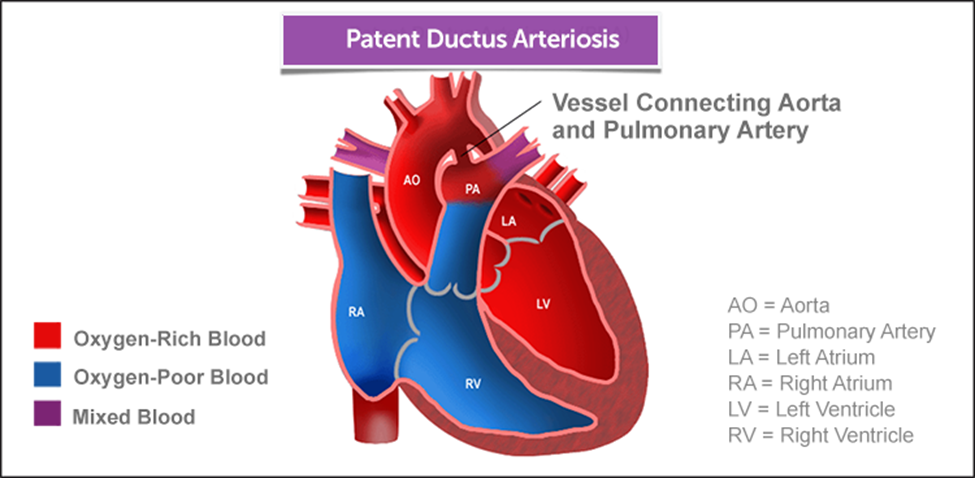
The registered nurse is discussing care of an infant diagnosed with a patent ductus arteriosus (PDA) with a nursing student. The registered nurse determines that the nursing student needs further teaching regarding a PDA when the student states that which circulatory change is a characteristic of this disorder?
A. This shunting allows oxygenated and unoxygenated blood to mix.
"This shunting allows oxygenated and unoxygenated blood to mix."Explanation: This statement is correct. In PDA, the shunting of blood between the aorta and pulmonary artery allows oxygenated and unoxygenated blood to mix, leading to decreased oxygen saturation in the systemic circulation.
B. Blood is shunted to the right side of the heart.
"Blood is shunted to the right side of the heart."Explanation: This statement is correct. In PDA, blood is shunted from the left side of the heart (aorta) to the right side of the heart (pulmonary artery).
C. This shunting results in increased pulmonary blood flow.
"This shunting results in increased pulmonary blood flow."Explanation: This statement is correct. PDA leads to increased pulmonary blood flow as a result of the shunting of blood from the aorta to the pulmonary artery.
D. Blood is shunted to the left side of the heart.
"Blood is shunted to the left side of the heart." Explanation: A patent ductus arteriosus (PDA) is a congenital heart defect where the ductus arteriosus, a fetal blood vessel that normally closes shortly after birth, remains open. In PDA, blood is shunted from the aorta (left side of the heart) to the pulmonary artery (right side of the heart), resulting in increased pulmonary blood flow. Therefore, the correct statement is that "Blood is shunted to the right side of the heart."
Full Explanation
A. "This shunting allows oxygenated and unoxygenated blood to mix."
Explanation: This statement is correct. In PDA, the shunting of blood between the aorta and pulmonary artery allows oxygenated and unoxygenated blood to mix, leading to decreased oxygen saturation in the systemic circulation.
B. "Blood is shunted to the right side of the heart."
Explanation: This statement is correct. In PDA, blood is shunted from the left side of the heart (aorta) to the right side of the heart (pulmonary artery).
C. "This shunting results in increased pulmonary blood flow."
Explanation: This statement is correct. PDA leads to increased pulmonary blood flow as a result of the shunting of blood from the aorta to the pulmonary artery.
D. "Blood is shunted to the left side of the heart."
Explanation:
A patent ductus arteriosus (PDA) is a congenital heart defect where the ductus arteriosus, a fetal blood vessel that normally closes shortly after birth, remains open. In PDA, blood is shunted from the aorta (left side of the heart) to the pulmonary artery (right side of the heart), resulting in increased pulmonary blood flow. Therefore, the correct statement is that "Blood is shunted to the right side of the heart."