
Nursing practice questions with comprehensive rationales
NurseDive Free Nursing Practice Question
A. Distended neck veins
Distended neck veins is not a manifestation of acute hemolytic reaction, but it may indicate fluid overload, which is another possible complication of blood transfusion. Fluid overload may occur when the blood volume or rate of infusion exceeds the client's circulatory capacity. Fluid overload may manifest as dyspnea, crackles, edema, hypertension, or tachycardia.
B. Client report of low back pain
Client report of low back pain is a manifestation of acute hemolytic reaction, which is a life-threatening condition that occurs when the donor blood is incompatible with the recipient's blood. Acute hemolytic reaction may occur within minutes or hours of the transfusion and may cause the destruction of the transfused red blood cells. Acute hemolytic reaction may manifest as fever, chills, low back pain, hemoglobinuria, hypotension, or shock.
C. A productive cough
A productive cough is not a manifestation of acute hemolytic reaction, but it may indicate a respiratory infection, which is a potential risk of blood transfusion. Blood transfusion may transmit infectious agents, such as bacteria, viruses, or parasites, from the donor to the recipient. A productive cough may also be a sign of pulmonary edema, which may result from fluid overload or transfusion-related acute lung injury (TRALI).
D. Client report of tinnitus
Client report of tinnitus is not a manifestation of acute hemolytic reaction, but it may indicate ototoxicity, which is a possible adverse effect of some medications, such as aminoglycosides, loop diuretics, or salicylates. Ototoxicity may damage the inner ear or the auditory nerve and cause hearing loss, tinnitus, or vertigo. The nurse should assess the client's medication history and monitor the client's hearing function.
This question is an excerpt from Nurse Dive's nursing test bank - Ati Pharmacology Proctored Exam 2. Take the full exam now
Full Explanation
Choice A reason: Distended neck veins is not a manifestation of acute hemolytic reaction, but it may indicate fluid overload, which is another possible complication of blood transfusion. Fluid overload may occur when the blood volume or rate of infusion exceeds the client's circulatory capacity. Fluid overload may manifest as dyspnea, crackles, edema, hypertension, or tachycardia.
Choice B reason: Client report of low back pain is a manifestation of acute hemolytic reaction, which is a life-threatening condition that occurs when the donor blood is incompatible with the recipient's blood. Acute hemolytic reaction may occur within minutes or hours of the transfusion and may cause the destruction of the transfused red blood cells. Acute hemolytic reaction may manifest as fever, chills, low back pain, hemoglobinuria, hypotension, or shock.
Choice C reason: A productive cough is not a manifestation of acute hemolytic reaction, but it may indicate a respiratory infection, which is a potential risk of blood transfusion. Blood transfusion may transmit infectious agents, such as bacteria, viruses, or parasites, from the donor to the recipient. A productive cough may also be a sign of pulmonary edema, which may result from fluid overload or transfusion-related acute lung injury (TRALI).
Choice D reason: Client report of tinnitus is not a manifestation of acute hemolytic reaction, but it may indicate ototoxicity, which is a possible adverse effect of some medications, such as aminoglycosides, loop diuretics, or salicylates. Ototoxicity may damage the inner ear or the auditory nerve and cause hearing loss, tinnitus, or vertigo. The nurse should assess the client's medication history and monitor the client's hearing function.
Similar Questions
A nurse is caring for a client who has a new prescription for propranolol. The nurse should monitor the client for which of the following severe reactions to this medication?
A. Ototoxicity
Ototoxicity is not a severe reaction to propranolol, but it may occur with some other medications, such as aminoglycosides, loop diuretics, or salicylates. Ototoxicity may damage the inner ear or the auditory nerve and cause hearing loss, tinnitus, or vertigo. The nurse should assess the client's medication history and monitor the client's hearing function.
B. Hypokalemia
Hypokalemia is not a severe reaction to propranolol, but it may occur with some other medications, such as thiazide diuretics, corticosteroids, or insulin. Hypokalemia may cause muscle weakness, cramps, arrhythmias, or cardiac arrest. The nurse should advise the client to eat foods rich in potassium, such as bananas, oranges, or potatoes, and to have regular blood tests to check the electrolyte levels.
C. Tachycardia
Tachycardia is not a severe reaction to propranolol, but it may be a sign of overdose, withdrawal, or rebound effect. Propranolol is a beta-blocker that lowers the heart rate and blood pressure by blocking the effects of epinephrine and norepinephrine. Propranolol may cause bradycardia, not tachycardia, as a side effect. The nurse should monitor the client's vital signs and advise the client to take the medication as prescribed and not to stop it abruptly.
D. Postural hypotension
Postural hypotension is a severe reaction to propranolol, as it may cause dizziness, fainting, or falls. Postural hypotension occurs when the blood pressure drops significantly when the client changes position, such as from lying to sitting or standing. Propranolol may cause postural hypotension by reducing the vascular tone and the cardiac output. The nurse should instruct the client to change position slowly and to report any symptoms of postural hypotension to the provider.
Full Explanation
Choice A reason: Ototoxicity is not a severe reaction to propranolol, but it may occur with some other medications, such as aminoglycosides, loop diuretics, or salicylates. Ototoxicity may damage the inner ear or the auditory nerve and cause hearing loss, tinnitus, or vertigo. The nurse should assess the client's medication history and monitor the client's hearing function.
Choice B reason: Hypokalemia is not a severe reaction to propranolol, but it may occur with some other medications, such as thiazide diuretics, corticosteroids, or insulin. Hypokalemia may cause muscle weakness, cramps, arrhythmias, or cardiac arrest. The nurse should advise the client to eat foods rich in potassium, such as bananas, oranges, or potatoes, and to have regular blood tests to check the electrolyte levels.
Choice C reason: Tachycardia is not a severe reaction to propranolol, but it may be a sign of overdose, withdrawal, or rebound effect. Propranolol is a beta-blocker that lowers the heart rate and blood pressure by blocking the effects of epinephrine and norepinephrine. Propranolol may cause bradycardia, not tachycardia, as a side effect. The nurse should monitor the client's vital signs and advise the client to take the medication as prescribed and not to stop it abruptly.
Choice D reason: Postural hypotension is a severe reaction to propranolol, as it may cause dizziness, fainting, or falls. Postural hypotension occurs when the blood pressure drops significantly when the client changes position, such as from lying to sitting or standing. Propranolol may cause postural hypotension by reducing the vascular tone and the cardiac output. The nurse should instruct the client to change position slowly and to report any symptoms of postural hypotension to the provider.
A nurse is reviewing laboratory results of a client who has atrial fibrillation and is taking warfarin. For which of the following results should the nurse notify the provider?
A. Platelets 190,000/mm3
Platelets 190,000/mm3 is within the normal range of 150,000 to 450,000/mm3. This result does not indicate a bleeding risk or a need to adjust the warfarin dose.
B. Hct 44%
Hct 44% is within the normal range of 37% to 47% for females and 42% to 52% for males. This result does not indicate anemia or polycythemia, which could affect the warfarin therapy.
C. PT 45 seconds
PT 45 seconds is above the normal range of 11 to 13.5 seconds. This result indicates that the blood is taking too long to clot, which increases the risk of bleeding. The nurse should notify the provider and expect a decrease in the warfarin dose.
D. Hgb 16 g/dL
Hgb 16 g/dL is within the normal range of 12 to 16 g/dL for females and 14 to 18 g/dL for males. This result does not indicate anemia or polycythemia, which could affect the warfarin therapy.
Full Explanation
Choice A reason: Platelets 190,000/mm3 is within the normal range of 150,000 to 450,000/mm3. This result does not indicate a bleeding risk or a need to adjust the warfarin dose.
Choice B reason: Hct 44% is within the normal range of 37% to 47% for females and 42% to 52% for males. This result does not indicate anemia or polycythemia, which could affect the warfarin therapy.
Choice C reason: PT 45 seconds is above the normal range of 11 to 13.5 seconds. This result indicates that the blood is taking too long to clot, which increases the risk of bleeding. The nurse should notify the provider and expect a decrease in the warfarin dose.
Choice D reason: Hgb 16 g/dL is within the normal range of 12 to 16 g/dL for females and 14 to 18 g/dL for males. This result does not indicate anemia or polycythemia, which could affect the warfarin therapy.
A nurse is caring for a client who is receiving heparin by continuous IV infusion. Which of the following medications should the nurse plan to administer in the event of an overdose?
A. Vitamin K
Vitamin K is the antidote for warfarin, not heparin. Vitamin K reverses the effects of warfarin by increasing the synthesis of clotting factors in the liver.
B. Glucagon
Glucagon is the antidote for insulin, not heparin. Glucagon increases the blood glucose level by stimulating the breakdown of glycogen in the liver.
C. Protamine
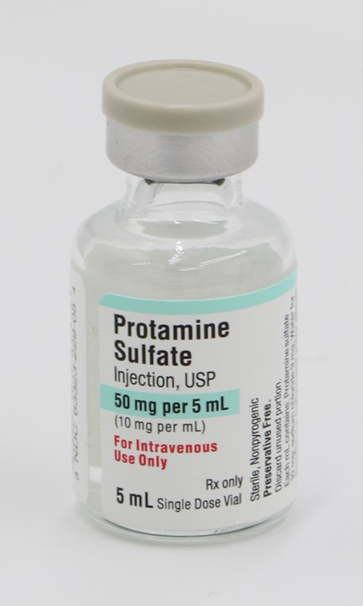
Protamine is the antidote for heparin, not vitamin K or glucagon. Protamine neutralizes the effects of heparin by binding to it and forming a stable complex.
D. Iron
Iron is not an antidote for any anticoagulant. Iron is a mineral that is essential for the production of hemoglobin and red blood cells.
Full Explanation
Choice A reason: Vitamin K is the antidote for warfarin, not heparin. Vitamin K reverses the effects of warfarin by increasing the synthesis of clotting factors in the liver.
Choice B reason: Glucagon is the antidote for insulin, not heparin. Glucagon increases the blood glucose level by stimulating the breakdown of glycogen in the liver.
Choice C reason: Protamine is the antidote for heparin, not vitamin K or glucagon. Protamine neutralizes the effects of heparin by binding to it and forming a stable complex.
Choice D reason: Iron is not an antidote for any anticoagulant. Iron is a mineral that is essential for the production of hemoglobin and red blood cells.