
Nursing practice questions with comprehensive rationales
NurseDive Free Nursing Practice Question
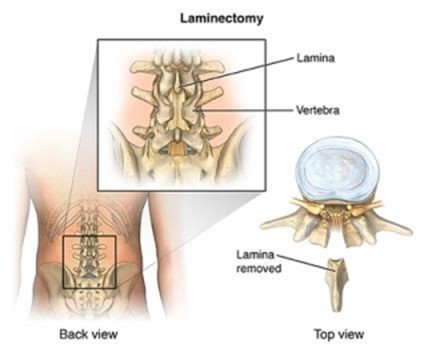
A nurse is caring for a client who is postoperative following a laminectomy with spinal fusion. Which of the following actions should the nurse take?
A. Position the client in a high-Fowler's position if clear drainage is noted on the dressing
Positioning the client in a high-Fowler's position if clear drainage is noted on the dressing is not a specific intervention for a laminectomy with spinal fusion. The nurse should follow the surgeon's specific postoperative orders regarding positioning and wound care.
B. Monitor sensory perception of the lower extremities.
Monitoring sensory perception of the lower extremities is a crucial nursing intervention after a laminectomy with spinal fusion. This is to assess for any signs of neurovascular compromise or nerve damage.
C. Assist the client into a knee-chest position to manage postoperative discomfort.
Assisting the client into a knee-chest position to manage postoperative discomfort is not a recommended position after a laminectomy with spinal fusion. The nurse should follow the surgeon's specific postoperative orders regarding positioning.
D. Maintain strict bed rest for the first 48 hr postoperative.
Maintaining strict bed rest for the first 48 hours postoperative is not typically indicated after a laminectomy with spinal fusion. Early mobilization and ambulation are often encouraged to prevent complications and promote recovery. The nurse should follow the surgeon's specific postoperative orders regarding activity and mobility.
This question is an excerpt from Nurse Dive's nursing test bank - ATI Med Surg Proctored Exam 6. Take the full exam now
Full Explanation
A. Positioning the client in a high-Fowler's position if clear drainage is noted on the dressing is not a specific intervention for a laminectomy with spinal fusion. The nurse should follow the surgeon's specific postoperative orders regarding positioning and wound care.
B. Monitoring sensory perception of the lower extremities is a crucial nursing intervention after a laminectomy with spinal fusion. This is to assess for any signs of neurovascular compromise or nerve damage.
C. Assisting the client into the knee-chest position to manage postoperative discomfort is not a recommended position after a laminectomy with spinal fusion. The nurse should follow the surgeon's specific postoperative orders regarding positioning.
D. Maintaining strict bed rest for the first 48 hours postoperative is not typically indicated after a laminectomy with spinal fusion. Early mobilization and ambulation are often encouraged to prevent complications and promote recovery. The nurse should follow the surgeon's specific postoperative orders regarding activity and mobility.
Similar Questions
A nursing is planning care for an adolescent who is postoperative following scoliosis repair with Harrington rod instrumentation. Which of the following interventions should the nurse include in the plan of care?
A. Place the client in protective isolation.
Protective isolation is not routinely required for clients following scoliosis repair unless there is an underlying infection risk.
B. Initiate the use of a PCA pump for pain control.
A PCA pump may be used for pain control, but it is not specific to post-scoliosis repair care.
C. Keep the head of the bed at a 30° angle.
Keeping the head of the bed at 30° is not required; positioning should focus on spinal alignment.
D. Reposition the client by log rolling every-4 hr.
Log rolling the client every 4 hours is essential to maintain spinal alignment, prevent complications, and ensure safety following Harrington rod instrumentation.
Full Explanation
A. Protective isolation is not routinely required for clients following scoliosis repair unless there is an underlying infection risk.
B. A PCA pump may be used for pain control, but it is not specific to post-scoliosis repair care.
C. Keeping the head of the bed at 30° is not required; positioning should focus on spinal alignment.
D. Log rolling the client every 4 hours is essential to maintain spinal alignment, prevent complications, and ensure safety following Harrington rod instrumentation.
A nurse is preparing to administer a continuous heparin infusion at 1600 units/hr. Available is heparin 25.000 units in dextrose 5% in water (DSW) 500 mL. The nurse should set the IV pumpto deliver how many mL/hr?
(Round the answer to the nearest whole number. Use a leading zero if it applies. Do not use a trailing zero.)
Full Explanation
- To calculate the infusion rate, use the formula: mL/hr = (units/hr) x (mL) / (units) - Plug in the values from the question: mL/hr = (1600 units/hr) x (500 mL) / (25.000 units) - Simplify and solve: mL/hr = 32
- Round to the nearest whole number: 32
- The answer is 32 mL/hr
A nurse is assessing the elastic bandage on the stump of a client who had a right below-the knee amputation. Which of the following findings should the nurse identify as a complication?
A. Looseness of the stump dressing
Looseness of the stump dressing may indicate the need for adjustment, but it is not a complication in itself.
B. The dressing forms a cone shape over the stump
The dressing forming a cone shape over the stump is a not sign of complications.
C. Pitting edema around the stump dressing
Pitting edema around the stump dressing may indicate swelling, which is common after an amputation. It is important to monitor for excessive edema as it is a sign of potential complication.
D. Figure-eight wrapping around the stump
Figure-eight wrapping around the stump is a technique used to provide even pressure and support, helping to prevent edema and promote healing. It is not a complication.
Full Explanation
A. Looseness of the stump dressing may indicate the need for adjustment, but it is not a complication in itself.
B. The dressing forming a cone shape over the stump is a not sign of complications.
C. Pitting edema around the stump dressing may indicate swelling, which is common after an amputation. It is important to monitor for excessive edema as it is a sign of potential complication.
D. Figure-eight wrapping around the stump is a technique used to provide even pressure and support, helping to prevent edema and promote healing. It is not a complication.