
Nursing practice questions with comprehensive rationales
NurseDive Free Nursing Practice Question
A nurse is caring for a client who is receiving continuous bladder irrigation following a transurethral resection of the prostate.
The client reports bladder spasms and the nurse observes decreased urinary output.
Which of the following actions should the nurse take?
A. Remove the indwelling urinary catheter.
Choice A is not the correct answer because removing the indwelling urinary catheter would not address the underlying issue of blood clots blocking the catheter.
B. Decrease traction on the catheter.
Choice B is not the correct answer because decreasing traction on the catheter would not address the underlying issue of blood clots blocking the catheter.
C. Administer ibuprofen 400 mg for pain relief.
Choice C is not the correct answer because while ibuprofen may provide some pain relief, it would not address the underlying issue of blood clots blocking the catheter.
D. Flush the catheter manually with 0.9% sodium chloride.
“Flush the catheter manually with 0.9% sodium chloride.” The client is receiving continuous bladder irrigation following a transurethral resection of the prostate and reports bladder spasms and decreased urinary output. These symptoms may indicate that the catheter is blocked with blood clots. Flushing the catheter manually with 0.9% sodium chloride can help to remove any blood clots and restore urinary output.
This question is an excerpt from Nurse Dive's nursing test bank - ATI Adult Medical Surgical 2019 Proctored Exam. Take the full exam now
Full Explanation
“Flush the catheter manually with 0.9% sodium chloride.” The client is receiving continuous bladder irrigation following a transurethral resection of the prostate and reports bladder spasms and decreased urinary output.
These symptoms may indicate that the catheter is blocked with blood clots.
Flushing the catheter manually with 0.9% sodium chloride can help to remove any blood clots and restore urinary output.
Choice A is not the correct answer because removing the indwelling urinary catheter would not address the underlying issue of blood clots blocking the catheter.
Choice B is not the correct answer because decreasing traction on the catheter would not address the underlying issue of blood clots blocking the catheter.
Choice C is not the correct answer because while ibuprofen may provide some pain relief, it would not address the underlying issue of blood clots blocking the catheter.
Similar Questions
A nurse is reviewing the medical record of a client who is scheduled for a CT scan with contrast media.
Which of the following medications should the nurse instruct the client to withhold for 48 hr following the procedure?
A. Clopidogrel.
Choice A, Clopidogrel, is not an answer because it is not mentioned in the search results as a medication that needs to be withheld after a CT scan with contrast media.
B. Furosemide.
Choice B, Furosemide, is not an answer because it is not mentioned in the search results as a medication that needs to be withheld after a CT scan with contrast media.
C. Metformin.
Metformin should be withheld for a minimum of 48 hours after the procedure. This is because metformin can increase the risk of contrast-induced acute kidney injury (CI-AKI) when undergoing contrast imaging.
D. Carvedilol.
Choice D, Carvedilol, is not an answer because it is not mentioned in the search results as a medication that needs to be withheld after a CT scan with contrast media.
Full Explanation
Metformin should be withheld for a minimum of 48 hours after the procedure.

This is because metformin can increase the risk of contrast-induced acute kidney injury (CI-AKI) when undergoing contrast imaging.
Choice A, Clopidogrel, is not an answer because it is not mentioned in the search results as a medication that needs to be withheld after a CT scan with contrast media.
Choice B, Furosemide, is not an answer because it is not mentioned in the search results as a medication that needs to be withheld after a CT scan with contrast media.
Choice D, Carvedilol, is not an answer because it is not mentioned in the search results as a medication that needs to be withheld after a CT scan with contrast media.
A nurse is planning care for a client who has full-thickness burns on the lower extremities.
Which of the following interventions should the nurse include?
A. Clean the equipment in the client's room once per week.
Choice A, cleaning the equipment in the client’s room once per week, is not an answer because it is not mentioned in the search results as an intervention for a client with full-thickness burns on the lower extremities.
B. Provide a diet of fresh fruits and vegetables for the client.
Choice B, providing a diet of fresh fruits and vegetables for the client, is not an answer because it is not mentioned in the search results as an intervention for a client with full-thickness burns on the lower extremities.
C. Limit visitation time for the client's children to 40 min per day.
Choice C, limiting visitation time for the client’s children to 40 min per day, is not an answer because it is not mentioned in the search results as an intervention for a client with full-thickness burns on the lower extremities.
D. Apply new gloves when alternating between wound care sites.
The nurse should apply new gloves when alternating between wound care sites. This is to prevent cross-contamination and infection.
Full Explanation
The nurse should apply new gloves when alternating between wound care sites.
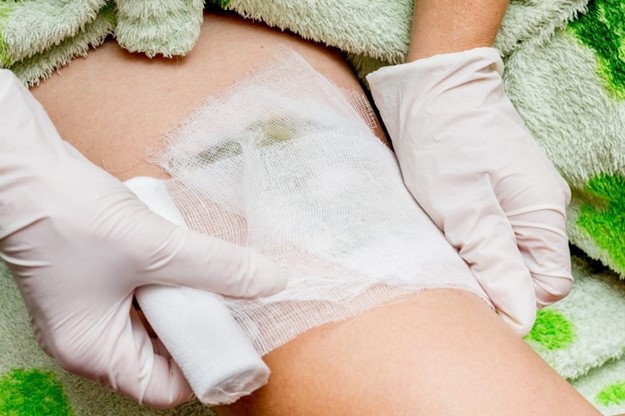
This is to prevent cross-contamination and infection.
Choice A, cleaning the equipment in the client’s room once per week, is not an answer because it is not mentioned in the search results as an intervention for a client with full-thickness burns on the lower extremities.
Choice B, providing a diet of fresh fruits and vegetables for the client, is not an answer because it is not mentioned in the search results as an intervention for a client with full-thickness burns on the lower extremities.
Choice C, limiting visitation time for the client’s children to 40 min per day, is not an answer because it is not mentioned in the search results as an intervention for a client with full-thickness burns on the lower extremities.
A nurse is caring for a client who is 6 hours postoperative following the application of an external fixator for a tibial fracture.
Which of the following actions should the nurse take?
A. Wrap sterile gauze on the sharp point of the pins.
Choice A, wrapping sterile gauze on the sharp point of the pins, is not an answer because it is not mentioned in the search results as an intervention for a client with an external fixator for a tibial fracture.
B. Adjust the clamps on the fixator frame.
Choice B, adjusting the clamps on the fixator frame, is not an answer because it is not mentioned in the search results as an intervention for a client with an external fixator for a tibial fracture.
C. Maintain the affected extremity in a dependent position.
Choice C, maintaining the affected extremity in a dependent position, is not an answer because it is not mentioned in the search results as an intervention for a client with an external fixator for a tibial fracture.
D. Palpate the dorsalis pedis pulse.
The nurse should palpate the dorsalis pedis pulse. This is to assess for peripheral neurovascular dysfunction, which is a potential complication of a tibial fracture.
Full Explanation
The nurse should palpate the dorsalis pedis pulse.
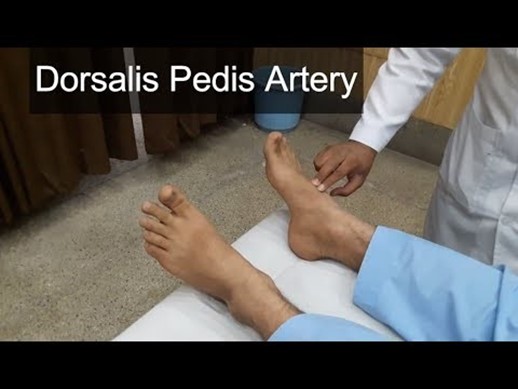
This is to assess for peripheral neurovascular dysfunction, which is a potential complication of a tibial fracture.
Choice A, wrapping sterile gauze on the sharp point of the pins, is not an answer because it is not mentioned in the search results as an intervention for a client with an external fixator for a tibial fracture.
Choice B, adjusting the clamps on the fixator frame, is not an answer because it is not mentioned in the search results as an intervention for a client with an external fixator for a tibial fracture.
Choice C, maintaining the affected extremity in a dependent position, is not an answer because it is not mentioned in the search results as an intervention for a client with an external fixator for a tibial fracture.