
Nursing practice questions with comprehensive rationales
NurseDive Free Nursing Practice Question
A nurse is planning care for a client who has full-thickness burns on the lower extremities.
Which of the following interventions should the nurse include?
A. Clean the equipment in the client's room once per week.
Choice A, cleaning the equipment in the client’s room once per week, is not an answer because it is not mentioned in the search results as an intervention for a client with full-thickness burns on the lower extremities.
B. Provide a diet of fresh fruits and vegetables for the client.
Choice B, providing a diet of fresh fruits and vegetables for the client, is not an answer because it is not mentioned in the search results as an intervention for a client with full-thickness burns on the lower extremities.
C. Limit visitation time for the client's children to 40 min per day.
Choice C, limiting visitation time for the client’s children to 40 min per day, is not an answer because it is not mentioned in the search results as an intervention for a client with full-thickness burns on the lower extremities.
D. Apply new gloves when alternating between wound care sites.
The nurse should apply new gloves when alternating between wound care sites. This is to prevent cross-contamination and infection.
This question is an excerpt from Nurse Dive's nursing test bank - ATI Adult Medical Surgical 2019 Proctored Exam. Take the full exam now
Full Explanation
The nurse should apply new gloves when alternating between wound care sites.
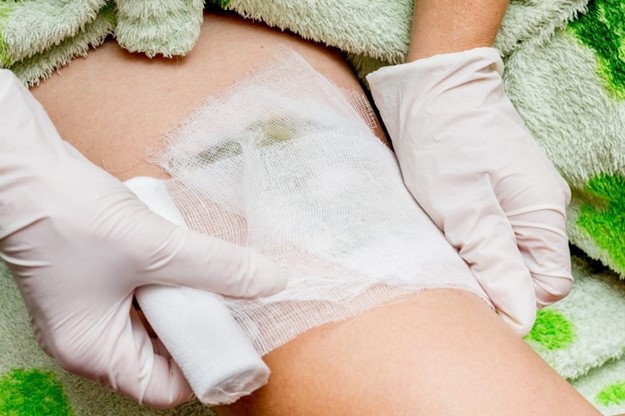
This is to prevent cross-contamination and infection.
Choice A, cleaning the equipment in the client’s room once per week, is not an answer because it is not mentioned in the search results as an intervention for a client with full-thickness burns on the lower extremities.
Choice B, providing a diet of fresh fruits and vegetables for the client, is not an answer because it is not mentioned in the search results as an intervention for a client with full-thickness burns on the lower extremities.
Choice C, limiting visitation time for the client’s children to 40 min per day, is not an answer because it is not mentioned in the search results as an intervention for a client with full-thickness burns on the lower extremities.
Similar Questions
A nurse is caring for a client who is 6 hours postoperative following the application of an external fixator for a tibial fracture.
Which of the following actions should the nurse take?
A. Wrap sterile gauze on the sharp point of the pins.
Choice A, wrapping sterile gauze on the sharp point of the pins, is not an answer because it is not mentioned in the search results as an intervention for a client with an external fixator for a tibial fracture.
B. Adjust the clamps on the fixator frame.
Choice B, adjusting the clamps on the fixator frame, is not an answer because it is not mentioned in the search results as an intervention for a client with an external fixator for a tibial fracture.
C. Maintain the affected extremity in a dependent position.
Choice C, maintaining the affected extremity in a dependent position, is not an answer because it is not mentioned in the search results as an intervention for a client with an external fixator for a tibial fracture.
D. Palpate the dorsalis pedis pulse.
The nurse should palpate the dorsalis pedis pulse. This is to assess for peripheral neurovascular dysfunction, which is a potential complication of a tibial fracture.
Full Explanation
The nurse should palpate the dorsalis pedis pulse.
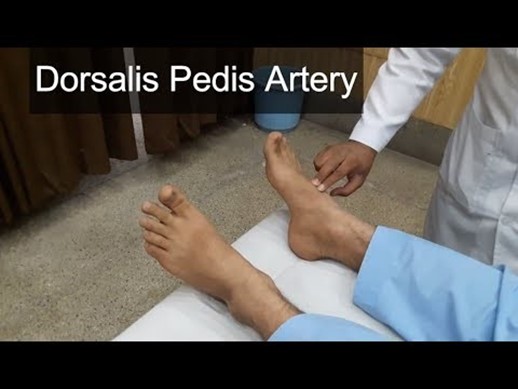
This is to assess for peripheral neurovascular dysfunction, which is a potential complication of a tibial fracture.
Choice A, wrapping sterile gauze on the sharp point of the pins, is not an answer because it is not mentioned in the search results as an intervention for a client with an external fixator for a tibial fracture.
Choice B, adjusting the clamps on the fixator frame, is not an answer because it is not mentioned in the search results as an intervention for a client with an external fixator for a tibial fracture.
Choice C, maintaining the affected extremity in a dependent position, is not an answer because it is not mentioned in the search results as an intervention for a client with an external fixator for a tibial fracture.
A nurse in the PACU is caring for a client.
Which of the following assessments is the nurse's priority?
A. Respiratory status.
The nurse’s priority assessment in the PACU (Post-Anesthesia Care Unit) should be the client’s respiratory status. This is because the client is recovering from anesthesia and may have an altered respiratory function.
B. Surgical site.
Choice B, assessing the surgical site, is not an answer because it is not the priority assessment for a client in the PACU.
C. Level of consciousness.
Choice C, assessing the level of consciousness, is not an answer because it is not the priority assessment for a client in the PACU.
D. Pain level.
Choice D, assessing the pain level, is not an answer because it is not the priority assessment for a client in the PACU.
Full Explanation
The nurse’s priority assessment in the PACU (Post-Anesthesia Care Unit) should be the client’s respiratory status.

This is because the client is recovering from anesthesia and may have an altered respiratory function.
Choice B, assessing the surgical site, is not an answer because it is not the priority assessment for a client in the PACU.
Choice C, assessing the level of consciousness, is not an answer because it is not the priority assessment for a client in the PACU.
Choice D, assessing the pain level, is not an answer because it is not the priority assessment for a client in the PACU.
A nurse is assessing a client who has right-sided heart failure.
Which of the following assessment findings should the nurse expect to find?
A. Poor skin turgor.
Choice A is incorrect because poor skin turgor is not a common symptom of right-sided heart failure.
B. Pitting edema.
Pitting edema is a common and obvious symptom of right-sided heart failure. This occurs when fluid retention causes swelling in the lower limbs and sometimes the abdomen.
C. Oliguria.
Choice C is incorrect because oliguria, or decreased urine output, is not a common symptom of right-sided heart failure.
D. S4 galloping heart sounds.
Choice D is incorrect because S4 galloping heart sounds are not a common symptom of right-sided heart failure.
Full Explanation
Pitting edema is a common and obvious symptom of right-sided heart failure.
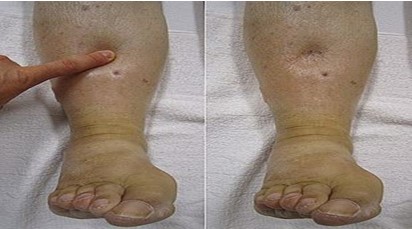
This occurs when fluid retention causes swelling in the lower limbs and sometimes the abdomen.
Choice A is incorrect because poor skin turgor is not a common symptom of right-sided heart failure.
Choice C is incorrect because oliguria, or decreased urine output, is not a common symptom of right-sided heart failure.
Choice D is incorrect because S4 galloping heart sounds are not a common symptom of right-sided heart failure.