Nursing practice questions with comprehensive rationales
NurseDive Free Nursing Practice Question
A nurse is preparing to bathe a client who has dementia. Which of the following actions should the nurse take?
A. Complete the bath even if the client is in distress.
Forcing the bath can increase agitation and damage trust. If the client becomes distressed, pause, reassure, and try again later.
B. Allow the client to select the temperature of the bath water.
Clients with dementia may have impaired sensory perception, increasing the risk of burns or discomfort. The nurse should check the water temperature to ensure safety.
C. Give detailed instructions for the client to follow.
Clients with dementia may struggle to process multiple steps, leading to frustration. Instead, use simple, one-step instructions and gentle guidance.
D. Use distractions when bathing the client.
Clients with dementia may experience anxiety, agitation, or distress during bathing. Using distractions, such as playing soothing music, talking about familiar topics, or providing a comforting touch, can help make the experience less stressful and more cooperative.
This question is an excerpt from Nurse Dive's nursing test bank - ATI RN Fundamentals 2019 with NGN - Proctored Exam 2. Take the full exam now
Full Explanation
A. Complete the bath even if the client is in distress. – Forcing the bath can increase agitation and damage trust. If the client becomes distressed, pause, reassure, and try again later.
B. Allow the client to select the temperature of the bath water. – Clients with dementia may have impaired sensory perception, increasing the risk of burns or discomfort. The nurse should check the water temperature to ensure safety.
C. Give detailed instructions for the client to follow. – Clients with dementia may struggle to process multiple steps, leading to frustration. Instead, use simple, one-step instructions and gentle guidance.
D. Use distractions when bathing the client. Clients with dementia may experience anxiety, agitation, or distress during bathing. Using distractions, such as playing soothing music, talking about familiar topics, or providing a comforting touch, can help make the experience less stressful and more cooperative.
Similar Questions
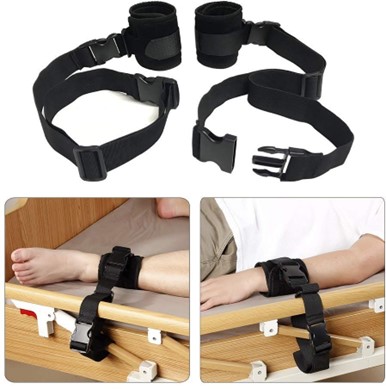
A nurse is planning care for a client who has a prescription for extremity restraints on both wrists. Which of the following actions should the nurse include in the plan of care? (Select all that apply.)
A. Assess skin temperature and color before applying the restraints.
When planning care for a client who has a prescription for extremity restraints on both wrists, the nurse should assess the client's skin temperature and color before applying the restraints to ensure that there is no circulation impairment.
B. Ensure that the client's bed is in the lowest position.
The nurse should also ensure that the client's bed is in the lowest position to prevent falls.
C. Secure restraints to allow three fingers to slide under the restraints.
The restraints should be secured to allow three fingers to slide under them to prevent injury and ensure proper circulation.
D. Pad bony prominences before applying the restraints.
Bony prominences should be padded before applying the restraints to prevent pressure injuries.
E. Attach the client's restraints to the bed rail.
Option e is incorrect because attaching the client's restraints to the bed rail can cause injury if the bed rail is moved or adjusted.
Full Explanation
When planning care for a client who has a prescription for extremity restraints on both wrists, the nurse should assess the client's skin temperature and color before applying the restraints to ensure that there is no circulation impairment. The nurse should also ensure that the client's bed is in the lowest position to prevent falls. The restraints should be secured to allow three fingers to slide under them to prevent injury and ensure proper circulation. Bony prominences should be padded before applying the restraints to prevent pressure injuries.
Option e is incorrect because attaching the client's restraints to the bed rail can cause injury if the bed rail is moved or adjusted.
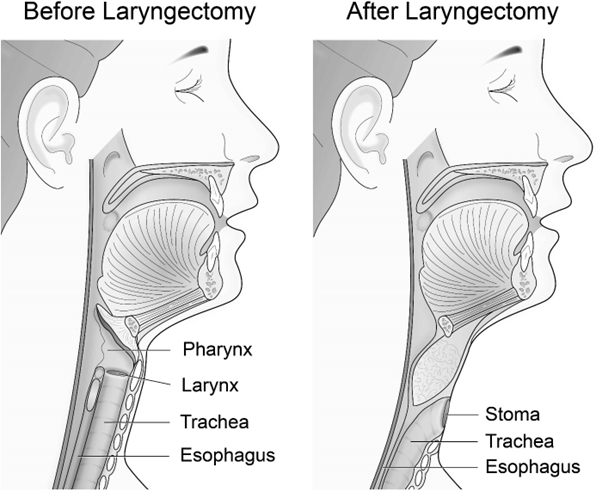
A nurse is providing care for a client who is to undergo a total laryngectomy. Which of the following interventions is the nurse's priority?
A. Explain the techniques of esophageal speech.
Esophageal speech is one method of communication but is learned later through speech therapy. Not the immediate priority.
B. Schedule a support session for the client.
While providing emotional support is important, it is not the immediate priority. The client needs to understand how to communicate effectively after the laryngectomy.
C. Determine the client's reading ability.
After surgery, the client will not be able to speak initially. Knowing if the client can read and write allows the nurse to provide a communication method (such as writing or using a communication board) to meet immediate needs, especially related to airway, pain, and care.
D. Review the use of an artificial larynx with the client.
An electrolarynx is an option but is introduced later in recovery. It is not the immediate concern before surgery.
E. None
None
F. None
None
Full Explanation
A. Explain the techniques of esophageal speech. Esophageal speech is one method of communication but is learned later through speech therapy. Not the immediate priority.
B. Schedule a support session for the client. While providing emotional support is important, it is not the immediate priority. The client needs to understand how to communicate effectively after the laryngectomy.
C. Determine the client's reading ability. After surgery, the client will not be able to speak initially. Knowing if the client can read and write allows the nurse to provide a communication method (such as writing or using a communication board) to meet immediate needs, especially related to airway, pain, and care.
D. Review the use of an artificial larynx with the client. An electrolarynx is an option but is introduced later in recovery. It is not the immediate concern before surgery.
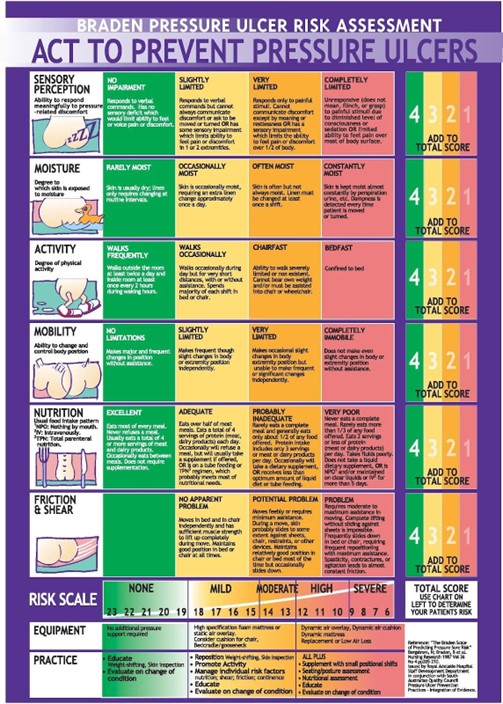
A nurse is teaching a group of newly licensed nurses about the Braden scale. Which of the following responses by a newly licensed nurse indicates an understanding of the teaching?
A. Each element has a range from one to five points.
Option a is incorrect because each element has a range from one to four points.
B. The higher the score, the higher the pressure injury risk.
Option b is incorrect because the lower the score, the higher the pressure injury risk.
C. The scale measures six elements.
The Braden scale measures six elements: sensory perception, moisture, activity, mobility, nutrition, and friction/shear. Each element has a range of one to four points, with a total possible score of 23 points. The lower the score, the higher the risk for pressure injury.
D. The client's age is part of the measurement.
Option d is incorrect because the client's age is not part of the measurement.
Full Explanation
The Braden scale measures six elements: sensory perception, moisture, activity, mobility, nutrition, and friction/shear. Each element has a range of one to four points, with a total possible score of 23 points. The lower the score, the higher the risk for pressure injury.
Option a is incorrect because each element has a range from one to four points.
Option b is incorrect because the lower the score, the higher the pressure injury risk.
Option d is incorrect because the client's age is not part of the measurement.