
Nursing practice questions with comprehensive rationales
NurseDive Free Nursing Practice Question
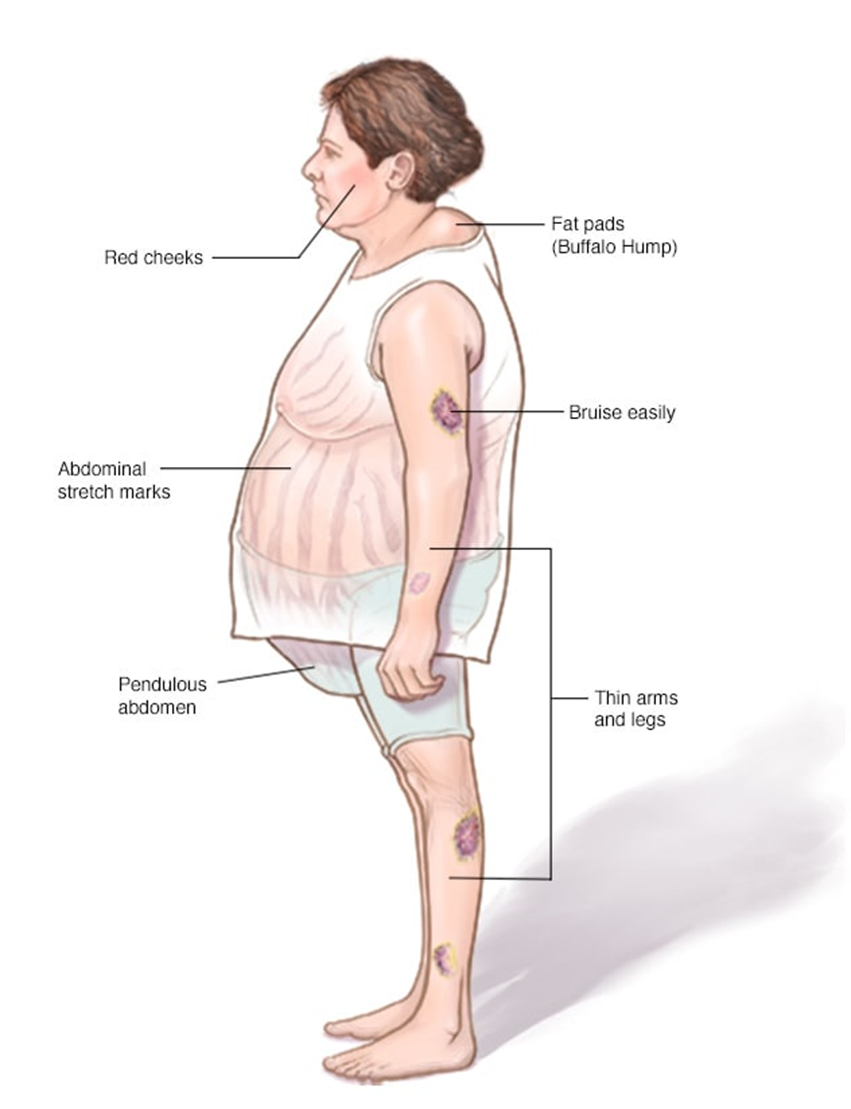
A nurse is providing dietary teaching for a client who has Cushing’s disease. Which of the following recommendations should the nurse include in the teaching?
A. Decrease protein intake.
: Decrease protein intake: This is not typically recommended for clients with Cushing’s disease. Protein is essential for maintaining muscle mass and overall health. Clients with Cushing’s disease often experience muscle weakness and wasting, so adequate protein intake is crucial to help counteract these effects. Therefore, decreasing protein intake would not be beneficial.
B. Restrict sodium intake.
: Restrict sodium intake: Clients with Cushing’s disease often suffer from hypertension (high blood pressure) due to the excess cortisol in their bodies. High sodium intake can exacerbate this condition by increasing blood pressure even further. Therefore, it is crucial to restrict sodium intake to help manage hypertension and reduce the risk of cardiovascular complications. Foods high in sodium include processed foods, canned soups, and salty snacks. The recommended daily sodium intake for most adults is less than 2,300 milligrams, but for those with hypertension, it is often advised to consume even less.
C. Limit intake of potassium-rich foods.
: Limit intake of potassium-rich foods: This is not a standard recommendation for clients with Cushing’s disease. In fact, potassium is often beneficial as it can help counteract the effects of sodium and lower blood pressure. Potassium-rich foods include bananas, oranges, spinach, and sweet potatoes. Limiting these foods would not be advantageous and could potentially worsen hypertension.
D. Increase carbohydrate intake.
: Increase carbohydrate intake: Increasing carbohydrate intake is not typically recommended for clients with Cushing’s disease. Excess cortisol can lead to increased blood sugar levels and a higher risk of developing diabetes. Therefore, it is important to manage carbohydrate intake carefully to avoid spikes in blood sugar. Instead, a balanced diet with a focus on complex carbohydrates, lean proteins, and healthy fats is recommended.
This question is an excerpt from Nurse Dive's nursing test bank - Final Med Surg Comprehensive Proctored Exam (Brooklyn University). Take the full exam now
Full Explanation
Choice A Reason:
Decrease protein intake: This is not typically recommended for clients with Cushing’s disease. Protein is essential for maintaining muscle mass and overall health. Clients with Cushing’s disease often experience muscle weakness and wasting, so adequate protein intake is crucial to help counteract these effects. Therefore, decreasing protein intake would not be beneficial.
Choice B Reason:
Restrict sodium intake: Clients with Cushing’s disease often suffer from hypertension (high blood pressure) due to the excess cortisol in their bodies. High sodium intake can exacerbate this condition by increasing blood pressure even further. Therefore, it is crucial to restrict sodium intake to help manage hypertension and reduce the risk of cardiovascular complications. Foods high in sodium include processed foods, canned soups, and salty snacks. The recommended daily sodium intake for most adults is less than 2,300 milligrams, but for those with hypertension, it is often advised to consume even less.
Choice C Reason:
Limit intake of potassium-rich foods: This is not a standard recommendation for clients with Cushing’s disease. In fact, potassium is often beneficial as it can help counteract the effects of sodium and lower blood pressure. Potassium-rich foods include bananas, oranges, spinach, and sweet potatoes. Limiting these foods would not be advantageous and could potentially worsen hypertension.
Choice D Reason:
Increase carbohydrate intake: Increasing carbohydrate intake is not typically recommended for clients with Cushing’s disease. Excess cortisol can lead to increased blood sugar levels and a higher risk of developing diabetes. Therefore, it is important to manage carbohydrate intake carefully to avoid spikes in blood sugar. Instead, a balanced diet with a focus on complex carbohydrates, lean proteins, and healthy fats is recommended.
Similar Questions
The nurse is assessing for correct placement of a nasogastric tube. The nurse aspirates the stomach contents, checks the gastric pH, and notes a pH of 7.35. Based on this information, which action should the nurse take at this time?
A. Document that the nasogastric tube is in the correct place.
: Documenting that the nasogastric tube is in the correct place is not appropriate in this scenario. The normal pH range for gastric contents is typically between 1.5 and 3.5. A pH of 7.35 is much higher than this range, indicating that the tube may not be in the stomach. Therefore, documenting the tube as correctly placed could lead to potential complications, such as improper feeding or medication administration.
B. Notify the health care provider.
: Notifying the health care provider is the correct action. A pH of 7.35 suggests that the nasogastric tube may be misplaced, possibly in the respiratory tract or another non-gastric location. Immediate notification of the health care provider is crucial to prevent any adverse outcomes and to take corrective measures, such as confirming placement with an X-ray or re-inserting the tube.
C. Check for placement by auscultating for air injected into the tube.
: Checking for placement by auscultating for air injected into the tube is not a reliable method for verifying nasogastric tube placement. While this method was traditionally used, it has been found to be inaccurate and is no longer recommended. The sound of air entering the stomach can be misleading and does not confirm correct placement.
D. Retest the pH using another strip.
: Retesting the pH using another strip is not the best immediate action. While it is important to ensure the accuracy of the pH reading, a pH of 7.35 is significantly outside the normal gastric range, and retesting is unlikely to yield a different result. The priority should be to notify the health care provider to address the potential misplacement of the tube.
Full Explanation
Choice A Reason:
Documenting that the nasogastric tube is in the correct place is not appropriate in this scenario. The normal pH range for gastric contents is typically between 1.5 and 3.5. A pH of 7.35 is much higher than this range, indicating that the tube may not be in the stomach. Therefore, documenting the tube as correctly placed could lead to potential complications, such as improper feeding or medication administration.
Choice B Reason:
Notifying the health care provider is the correct action. A pH of 7.35 suggests that the nasogastric tube may be misplaced, possibly in the respiratory tract or another non-gastric location. Immediate notification of the health care provider is crucial to prevent any adverse outcomes and to take corrective measures, such as confirming placement with an X-ray or re-inserting the tube.
Choice C Reason:
Checking for placement by auscultating for air injected into the tube is not a reliable method for verifying nasogastric tube placement. While this method was traditionally used, it has been found to be inaccurate and is no longer recommended. The sound of air entering the stomach can be misleading and does not confirm correct placement.
Choice D Reason:
Retesting the pH using another strip is not the best immediate action. While it is important to ensure the accuracy of the pH reading, a pH of 7.35 is significantly outside the normal gastric range, and retesting is unlikely to yield a different result. The priority should be to notify the health care provider to address the potential misplacement of the tube.
A nurse is assessing a client who has Graves’ disease. The nurse should expect which of the following laboratory results?
A. Decreased thyroxine (T4) level.
: A decreased thyroxine (T4) level is not expected in a client with Graves’ disease. Graves’ disease is an autoimmune disorder that leads to hyperthyroidism, where the thyroid gland produces excessive amounts of thyroid hormones, including T4. Therefore, the T4 level is typically elevated, not decreased.
B. Decreased triiodothyronine (T3) level.
: Similarly, a decreased triiodothyronine (T3) level is not expected in Graves’ disease. Like T4, T3 levels are usually elevated due to the overactive thyroid gland. T3 is the active form of thyroid hormone and is often increased in hyperthyroid conditions.
C. Decreased thyroid-stimulating immunoglobulins (TSI) percentage.
: Decreased thyroid-stimulating immunoglobulins (TSI) percentage is incorrect. In Graves’ disease, TSI levels are elevated because these antibodies stimulate the thyroid gland to produce more thyroid hormones. TSI mimics the action of TSH, leading to increased production of T3 and T4.
D. Decreased thyroid-stimulating hormone (TSH) level.
: Decreased thyroid-stimulating hormone (TSH) level is the correct answer. In Graves’ disease, the excessive thyroid hormones (T3 and T4) exert negative feedback on the pituitary gland, leading to suppressed TSH production. Therefore, TSH levels are typically low in patients with Graves’ disease.
Full Explanation
Choice A Reason:
A decreased thyroxine (T4) level is not expected in a client with Graves’ disease. Graves’ disease is an autoimmune disorder that leads to hyperthyroidism, where the thyroid gland produces excessive amounts of thyroid hormones, including T4. Therefore, the T4 level is typically elevated, not decreased.
Choice B Reason:
Similarly, a decreased triiodothyronine (T3) level is not expected in Graves’ disease. Like T4, T3 levels are usually elevated due to the overactive thyroid gland. T3 is the active form of thyroid hormone and is often increased in hyperthyroid conditions.
Choice C Reason:
Decreased thyroid-stimulating immunoglobulins (TSI) percentage is incorrect. In Graves’ disease, TSI levels are elevated because these antibodies stimulate the thyroid gland to produce more thyroid hormones. TSI mimics the action of TSH, leading to increased production of T3 and T4.
Choice D Reason:
Decreased thyroid-stimulating hormone (TSH) level is the correct answer. In Graves’ disease, the excessive thyroid hormones (T3 and T4) exert negative feedback on the pituitary gland, leading to suppressed TSH production. Therefore, TSH levels are typically low in patients with Graves’ disease.
A nurse is caring for a client who has Addison’s disease and is at risk for Addisonian crisis. Which of the following actions should the nurse take?
A. Weigh the client daily.
: Weigh the client daily: While monitoring weight is important for clients with Addison’s disease, it is not the primary action to prevent an Addisonian crisis. Daily weight monitoring helps track fluid balance and detect any sudden changes that might indicate complications, but it does not directly address the hormonal imbalance that characterizes Addisonian crisis.
B. Restrict food intake.
: Restrict food intake: Restricting food intake is not recommended for clients with Addison’s disease. Proper nutrition is crucial for maintaining energy levels and overall health. Clients with Addison’s disease need a balanced diet to manage their condition effectively. Restricting food intake could lead to malnutrition and exacerbate symptoms.
C. Administer oral corticosteroids.
: Administer oral corticosteroids: This is the correct action. Addison’s disease is characterized by insufficient production of cortisol and aldosterone by the adrenal glands. Administering oral corticosteroids helps replace the deficient hormones and manage the symptoms of Addison’s disease. During an Addisonian crisis, immediate administration of corticosteroids is critical to prevent severe complications such as shock, coma, or even death.
D. Provide a low carbohydrate diet.
: Provide a low carbohydrate diet: A low carbohydrate diet is not specifically recommended for clients with Addison’s disease. Instead, a balanced diet that includes adequate carbohydrates, proteins, and fats is essential. Carbohydrates are important for maintaining energy levels, especially since clients with Addison’s disease may experience fatigue and weakness. Restricting carbohydrates could lead to low blood sugar levels, which can be dangerous for these clients.
Full Explanation
Choice A Reason:
Weigh the client daily: While monitoring weight is important for clients with Addison’s disease, it is not the primary action to prevent an Addisonian crisis. Daily weight monitoring helps track fluid balance and detect any sudden changes that might indicate complications, but it does not directly address the hormonal imbalance that characterizes Addisonian crisis.
Choice B Reason:
Restrict food intake: Restricting food intake is not recommended for clients with Addison’s disease. Proper nutrition is crucial for maintaining energy levels and overall health. Clients with Addison’s disease need a balanced diet to manage their condition effectively. Restricting food intake could lead to malnutrition and exacerbate symptoms.
Choice C Reason:
Administer oral corticosteroids: This is the correct action. Addison’s disease is characterized by insufficient production of cortisol and aldosterone by the adrenal glands. Administering oral corticosteroids helps replace the deficient hormones and manage the symptoms of Addison’s disease. During an Addisonian crisis, immediate administration of corticosteroids is critical to prevent severe complications such as shock, coma, or even death.
Choice D Reason:
Provide a low carbohydrate diet: A low carbohydrate diet is not specifically recommended for clients with Addison’s disease. Instead, a balanced diet that includes adequate carbohydrates, proteins, and fats is essential. Carbohydrates are important for maintaining energy levels, especially since clients with Addison’s disease may experience fatigue and weakness. Restricting carbohydrates could lead to low blood sugar levels, which can be dangerous for these clients.