
Nursing practice questions with comprehensive rationales
NurseDive Free Nursing Practice Question
A nurse is providing teaching about the effects of sun exposure to a parent of a toddler.
Which of the following responses by the parent indicates an understanding of the teaching?
A. "My child should remain under a beach umbrella during morning hours.”
Choice A is wrong because while staying under a beach umbrella can provide some protection from the sun, it is not enough on its own.
B. "I should dress my child in loose-weave clothing.”
Choice B is wrong because loose-weave clothing may not provide enough protection from the sun’s rays.
C. "I should apply a 10 SPF sunscreen to my child's entire body.”
Choice C is wrong because a sunscreen with an SPF of at least 30 is recommended for adequate protection.
D. "My child should wear a wide-brimmed hat.”
Wearing a wide-brimmed hat can help protect a child’s face, neck and ears from the harmful effects of the sun.
This question is an excerpt from Nurse Dive's nursing test bank - ATI RN Nursing Care of Children 2019 Proctored Exam. Take the full exam now
Full Explanation
Wearing a wide-brimmed hat can help protect a child’s face, neck and ears from the harmful effects of the sun.

Choice A is wrong because while staying under a beach umbrella can provide some protection from the sun, it is not enough on its own.
Choice B is wrong because loose-weave clothing may not provide enough protection from the sun’s rays.
Choice C is wrong because a sunscreen with an SPF of at least 30 is recommended for adequate protection.
Similar Questions
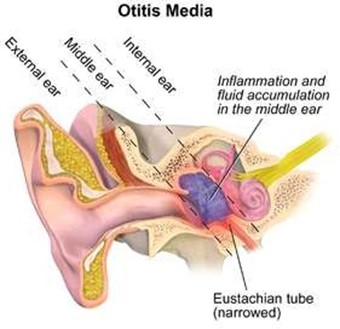
A nurse is assessing an infant who has acute otitis media.
Which of the following findings should the nurse expect? (Select all that apply.).
A. Increased appetite.
Choice A is wrong because an infant with acute otitis media may have a decreased appetite.
B. Crying.
An infant with acute otitis media may exhibit crying, restlessness and fever.
C. Restlessness.
An infant with acute otitis media may exhibit crying, restlessness and fever.
D. Fever.
An infant with acute otitis media may exhibit crying, restlessness and fever.
E. Enlarged subclavicular lymph node.
Choice E is not the best answer because an enlarged subclavicular lymph node is not a common finding in acute otitis media.
Full Explanation
An infant with acute otitis media may exhibit crying, restlessness and fever.
Choice A is wrong because an infant with acute otitis media may have a decreased appetite.
Choice E is not the best answer because an enlarged subclavicular lymph node is not a common finding in acute otitis media.
A nurse is providing teaching about home care to the parent of a child who has scabies.
Which of the following instructions should the nurse include in the teaching?
A. Wash the child's hair with shampoo containing ketoconazole.
Choice A is wrong because ketoconazole shampoo is used to treat fungal infections of the scalp, not scabies.
B. Treat everyone who came into close contact with the child.
Scabies is a highly contagious skin condition caused by mites and can spread easily through close physical contact. It is important to treat everyone who came into close contact with the child to prevent reinfestation.
C. Soak combs and brushes in boiling water for 10 min.
Choice C is wrong because while it is important to clean combs and brushes, soaking them in boiling water for 10 minutes may not be necessary.
D. Apply petroleum jelly to the affected areas.
Choice D is wrong because petroleum jelly is not an effective treatment for scabies.
Full Explanation
Scabies is a highly contagious skin condition caused by mites and can spread easily through close physical contact.
It is important to treat everyone who came into close contact with the child to prevent reinfestation.
Choice A is wrong because ketoconazole shampoo is used to treat fungal infections of the scalp, not scabies.
Choice C is wrong because while it is important to clean combs and brushes, soaking them in boiling water for 10 minutes may not be necessary.
Choice D is wrong because petroleum jelly is not an effective treatment for scabies.
A nurse is caring for a 5-year-old child following a tonsillectomy and adenoidectomy.
Which of the following findings should the nurse identify as an indication of hemorrhage?
A. Blood pressure 95/56 mm Hg.
Choice A is wrong because a blood pressure of 95/56 mm Hg is within the normal range for a 5-year-old child.
B. Heart rate 54/min.
Choice B is wrong because a heart rate of 54/min is within the normal range for a 5-year-old child.
C. Continuous swallowing.
Continuous swallowing can be an indication of hemorrhage following a tonsillectomy and adenoidectomy. This is because the child may be swallowing blood that is coming from the surgical site.
D. Flushing of the face.
Choice D is wrong because flushing of the face is not an indication of hemorrhage following a tonsillectomy and adenoidectomy.
Full Explanation
Continuous swallowing can be an indication of hemorrhage following a tonsillectomy and adenoidectomy.
This is because the child may be swallowing blood that is coming from the surgical site.
Choice A is wrong because a blood pressure of 95/56 mm Hg is within the normal range for a 5-year-old child.
Choice B is wrong because a heart rate of 54/min is within the normal range for a 5-year-old child.
Choice D is wrong because flushing of the face is not an indication of hemorrhage following a tonsillectomy and adenoidectomy.