
Nursing practice questions with comprehensive rationales
NurseDive Free Nursing Practice Question
A nurse is providing teaching to an adolescent who has type 1 diabetes mellitus. Which of the following should the nurse include in the teaching?
A. Obtain an influenza vaccine annually
This is a crucial recommendation. People with diabetes, including type 1 diabetes, have a higher risk of complications from infections, including influenza (the flu). The flu can lead to elevated blood sugar levels and potentially worsen diabetes control. Getting an annual influenza vaccine helps reduce the risk of getting the flu and its associated complications.
B. Take glyburide with breakfast
Glyburide is a medication used to treat type 2 diabetes, not type 1 diabetes. It stimulates the pancreas to produce more insulin. Type 1 diabetes is characterized by a lack of insulin production, so taking glyburide would not be appropriate.
C. Administer glucagon for hyperglycemia
Glucagon is a hormone used to raise blood sugar levels, typically in cases of severe hypoglycemia (low blood sugar). It is not used to treat hyperglycemia (high blood sugar) in type 1 diabetes. Instead, insulin administration is the primary method for managing high blood sugar levels.
D. Inject insulin in the deltoid muscle
Insulin injections for individuals with type 1 diabetes are typically given in the subcutaneous fat, which is found just beneath the skin. The deltoid muscle is not a recommended site for insulin injections due to inconsistent absorption. The abdomen, thighs, and buttocks are commonly recommended injection sites.
This question is an excerpt from Nurse Dive's nursing test bank - ATI PAEDIATRICS PROCTORED EXAM - SIMMONS U BSN. Take the full exam now
Full Explanation
Type 1 diabetes mellitus is a condition where the body's immune system mistakenly attacks and destroys the insulin-producing cells in the pancreas. Individuals with type 1 diabetes require insulin therapy to manage their blood sugar levels. Since the question is about teaching an adolescent with type 1 diabetes, let's analyze each option:
A) Obtain an influenza vaccine annually:
This is a crucial recommendation. People with diabetes, including type 1 diabetes, have a higher risk of complications from infections, including influenza (the flu). The flu can lead to elevated blood sugar levels and potentially worsen diabetes control. Getting an annual influenza vaccine helps reduce the risk of getting the flu and its associated complications.
B) Take glyburide with breakfast:
Glyburide is a medication used to treat type 2 diabetes, not type 1 diabetes. It stimulates the pancreas to produce more insulin. Type 1 diabetes is characterized by a lack of insulin production, so taking glyburide would not be appropriate.
C) Administer glucagon for hyperglycemia:
Glucagon is a hormone used to raise blood sugar levels, typically in cases of severe hypoglycemia (low blood sugar). It is not used to treat hyperglycemia (high blood sugar) in type 1 diabetes. Instead, insulin administration is the primary method for managing high blood sugar levels.
D) Inject insulin in the deltoid muscle:
Insulin injections for individuals with type 1 diabetes are typically given in the subcutaneous fat, which is found just beneath the skin. The deltoid muscle is not a recommended site for insulin injections due to inconsistent absorption. The abdomen, thighs, and buttocks are commonly recommended injection sites.
Similar Questions
A nurse is assessing a child who has nephrotic syndrome. Which of the following findings should the nurse expect?
A. Smokey brown urine
This finding is not typically associated with nephrotic syndrome. Smokey brown urine might indicate the presence of blood in the urine, which can be seen in conditions such as hematuria or certain kidney infections.
B. Polyuria
Polyuria refers to excessive urination and is not a primary characteristic of nephrotic syndrome. However, children with nephrotic syndrome may have decreased urine output due to the loss of fluid and proteins through the damaged kidney filters.
C. Facial edema
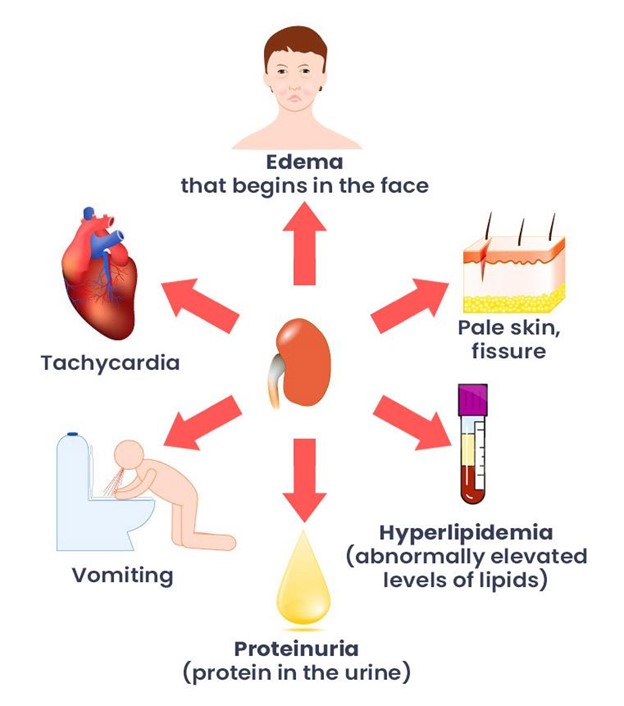
Facial edema (swelling of the face) is a hallmark of nephrotic syndrome. The loss of albumin in the urine results in a decrease in oncotic pressure (a force that helps keep fluid in the blood vessels), leading to fluid accumulation in the interstitial spaces, including the face, ankles, and abdomen.
D. Hypertension
Hypertension (high blood pressure) is not a typical finding of nephrotic syndrome itself. However, it's possible for kidney damage to lead to secondary hypertension. In nephrotic syndrome, low levels of albumin can trigger the renin-angiotensin-aldosterone system, which can contribute to increased blood pressure.
Full Explanation
A) Smokey brown urine:
This finding is not typically associated with nephrotic syndrome. Smokey brown urine might indicate the presence of blood in the urine, which can be seen in conditions such as hematuria or certain kidney infections.
B) Polyuria:
Polyuria refers to excessive urination and is not a primary characteristic of nephrotic syndrome. However, children with nephrotic syndrome may have decreased urine output due to the loss of fluid and proteins through the damaged kidney filters.
C) Facial edema:
Facial edema (swelling of the face) is a hallmark of nephrotic syndrome. The loss of albumin in the urine results in a decrease in oncotic pressure (a force that helps keep fluid in the blood vessels), leading to fluid accumulation in the interstitial spaces, including the face, ankles, and abdomen.
D) Hypertension:
Hypertension (high blood pressure) is not a typical finding of nephrotic syndrome itself. However, it's possible for kidney damage to lead to secondary hypertension. In nephrotic syndrome, low levels of albumin can trigger the renin-angiotensin-aldosterone system, which can contribute to increased blood pressure.
A nurse is caring for a school-age child who has acute glomerulonephritis with peripheral edema and is producing 35 mL of urine per hour. The nurse should place the client on which of the following diets?
A. Low-protein, low-potassium diet
While low-protein and low-potassium diets can be appropriate for certain kidney conditions, such as chronic kidney disease, they are not typically the primary focus in the acute phase of glomerulonephritis. Protein restriction might be considered if there is significant kidney damage, and potassium levels are elevated.
B. Low-sodium fluid-restricted
This is the most appropriate option. In acute glomerulonephritis, the kidneys' ability to regulate sodium and fluid balance may be impaired due to inflammation and decreased glomerular filtration. Fluid retention and peripheral edema are common. A low-sodium diet helps reduce fluid retention and manage edema.
C. Low carbohydrate, low-protein diet
Low-carbohydrate and low-protein diets are not the main dietary considerations for acute glomerulonephritis. The primary focus is on managing sodium and fluid intake due to impaired kidney function.
D. Regular diet, no added salt
A regular diet without added salt might exacerbate the fluid retention and edema associated with acute glomerulonephritis. Sodium intake needs to be controlled to prevent further fluid buildup.
Full Explanation
A) Low-protein, low-potassium diet:
While low-protein and low-potassium diets can be appropriate for certain kidney conditions, such as chronic kidney disease, they are not typically the primary focus in the acute phase of glomerulonephritis. Protein restriction might be considered if there is significant kidney damage, and potassium levels are elevated.
B) Low-sodium fluid-restricted diet:
This is the most appropriate option. In acute glomerulonephritis, the kidneys' ability to regulate sodium and fluid balance may be impaired due to inflammation and decreased glomerular filtration. Fluid retention and peripheral edema are common. A low-sodium diet helps reduce fluid retention and manage edema.
C) Low carbohydrate, low-protein diet:
Low-carbohydrate and low-protein diets are not the main dietary considerations for acute glomerulonephritis. The primary focus is on managing sodium and fluid intake due to impaired kidney function.
D) Regular diet, no added salt:
A regular diet without added salt might exacerbate the fluid retention and edema associated with acute glomerulonephritis. Sodium intake needs to be controlled to prevent further fluid buildup.
The follow questions refer to the patient described below:
A 9 yr. old child with both hydrocephalus and a cardiac defect weighs 55 pounds. He requires digoxin by mouth once daily, the dose should be held if there are any symptoms of toxicity.
Pediatric maintenance dose is 5 mcg/kg daily given as a single dose. After listening to the apical rate for one full minute, you note it is only 50. Should you administer the digoxin as ordered?
A. NO
B. Just administer it without checking
C. instruct mom to give it
D. Yes
Full Explanation
Digoxin is a medication commonly used to treat certain heart conditions, including some congenital heart defects. It's important to monitor the heart rate and other signs of toxicity when administering digoxin, especially in pediatric patients. Let's break down the information given:
The pediatric maintenance dose of digoxin is 5 mcg/kg daily.
The child weighs 55 pounds (approximately 25 kg).
Given these values, the total daily dose for this child would be:
Total daily dose = 5 mcg/kg × 25 kg = 125 mcg
This total daily dose is usually given as a single dose. However, the child's heart rate is noted to be only 50 beats per minute (bpm). A heart rate of 50 bpm in a child could potentially indicate bradycardia (slow heart rate), which can be a sign of digoxin toxicity. Bradycardia is a known adverse effect of digoxin, and it's important to assess for other signs of toxicity as well, such as nausea, vomiting, and changes in color vision.
In this case, it would be prudent to withhold the digoxin and assess the child further for signs of toxicity or bradycardia. The dose should not be administered until the healthcare provider is consulted and appropriate action is determined.
So, the correct answer is indeed NO. Administering the digoxin without considering the slow heart rate and the potential for toxicity could be unsafe for the child.