
Nursing practice questions with comprehensive rationales
NurseDive Free Nursing Practice Question
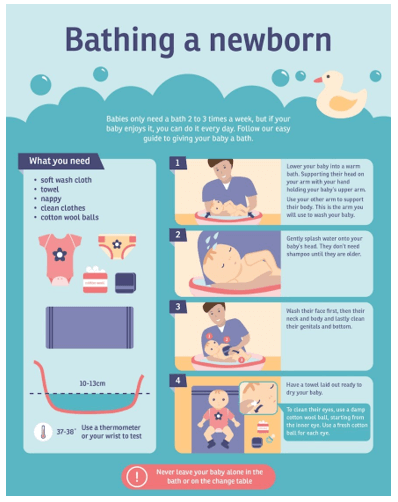
A nurse is reinforcing teaching with a new parent about bathing her newborn.
Which of the following statements should the nurse include?
A. Apply talcum powder daily after bathing in order to prevent diaper rash.
Using talcum powder is not recommended as it can be harmful to the baby's respiratory system if inhaled.
B. Use an alkaline soap to bathe the baby.
Mild, pH-balanced soap should be used instead of alkaline soap to avoid irritating the baby's delicate skin.
C. Perform sponge baths until the baby's umbilical cord falls off.
Sponge baths are recommended until the umbilical cord stump falls off, which typically occurs within the first two weeks of life. After that, the baby can be immersed in water for a regular bath.
D. Ensure the bath water is at least 96 degrees Fahrenheit.
The bathwater temperature should be around 98 degrees Fahrenheit and not hoter than 100 degrees Fahrenheit to prevent burns.
This question is an excerpt from Nurse Dive's nursing test bank - PN Comprehensive Predictor PN 2020 Proctored Exam. Take the full exam now
Full Explanation
Explanation:
Sponge baths are recommended until the umbilical cord stump falls off, which typically occurs within the first two weeks of life. After that, the baby can be immersed in water for a regular bath.
Using talcum powder is not recommended as it can be harmful to the baby's respiratory system if inhaled. Mild, pH-balanced soap should be used instead of alkaline soap to avoid irritating the baby's delicate skin.
The bathwater temperature should be around 98 degrees Fahrenheit and not hoter than 100 degrees Fahrenheit to prevent burns.
Similar Questions
A nurse is reinforcing teaching with a client who has a new prescription for atorvastatin.
For which of the following adverse effects should the nurse instruct the client to monitor and report to the provider?
A. Hypoglycemia
Hypoglycemia is not commonly associated with atorvastatin use and would not require immediate reporting to the healthcare provider.
B. Palpitations
HPalpitations is not commonly associated with atorvastatin use and would not require immediate reporting to the healthcare provider.
C. Daytime drowsiness
Daytime drowsiness is not commonly associated with atorvastatin use and would not require immediate reporting to the healthcare provider.
D. Muscle pain
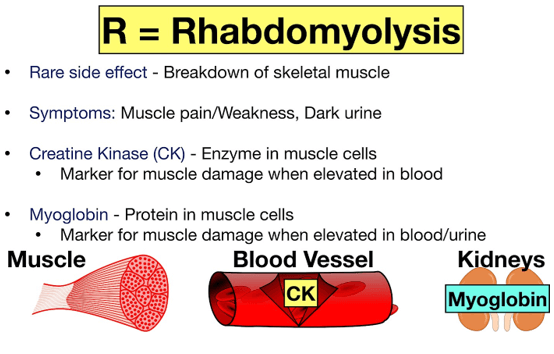
Atorvastatin is a medication used to lower cholesterol levels in the blood. One of the potential adverse effects of atorvastatin is myopathy, a condition characterized by muscle pain, weakness, and tenderness. In severe cases, myopathy can progress to rhabdomyolysis, a potentially life-threatening condition in which muscle breakdown products are released into the bloodstream and can cause kidney damage. Therefore, the nurse should instruct the client to monitor for muscle pain, weakness, or tenderness and report these symptoms to the healthcare provider immediately.
Full Explanation
d. Muscle pain.
Atorvastatin is a medication used to lower cholesterol levels in the blood. One of the potential adverse effects of atorvastatin is myopathy, a condition characterized by muscle pain, weakness, and tenderness. In severe cases, myopathy can progress to rhabdomyolysis, a potentially life-threatening condition in which muscle breakdown products are released into the bloodstream and can cause kidney damage.
Therefore, the nurse should instruct the client to monitor for muscle pain, weakness, or tenderness and report these symptoms to the healthcare provider immediately. Hypoglycemia, palpitations, and daytime drowsiness are not commonly associated with atorvastatin use and would not require immediate reporting to the healthcare provider.
A nurse is assisting with the care of a client in a PACU. Provider Prescriptions
1100:
Oxygen 2 to 5 L/min via nasal cannula to maintain oxygen saturation greater than 92%.
Which of the following actions should the nurse take during the management of oxygenation for this client? Select all that apply.
A. Place the client in the supine position.
-
B. Prepare to administer oxygen via Venturi face mask.
-
C. Add a humidifier to the oxygen device.
When managing oxygenation for a client in a PACU, the nurse should take several actions. The nurse should add a humidifier to the oxygen device to help prevent dryness of the nasal passages¹.
D. Encourage client to perform deep breathing exercises.
The nurse should also encourage the client to perform deep breathing exercises to promote oxygenation¹.
E. Examine the client's nail beds.
The nurse should examine the client's nail beds for signs of cyanosis, which can indicate inadequate oxygenation¹.
Full Explanation
When managing oxygenation for a client in a PACU, the nurse should take several actions. The nurse should add a humidifier to the oxygen device to help prevent dryness of the nasal passages¹.
The nurse should also encourage the client to perform deep breathing exercises to promote oxygenation¹.
Additionally, the nurse should examine the client's nail beds for signs of cyanosis, which can indicate inadequate oxygenation¹.
A nurse is collecting data from a client who has pyelonephritis and is receiving gentamicin via IV infusion.
Which of the following manifestations should the nurse identify as an adverse effect of the treatment?
A. Slurred speech
-
B. Hypotension
-
C. New onset of hearing loss
When collecting data from a client who is receiving gentamicin via IV infusion, the nurse should identify new onset of hearing loss as an adverse effect of the treatment¹.
D. Hyperthermia
-
Full Explanation
c. New onset of hearing loss.
When collecting data from a client who is receiving gentamicin via IV infusion, the nurse should identify new onset of hearing loss as an adverse effect of the treatment¹. Gentamicin can cause vestibulocochlear nerve damage, which can affect hearing and balance¹.